secrets of organ playing - when you practice, miracles happen
  • HOME
  • BLOG
  • STORE
  • TOTAL ORGANIST
  • TOOLS
  • YOUTUBE
  • COMPOSITIONS
  • COACHING
  • ABOUT
  • RECITALS
  • PHOTOS
  • CONTACT
  • LOGIN
  • LT
  • AUSRA'S YOUTUBE

SOPP322: On accompanying the congregation and improvising

11/5/2018

Comments

 
Vidas: Hi guys, this is Vidas.

Ausra: And Ausra.
 
V: Let’s start episode episode 322, of Secrets of Organ Playing Podcast. This question was sent by Rob. He writes:

Hello Ausra and Vidas,

Today, I have a few things to share with you that relate to subjects that both of you discussed in recent SOPPs. Please feel free to use it as “ammo” to elaborate on as you see fit.

1) Accompanying the congregation in singing

This is something that I’ve been doing for almost 45 years now. When I accompany a choir, I’ll have to “obey” the SATB setting of the songs. When I accompany the people, I can basically make up my own harmonies. What I do is this: one of my ears listens to the organ, the other ear listens to the singing of the congregation. Now, in the middle of my head, I bring the two together: I always make sure, that I am just a fraction of a beat “ahead” so I can give them the next note, the next tone that they need to sing. This way, you can also control the pace of the song, because congregations are inclined to slow down in singing and it is best not to allow this. So, “split-listening” and being just ahead of the people is key in accompanying. And, of course, make sure that the melody of the song can be heard clearly.

2) On improvisation

I discovered, that there is a part in my brain that always creates music. All I need to do, is tune into it and listen to what’s “playing” in my head at that moment. Can be a melody, can be a harmonized piece of music. When I listen to it, I can get my right hand to immediately produce the melody that I hear. I am not yet good enough to immediately produce the harmonics that I hear with both hands. So, I must take it “slow”. That is, play the melody (and often harmonizing it as well) bringing it out in the right hand and find supporting harmony (chords etc.) in the left hand and pedal. I change between playing on 2 manuals and playing on 1 manual where I get to bring the two hands together while developing on the keyboard what I hear in my head. This works wonderfully well. And I do make it a habit of improvising 10-15 minutes every time I play the organ. Also before service, I make time to improvise for about 5 minutes. Makes sense to you guys?

Enjoy the weekend.
Kind regards,

Rob


V: So, Ausra, these two questions, one is about accompanying congregation and about improvisation. I think it’s really on track what he’s suggesting about accompanying the congregation.

A: I think it’s very much on track. Actually that’s what I would do if I was accompanying congregation. But of course, one part of this part of question, reminded me, or actually, we were kicked off the church. Because you didn’t want to play slower for congregational accompaniment.
 
V: I was split second ahead, or more than split second ahead.
 
A: True, and we received so many complaints, especially Vidas. And people would ask me to play service more often because I played slower and listened to them more. But Vidas just didn’t want to give up and wanted to keep his own tempo. And well, at that time we were very young, and probably not as wise as we are now, yes?
 
V: Yes. Today we would play in lento tempo.
 
A: So, this was, I guess, probably twenty or even more years ago.
 
V: Yes. Today we would play everything like Albert Schweitzer did.
 
A: Well, now I guess, if this would be in nowadays, I probably even wouldn’t take such a job.
 
V: Wow. That’s even better.
 
A: True. But actually, yes, the congregation tries to slow things down.
 
V: But, Ausra, if it’s not a job, if somebody just asks you to fill in, you know, like a friend, substitute, just once, and would you slow down, or would you lead ahead?
 
A; Well, that’s a good question. I would probably lead ahead. What would you do?
 
V: I would lead ahead, yes. You see, at that time, we didn’t have our doctorate degrees. Now we have doctorate degrees. And to anybody who is complaining, we can,,,
 
A: Show our diploma, yes.
 
V: Yes. Yes. Complain to the director of University of Nebraska, Lincoln.
 
A: Yes.
 
V: (Laughs)
 
A: That’s funny. That’s really funny. But actually, you just need to be reasonable. If you’re tempo and congregation tempo is very different, you need to think about it—why this happens. Because maybe you choose too fast tempo for that particular hymn. And you need to think if this happens all the time, and maybe you need to listen yourself from a side, make a recording of it, because that tempo might defer slightly bu it cannot be very different.
 
V: Mmm-hmm.
 
A: And when you’re accompanying congregation, always try to sing too. That way you will get the right feeling of the tempo.
 
V: And sing energetically, because some congregations, like the one we were talking about, were singing like at the funeral, always.
 
A: I know. We were dragging each note. If you, let’s say the hymn is written in quarter note values, yes? And we would make a whole note from a quarter note, and it was just impossible to survive.
 
V: They would breathe with every word.
 
A: True. With every note.
 
V: Or every note. Maybe that’s original historically correct way of singing.
 
A: I don’t know but it was just a nightmare.
 
V: Because remember what Pamela Ruiter-Feenstra told us, a little bit about her research with, I think, singing psalms, in the, back in the day, that they were singing them really, really, extremely slow.
 
A: Well, but that was what, a few hundred years ago.
 
V: Right.
 
A: But we are in the 21st Century now.
 
V: We drive fast cars.
 
A: Well, we cannot take service that is longer than one hour.
 
V: We eat fast food.
 
A: True.
 
V: Everything is fast.
 
A: Well, and fast death awaits us, yes?
 
V: And the mass is no longer three hours long, like it was before Tridentine time.
 
A: True. So I don’t know, for me, seems that everything needs to be balanced. So, and everybody needs to be reasonable. So, and I’m talking about tempo too. It cannot be too fast and it cannot be too slow. And I think you need to take a breath after each phrase, but not after each note (laughs).
 
V: Mmm-hmm. If you can sing a phrase in one breath, then,,,
 
A: Then I think your tempo is fine.
 
V: Mmm-hmm. Excellent. Let’s go to the second part of the question about improvisation. Rob seems to have constant creative flow in his head, right, and whenever he wants to tune in to it and catch those melodies. This reminds me of a saying, or a quote by David Lynch. Remember the director of the movie, or the T.V. series, called...
 
A: Twin Peaks.
 
V: Twin Peaks, yes. He says that ‘we don’t create ideas, we catch ideas’. They are out there someplace floating in the ether, or someplace, I don’t know where. But when we are in the right state of mind, we can tune in and those ideas will come to us.
 
A: But do you think those ideas will help you to make a good harmonic accompaniment to the melody that just came to your mind? Or you need specific knowledge and skills?
 
V: Oh, that’s your harmony part, theory part, saying, right?
 
A: Yes.
 
V: I know what you’re leaning to, but I believe some people can play intuitively, with both hands, and even pedals, but it takes completely different state of mind constantly observing in everyday life, I think. If you, for example, would observe people who meditate, that could be like playing or sounding meditation. If people could to that, then they could play with both hands also, without real understanding what they play, but intuitively. But that’s a different mentality, Ausra. We are talking about the logical procedures, right?
 
A: True. And I’m just wondering, because you are improvising so much. Do you think that all that history, your history, personal history, of learning, learning harmony, learning theory, is it helping you or harming you, when you improvising?
 
V: You see, I also taught at the Čiurlionis National School of Art for twelve years, until this year, and all those years I taught, either solfege, which is ear training, or music theory. So basically those terms and procedures, modes, chords, were part of my daily routine with kids. And therefore they were ingrained in my memory too. When I first started teaching, I had to think consciously—what is this mode, how it’s constructed, what is this inversion of the chord—I was not that fluent. But now, I don’t have to think any more of course, and it’s part of my, part of my nature, probably. And when I’m playing intuitively on the organ, like improvising spontaneously, this former background or training comes in, into the forefront too, without even me noticing. So for other people probably, they do need to study theory and harmony for many years, until this is spontaneous for them enough.
 
A: What would you tell for people who don’t want to learn theory?
 
V: Maybe they’re not committed enough. Maybe organ playing or improvising on the organ is not important, that important to them. Maybe they don’t want to improve that much.
 
A: Because, in my daily life, as teaching these harmony, theory and solfege for various instrumentalists and choir conductors, and piano performers and now teaching in that organ school, I always get this big, big confrontation. So basically I’m in a war, in a constant war, and it’s getting tiresome.
 
V: I know how you feel. It’s difficult when you’re the only soldier on the battlefield, right?
 
A: I know.
 
V: And nobody’s really supporting you. Even your colleagues, they support you, on certain conditions, because, yes they need to teach theory and think that theory is important, harmony is important, but they’re not performers, they’re not creators, and they don’t apply them, these concepts in practice. And they really can’t really make a good argument to the kids—why do they need this?
 
A: Well, yes, but I’m a performer too, but...
 
V: You can because you use it every day.
 
A: But still nobody listens so it seems like a hopeless business.
 
V: I think people always listen to the authority, right? Whoever is authority to you, Olivier Latry or George Ritchie, if they tell you something important, you listen, right? But if your colleague says to you something which you disagree with, then you kind of are critical and this is understandable—everybody does this. So your kids would probably need to find authority from their circle, maybe their friends.
 
A: But, actually it didn’t happen last year or a year before, but right from this school year when they come to school earlier, like a half an hour before first class, 7:30 am, I hear that kids are listen from their smart phones to music, and dancing and making fun, and it’s usually pop music. So I guess I’m not the right authority because I think their authorities [are] maybe Lady Gaga or whatever else.
 
V: Then, we should invite Lady Gaga to visit our schools, right?
 
A: (Laughs). Yes. Do you think she would tell that we need to study harmony and solfege?
 
V: No, but she would tell them that they need to create songs. Remember we just watched a movie, ‘A Star is Born’, and we were really moved.
 
A: True. But actually these songs that she composed for this movie, were not in the style that she created on her daily basis for her pop performances.
 
V: Uh-huh. But this was still the same person, you see.
 
A: True.
 
V: So, I dunno. But sure, it’s, maybe we will not be able to invite Lady Gaga to the school tonight, just yet, but how about this; are you keeping in touch with your former students, on Facebook, let’s say?
 
A: Yes, for some, I am.
 
V: Some. Some students who were good at school, good in theory and harmony.
 
A: Do you think they believe that the harmony helped them in somebody else? I’m even afraid of asking that, because I might get depressed.
 
V: But that would be the truth, and the truth liberates you, right? Always.
 
A: And then I would have to quit school as well, as you did, yes?
 
V: I quit...
 
A: And I would find out that nobody actually needs harmony.
 
V: No, no, no. What I really think, those few students who graduated, and now are continuing their education or are already professional musicians, I think some of them really understands now, what you did for them, in early years. And if you invited them to come back to talk to their former peers, and like give a speech, like motivational speech, they would probably inspire current students even better than you could. Because our young people of today, would suddenly understand that these graduates were in sitting in their pews.
 
A: True. I’ll think about it.
 
V: Think about it and just ask on Facebook a few people and see what they come up with. Alright, guys, lots of ideas for the future. Not only for us but hopefully for you too, because we love helping you grow. So please keep sending us your lovely questions and feedback. And remember, when you practice...
 
A: Miracles happen!
Comments

    DON'T MISS A THING! FREE UPDATES BY EMAIL.

    Thank you!

    You have successfully joined our subscriber list.

    .
    Picture
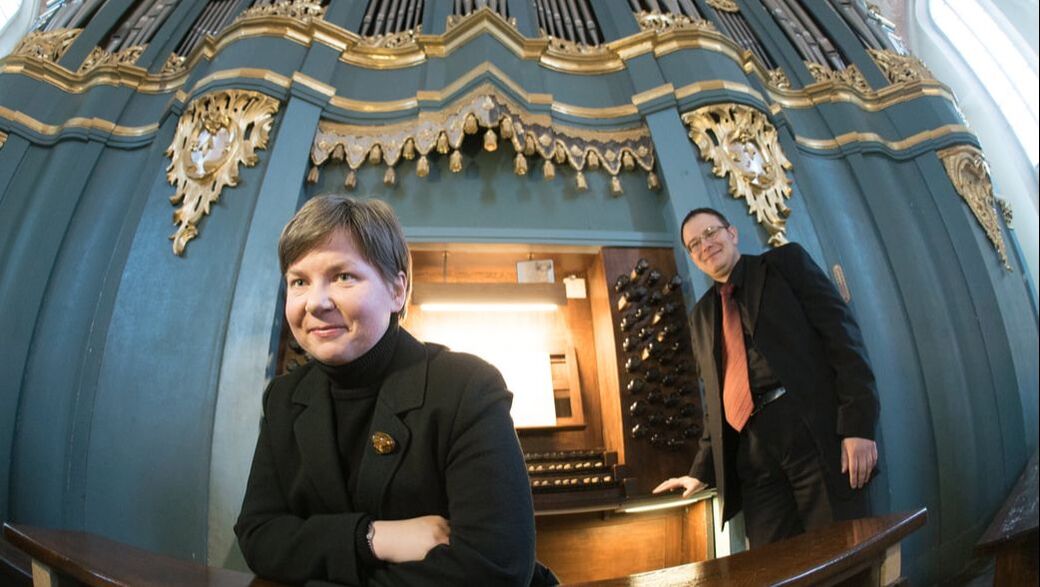
    PicturePhoto by Edgaras Kurauskas
    Authors
    Drs. Vidas Pinkevicius and Ausra Motuzaite-Pinkeviciene
    Organists of Vilnius University , creators of Secrets of Organ Playing.

    DONATE BY PAYPAL
    Picture
    Our Hauptwerk Setup:
    Don't have an organ at home? No problem - print out our paper organ manuals and pedals and start practicing today!

    RSS Feed

    Categories

    All
    100 Things
    18th Century Organ Music
    19th Century French Organ Music
    19th Century German Organ Music
    2016 Secrets Of Organ Playing Calendar
    20th Century English Organ Music
    20th Century French Organ Music
    20th Century Music
    Ach-gott
    Ach-gott-vom-himmel-sieh-darein
    Achieving-success
    Acoustics
    A Cuckoo
    Ad-wammes
    A Fear
    Affiliate-program
    Airi And Tuomas Saloniemi
    Aiusra Playing
    Alain Trouche
    Alexandre Guilmant Op. 1
    Alla Breve
    Alternate Toe Technique
    Alto Part
    Amateur Vs Pro
    A-mighty-fortress-is-our-god
    Andante From Sonata No. 1
    Andreas-spahn
    Angela-kraft-cross
    Anniversaries-of-organ-composers-2016
    Anthem Playing
    An Wasserflussen Babylon
    App
    Arjan-breukhoven
    Arnoldas-leleika
    Arpeggio
    Arrangement
    Articulate Legato
    Articulation
    Ask-vidas-and-ausra
    Ask-vidas-and-ausra
    As-thou-wilt
    Atonal-music
    Attracting-new-audience
    Auguste-descarres
    Auke-jongbloed
    Aus-meines-herzens-gunde
    Ausra-motuzaite-pinkeviciene
    Ausra-motuzaitepinkeviciene
    Ausras-playing
    Ave-verum
    Bach-a-young-rascal
    Bach-organ-music
    Bachs-birthday
    Bachs-chorale-harmonisation
    Bachs-circle
    Bachs-improvisation
    Bachs-manuscripts
    Bachs-music
    Bachs-organ-world
    Bachs-organ-world
    Bad-habits
    Bamboo-organ
    Baroque Organ Music
    Basecamp
    Basso-continuo
    Becoming-an-organist
    Becoming-cathedral-organist
    Beethoven
    Being-original
    Beth-zucchino
    Bitcoin
    Blind-organist
    Blockchain
    Blogging
    Boellmann
    Bonus-material
    Book-reviews
    Buxheimer-orgelbuch
    Buxtehude
    Bwv-1080
    Bwv-147
    Bwv-531
    Bwv-532
    Bwv-533
    Bwv-534
    Bwv-536
    Bwv-537
    Bwv-538
    Bwv-539
    Bwv-540
    Bwv-541
    Bwv-542
    Bwv-543
    Bwv-544
    Bwv-545
    Bwv-546
    Bwv-547
    Bwv-549
    Bwv-552
    Bwv-553-training
    Bwv-5621
    Bwv-564
    Bwv-5641
    Bwv-5652
    Bwv-566
    Bwv-570
    Bwv-572
    Bwv-577
    Bwv-578
    Bwv-582
    Bwv-590
    Bwv-630
    Bwv-639
    Bwv 659 Home Study Course
    Bwv-731
    Bwv 731 Home Study Course
    Bwv 731 Mini Course
    Bwv-767
    Bwv-957
    Cadences
    Canon-for-organ
    Cantata
    Carillon
    Carl-dodrill
    Carlotta-ferrari
    Carrilon
    Carson-cooman
    Cello-and-piano
    Cesar-franck
    Challenges
    Charles-spanner
    Charles-tournemire
    Children
    Choir Conducting
    Choir-organ
    Choral Accompaniments
    Choral-analysis
    Chorale-fantasias
    Chorale-prelude
    Choral-harmonisation
    Chord-analysis
    Chord-progressions
    Chords
    Christe
    Christmas-carols
    Christmas-for-organist
    Christmas-music
    Christophe-mantoux
    Christopher-henley
    Christus
    Chromaticisms
    Church Organist
    Church-organ-music
    Church-organ-playing
    Ciurlionis
    Classical Organ Music
    C-major-scale
    Coaching
    Colin-andrews
    Competition
    Complicated Rhythms
    Composing Organ Music
    Composition
    Compositions Of Ausra Motuzaite Pinkeviciene
    Compositions Of Ausra Motuzaitepinkeviciene
    Composition Tutorials
    Concentration
    Concert-organist
    Concert-trip
    Congregation
    Contemporary Organ Music
    Continuo Playing
    Coounterpoint
    Coronavirus
    Correcting-mistakes
    Cosmology
    Counterpoint
    Counterpoint Exercises
    Counting
    Creating-a-storm
    Creating-melody
    Creativity
    Crescendo Pedal
    Crista-miller
    Curiosity
    Custom-tutorials
    Daniel-moult
    Daniel-segner
    Daniel-vanden-broecke
    Danzig-organ-culture
    David-danielson-eaton
    David-knight
    Dedicace
    Der-ist-mein-leben
    Diego-innocenzi
    Different-editions
    Dina-ichina-denis-machankov
    Distrokid
    D-major-scale-in-the-pedals
    Domenico-severin
    Don-cook
    Dorian-toccata
    Double-harmonic-scale
    Downloading-scores
    Dylan-mccaig
    Early-fingering
    Early Hymn Playing
    Early-keyboard-technique
    Early-organ-music
    Early Pedal Technique
    Ear Training
    Ear Training Exercises
    E-book
    Ebook
    Edward-landin
    Electronic Organs
    Electropneumatic-organ
    Elevazione
    Eliminating Mistakes
    Email-delivery
    Emanate
    Emotion In Performance
    Emotions
    English-organ-music
    Enrico-presti
    Entrepreneurship
    Epiphany
    Erik-satie
    Es-ist-das-heil-uns-kommen-her
    Estampie
    Exams
    Exceptions Of Legato Articulation
    Exercises
    Fantasia-and-fugue-in-a-minor
    Fast Tempo
    Feelings
    Felipe-dominguez
    Fighting-woodworm
    Finding A Mentor
    Finding-help
    Finding Organ Teacher
    Finding-repertoire
    Finding-time
    Finger Crossing
    Finger Glissando
    Fingering
    Finger Substitution
    Following-the-rules
    Forkel-about-bach
    Francine-and-matthieu-latreille
    Francine-nguyensavaria
    Francoise-couperin
    Frank-mento
    Franz-buhler
    Franz-seydelmann
    Frederic-chopin
    Frederik-magle
    Freelancing
    French-classical-organ-music
    French-ornaments
    French Tradition Of Organ Improvisation
    Fugheta-bwv-696
    Fughetta
    Fugue
    Fugue-in-d-minor
    Fugue-on-bach
    Funeral-music
    Future-of-organ-art
    Gavin-black
    Gena-bedrosian
    Gene-bedient
    Genevan-psalter
    Georg-bohm
    George-ritchie
    Gerd-hennecke-markus-kumpf
    German-anthem
    German-baroque-organ-music
    Gershwin
    Getting-the-audience
    Gigout-toccata
    Giving-away-ideas
    Glenn-tompkins
    Goal Setting
    Goran-grahn
    Gotteslob-257
    Graham-twist
    Grand-plein-jeu
    Gregorian Chant
    Guy-bovet
    Hand And Feet Coordination
    Hand-bell-choir
    Handel
    Hand Independence
    Handling-gossips
    Hans-davidsson
    Hansola-ericsson
    Harmona 85
    Harmonium
    Harmonium-music
    Harmonization
    Harmonization Exercises
    Harmonizing-melody
    Harmony
    Harmony Exercise
    Harmony-for-organists
    Harpsichord
    Harpsichord-playing-for-organists
    Harsh-sounding-music
    Hauptwerk
    Having-fun
    Hayo-boerema
    Health Problems
    Healthy Practicing
    Heather-hernandez
    Historical-organs
    Hopes-and-fairs-of-2015
    How To Play The Organ
    Hugo-bakker
    Hugo-distler
    Hymn Analysis
    Hymn Harmonisation
    Hymn Improvisation
    Hymn Modulation
    Hymn Playing
    Hymn Playing Exercises
    Hymn-singing
    Ich-dank-dir
    Identifying-the-problem
    Imagination
    Immediate-results
    Improvisation
    Improvisation-contest
    Improvisation Exercises
    Improvisation-in-bach-style
    Improvisation Tutorials
    In-memoriam-jacques-van-ootmerssen
    Inside-of-the-organ
    Inspiration
    Instructional Videos
    Intabulations
    Interesting Organ Music Links
    International Organist Career
    Intervals
    Invention
    Invertible-counterpoint
    I-place-my-trust-in-god
    Italian-organ-music
    Italian-romantic-organ-music
    Italian-style
    Italy
    Jacquesnicolas-lemmens
    Ja-krygell-fugue-in-g-minor
    James-d-hicks
    James-flores
    James-kibbie
    James Michael Stevens
    James-spanner
    Janis-kalnins
    Jan-karman
    Jan-zwart
    Jay-farnes
    Jeanne-demessieux
    Jeannine-jordan
    Jeanpaul-imbert
    Jeff-perks
    Jehan-alain
    Jeremy-david-tarrant
    Jeremy-owens
    Jesse-eschbach
    Jesus-sinners-doth-receive
    Johann-adam-krygell
    Johann-adam-reincken
    Johann-christoph-bach
    Johannes-brahms
    Johann-ludwig-krebs
    Johann-nicolaus-hanff
    Johann-pachelbel
    John-boody
    John-higgins
    John-stanley
    Jonathan-embry
    Joris-verdin
    Jose-lidon
    Joseph-bonnet
    Joseph-rheinberger
    Jp-sweelinck
    Js-bach
    Js-bach
    Js-bach-bwv-525
    Js-bach-bwv-565
    Jsbach Music4f07d8816e
    Jsbach Musicb4ce245bde
    Jsbach Organ Music2fb25be29c
    Jsbach Organ Music91e7fe89b0
    Jsbach Organ Musicaf35993ca2
    Juozas-naujalis
    Kae-hannah-matsuda
    Kalle-toivio
    Katelyn-emerson
    Kathleen-scheide
    Kauffmann
    Keyboard Practice
    Kimberly-marshall
    Kinetic-theatre
    Krzyzstof-urbaniak
    Latvia
    Latvian-organ-culture
    Learning New Music
    Learn With Vidas
    Left Hand Technique
    Legato Playing
    Liebe-herre
    Liebster-jesu
    Liepaja
    Listeners
    Lists Of Organ Compositions
    Lithuanian Music
    Lithuanian Organ Music
    Lithuanian Organs
    Liturgical-musician
    Live-coaching
    Live Performance Vs Recording
    Livestream
    Loosing-job
    Lord-of-all-power-and-might
    Louisnicolas-clerambault
    Louis-vierne
    Luca-massaglia
    Luigi-pozzi
    Lydia-vroegindeveijn-erin-scheessele
    Lynne-davis
    Making-choices
    Making-goals
    Making-mistakes
    Making-music-together
    Making Organ Recordings
    Making-progress
    Manual Changes
    Manual-playing
    Manual Scales
    Manual-scales
    Manuscripts
    Marcel-dupre
    Marches-for-organ
    Marches-for-wedding
    Marco-lo-muscio
    Marie-rubis-bauer
    Marketing For Organists
    Mark-konewko
    Martin-jean
    Martin-pasi
    Martin-sander
    Mary Murrell And Quentin Faulkners
    Mary-murrell-and-quentin-faulkners
    Mastery
    Matthew-buller
    Matthew-cates
    Matthias-schneider
    Maurice-durufle
    Maurizio-croci
    Max-reger
    Mechanical Action Organs
    Mechanical-action-organs
    Melodica
    Melodic Dictation
    Melodic Dictation Exercises
    Memorisation
    Memorization
    Mendelssohn Organ Music
    Mental Attitude In Organ Playing
    Messiaen
    Meter
    Michael-bauer
    Michael-calabris
    Michael-dierks
    Michael-hammer
    Michael-johnston-and-john-apple
    Michael-wise
    Missing-links
    Mixing-colors
    Modality
    Moderato
    Modern-art
    Modern-music
    Modern Organ Music
    Modern-variation
    Modes
    Modulation
    Motivation
    Movie-music-for-organ
    Mozart
    Mozart-bach
    Musical Analysis
    Musical-clefs
    Music-blogging
    Music-for-easter
    Music-for-lent
    Music-forms
    Music-for-pentecost
    Music-for-pope-francis
    Music For Ukraine
    Music Of Johann Ludwig Krebs
    Musicoin
    Music Theory Exercises
    Music Theory For Organists
    Music-therapy
    Musing-with-children
    My Compositions
    My-jesus
    My-music
    Nativity-story
    Newsletter
    Nicholas-papadimitriou
    Nico-declerck
    Nicole-keller
    Nigel-williams
    Nordic-organ-music
    North German Baroque Organ Music
    Norwegian-organ-music
    Numbers
    Older-age
    Oliver-schulte
    Olivier-latry
    One Manual Organ
    On The Bench With Vidas
    Op-7
    Open-score
    Ordinary Touch
    Organ-accompaniment
    Organ And Choir Music
    Organ-and-recorder
    Organ-and-saxophone
    Organ And Voice
    Organ Arrangements
    Organ-as-an-instrument
    Organ-assistant
    Organ-bench
    Organ Building
    Organ-competition
    Organ Composition
    Organ-composition
    Organ-concert
    Organ Demonstration
    Organ Duet Recitals
    Organ Duets
    Organ Exercises
    Organ-exercises
    Organ Improvisation
    Organist Auditions
    Organist Career
    Organist Mistakes
    Organist Shoes
    Organist Success
    Organize Organ Festival
    Organ Maintenance
    Organ-mechanics
    Organ Method Books
    Organ-mirror
    Organ Music
    Organ-music-of-reformation-time
    Organ-pedagogy
    Organ Pedal Technique
    Organ-performance
    Organ Playing
    Organ-playing-level
    Organ Playing Mistakes
    Organ Playing Styles
    Organ Playing Tips
    Organ Playing Tutorial
    Organ Practice
    Organ-prelude
    Organ Recital Playing
    Organ Recitals
    Organ Registration
    Organ-registration
    Organ Repertoire
    Organ Restoration
    Organ Shoes
    Organ-stops
    Organ-teacher
    Organ Technique
    Organ-technologies
    Organ-touch
    Organ-tour
    Organ-training-material
    Organ Transposition
    Organ-tuning
    Organ-videos-from-italy
    Organ Wind System
    Orgelbuchlein
    Ornamentation
    Overcoming Frustration
    Owning-your-music
    Pachelbel
    Page-turnining
    Pain Issues
    Pamela-ruiter-feenstra
    Pamela-ruiterfeenstra
    Paper-organ
    Parenting-and-organ-playing
    Parish
    Paslek
    Passacaglia
    Pastor-de-lasala
    Patreon
    Paul-ayres
    Paul-cienniwa
    Paulius-grigonis
    Pedal Exercises
    Pedaling
    Pedal Playing
    Pedal-point
    Pedal Preparation
    Pedal Scales
    Pedal Technique
    Pedal-trills
    Pedal-tutorial
    Pedal-virtuoso-master-course
    Perfect-pitch
    Performance Anxiety
    Performance-anxiety
    Performance-practice
    Performing-organ-music
    Perseverance
    Personal Development
    Peter-holder
    Peter-sykes
    Peter-van-tour
    Phil-lehenbauer
    Phillip-parkey
    Phrasing
    Piano Exercises
    Piano Practice
    Piano Technique On The Organ
    Piano Touch
    Pieter-dirksen
    Pieter-van-dijk
    Pinkevicius-op-37
    Pipe-organ
    Planning Organ Recitals
    Playing-accelerandos
    Playing Attitude
    Playing-concert
    Playing-from-memory
    Playing-in-ensemble
    Playing-organ-at-an-older-age
    Playing-recital
    Playing With Confidence
    Playing-with-orchestra
    Playing-with-solo-instrument
    Podcast
    Poland
    Polyphonic-music
    Portable-hauptwerk-setup
    Portative Organ
    Positive-feedback
    Postlude
    Practice-guide
    Practice Instruments
    Practice Time
    Practicing Habits
    Praetorius
    Pray-for-paris
    Prelude-and-fugue
    Prelude-improvisation
    Prepare-ye-the-way-of-the-lord
    Preparing-for-an-organ-event
    Preparing For Recitals
    Preparing-for-recitals
    Preparing-for-the-premiere
    Principal-chorus
    Products
    Programing Organ Recitals
    Psalms
    Publishing
    Publishing-organ-music
    Randall-krum
    Recital-opportunities
    Recit-de-chrohorne
    Recording-complete-works-by-bach
    Recording-organ-music-and-bach
    Recording-yourself
    Reed Organ
    Reincken
    Renaissance Organ Music
    Repeated-notes
    Repetitions
    Replacing-organist
    Resistance
    Resolutions
    Rhetoric-figures
    Robert-mccormick
    Robert-morehead
    Robin-gullbrandsson
    Roger-sherman
    Romantic French Organ Music
    Romantic German Organ Music
    Romantic Organ Music
    Sacred Music
    Saint-cecilia
    Saint-lucia
    Samuel-delaunay
    Samuel-giddy
    Sara-schott
    Scales And Arpeggios
    Scales-and-arpeggios
    Scheidemann
    Scheidt
    Schublers-chorales
    Science-and-art
    Scott-elsholz
    Secrets-of-organ-playing
    Secrets-of-organ-playing-calendar-2017
    Secrets-of-organ-playing-contest
    Selecting-repertoire
    Selecting-tempo
    Self-doubts
    Selfdoubts
    Selfimprovementd902628688
    Sharing-your-talents
    Shopify
    Short-octave
    Short Pedal Board
    Sietze-de-vries
    Sigh-motive
    Sight Reading
    Sightreading9d750d820d
    Sightreadinga5764d655d
    Silencing-the-crowd
    Sinfonia
    Singing-your-music
    Slawomir-zubrzycki
    Slow-and-easy
    Small Hands
    Software-program
    Sonata
    Sonata-form
    Sophieveronique-caucheferchoplin
    Sound Delay
    Soundrop
    Spanish-fingering
    Spinet Organs
    Split-keys
    Stanislaw-moniuszko
    Steemit
    Success
    Swedish-organ-culture
    Sweelinck Organ Music
    Swell-pedal
    Sydney Organ Journal
    Taking-a-break
    Talking-on-the-radio
    Taming-the-instrument
    Teaching
    Teaching-organ-playing
    Teisutis-makacinas
    Tempo
    Testimonials
    Tetrachord
    Thanking-someone
    Thanksgiving
    The-art-of-organ-building
    The-art-of-organ-improvisation
    The-arts-ministry-in-the-21st-century
    The-largest-tracker-organ
    The-notebook-of-anna-magdalena-bach
    Thierry-mechler
    Thomas-aberg
    Thomas-leslie
    Time Management
    Tobitha-moldenhauer
    Toccata
    Toccata-in-c-major
    Tom-trenney
    Tonality
    Top 5 Lists
    Tore-bjorn-larsen
    Total Organist
    Tournemire
    Toy-stops
    Tracker-organ
    Training
    Transcription
    Transposition
    Treatises
    Trio
    Trios
    Trio Sonatas
    Triplets
    Trust-and-authority
    Trying-different-organs
    Trying-new-things
    Tune-in-tenor
    Tuning
    Turning Pages
    Tutor
    Two-kinds-of-organists
    Two-part-training
    Tyler-boehmer
    Ugly-music
    Uncomfortable Organs
    Unda Maris Studio
    Unpredictable-organist
    Variations
    Vidas-pinkevicius
    Vidas Pinkevicius Compositions
    Vidas-pinkevicius-op-2
    Vidas-playing
    Video-training
    Viernes-final-from-the-symphony-no1
    Viola-organistica
    Virtual Organs
    Visiting-casparinis-organ
    Voluntary
    Vom-himmel-sieh-darein
    Walter-gatti
    Wayne-leupold
    Webinars
    Wedding-playing
    Weston-jennings
    Widor
    Widor-toccata
    Wilhelm-friedemann-bach
    William-mason
    William-whitehead
    Wir-sind-hier
    Wolff-von-ross
    Wolfram-kampffmeyer
    Workshop
    World-class-artist
    Worldclass-artist
    Writing-fugues
    Wyatt-smith
    Year-of-2014
    Year-review-2014
    You-tube
    Youtube

    Archives

    November 2025
    October 2025
    September 2025
    August 2025
    July 2025
    June 2025
    May 2025
    April 2025
    March 2025
    February 2025
    January 2025
    December 2024
    November 2024
    October 2024
    September 2024
    August 2024
    July 2024
    June 2024
    May 2024
    April 2024
    March 2024
    February 2024
    January 2024
    December 2023
    November 2023
    October 2023
    September 2023
    August 2023
    July 2023
    June 2023
    May 2023
    April 2023
    March 2023
    February 2023
    January 2023
    December 2022
    November 2022
    October 2022
    September 2022
    August 2022
    July 2022
    June 2022
    May 2022
    April 2022
    March 2022
    February 2022
    January 2022
    December 2021
    November 2021
    October 2021
    September 2021
    August 2021
    July 2021
    June 2021
    May 2021
    April 2021
    March 2021
    February 2021
    January 2021
    December 2020
    November 2020
    October 2020
    September 2020
    August 2020
    July 2020
    June 2020
    May 2020
    April 2020
    March 2020
    February 2020
    January 2020
    December 2019
    November 2019
    October 2019
    September 2019
    August 2019
    July 2019
    June 2019
    May 2019
    April 2019
    March 2019
    February 2019
    January 2019
    December 2018
    November 2018
    October 2018
    September 2018
    August 2018
    July 2018
    June 2018
    May 2018
    April 2018
    March 2018
    February 2018
    January 2018
    December 2017
    November 2017
    October 2017
    September 2017
    August 2017
    July 2017
    June 2017
    May 2017
    April 2017
    March 2017
    February 2017
    January 2017
    December 2016
    November 2016
    October 2016
    September 2016
    August 2016
    July 2016
    June 2016
    May 2016
    April 2016
    March 2016
    February 2016
    January 2016
    December 2015
    November 2015
    October 2015
    September 2015
    August 2015
    July 2015
    June 2015
    May 2015
    April 2015
    March 2015
    February 2015
    January 2015
    December 2014
    November 2014
    October 2014
    September 2014
    August 2014
    July 2014
    June 2014
    May 2014
    April 2014
    March 2014
    February 2014
    January 2014
    December 2013
    November 2013
    October 2013
    September 2013
    August 2013
    July 2013
    June 2013
    May 2013
    April 2013
    March 2013
    February 2013
    January 2013
    December 2012
    November 2012
    October 2012
    September 2012
    August 2012
    July 2012
    June 2012
    May 2012
    April 2012
    March 2012
    February 2012
    January 2012
    December 2011

This site participates in the SheetMusicPlus, Amazon, Thomann and other affiliate programs, the proceeds of which keep it free for anyone to read.
​Copyright  © 2011-2025 by Vidas Pinkevicius and Ausra Motuzaite-Pinkeviciene.
​Terms of Service and Privacy Policy
  • HOME
  • BLOG
  • STORE
  • TOTAL ORGANIST
  • TOOLS
  • YOUTUBE
  • COMPOSITIONS
  • COACHING
  • ABOUT
  • RECITALS
  • PHOTOS
  • CONTACT
  • LOGIN
  • LT
  • AUSRA'S YOUTUBE