|
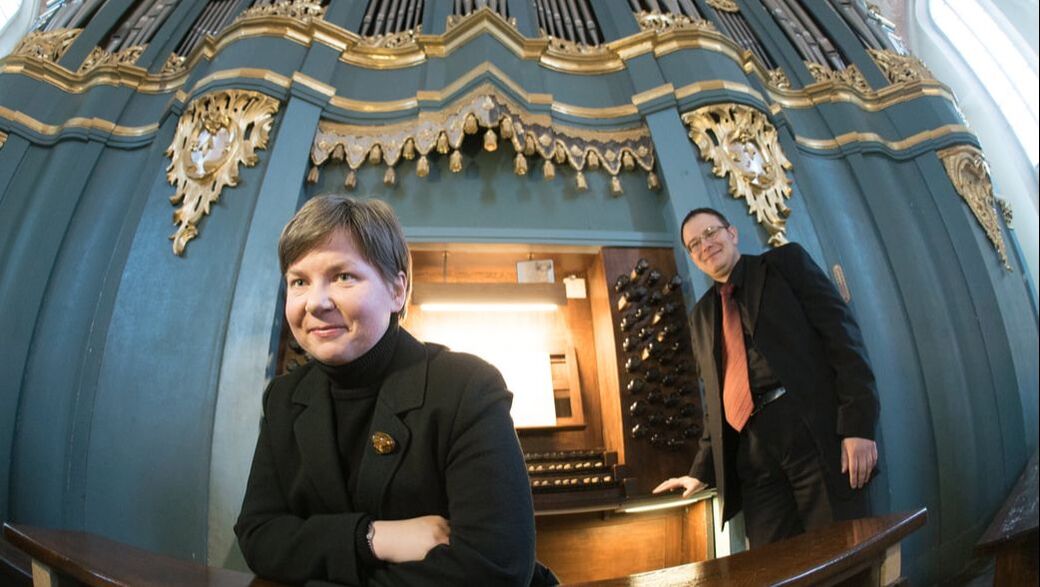
Vidas: Hello and welcome to Secrets of Organ Playing Podcast! Ausra: This is a show dedicated to helping you become a better organist. V: We’re your hosts Vidas Pinkevicius... A: ...and Ausra Motuzaite-Pinkeviciene. V: We have over 25 years of experience of playing the organ A: ...and we’ve been teaching thousands of organists online from 89 countries since 2011. V: So now let’s jump in and get started with the podcast for today. A: We hope you’ll enjoy it! V: Hi guys! This is Vidas. A: And Ausra. V: Let’s start episode 786 of Secrets of Organ Playing Podcast. This question was sent by Jeovane, and he asks: Did the Soviets allow sacred music? This question reminds me of Arvo Part’s Credo, banned for "political provocation". V: It’s a broad question, right Ausra? A: Yes, it’s very broad and… V: Where shall be start? A: Well, they’re already independent for a few decades now, so it’s not so pleasant to look back at the past. V: But there was this time, for example, where organists, we had to promise the authorities not to work at the church, not to play masses for example. They were raised to be concert organists only, not liturgical organists. A: Yes, but you know, we haven’t experienced the worst of the regime, because when we were teenagers, Lithuania regained independence thanks to Iceland, so… V: What do you mean? A: Because it was the first country to recognize our independence de facto. Not like United States or other big countries. So we will eternally be grateful to Iceland for that. But yes, it was a hard time for church music, of course. V: We were growing up in the time of, just before independence, right? We were, regained independence in 1990, so we were teenagers at the time. So what we remember from the late Soviet time was already the end of the regime, or drawing close to the end of the regime I think. A: Yes, because we were born, Brezhnev was the Secretary of the Soviet Union, first Secretary of the Soviet Union. It was a period of great stagnation, economy was dropping down, then shortly we had, what, Andropov and Chernenko, and later on Gorbachev came to power, and he started his glasnost and perestroika, and things started to change. But yeah. You know, it's a really hard topic. V: You know, the reason Soviets banned sacred music was that they wanted to have an atheist society obviously. A: Well because where would you have performed like sacred music? Most of the churches were closed. Like some insignificant small ones were open, like in villages, but other churches were closed. Like the church of St. John’s for example was the Museum of Science, then church of St. Casimir in Vilnius was Museum of Atheism. And the cathedral in Vilnius was the art gallery at that time. So, but it had an organ, concert organ, and it had organ concerts. V: Yes, and going to those concerts weekly, I think signified to people, like a resistance to the regime. They sometimes probably were even imagining that they were going to the church, not the museum. A: Yes. But right now it’s really hard to talk about this, because all of this can come back, and even in a worse shape. So, if you guys are living far from East Europe, then it’s probably hard for you to understand what the Baltic countries are experiencing now. Looking and watching and observing what is happening in Ukraine on a daily basis. It’s really, let’s say now not the sacred music that concerns me the most, but how to stay safe. V: So, to stay safe, we need Ukraine to win this terrible war, basically. Good? A: Yes. There is that famous saying, do you remember that, about the muse? V: “Muses are silent when the guns are sounding.” A: Yeah. So, guns are not sounding yet in Lithuania, but who knows? V: On the other hand, muses need to be activated even during troubled times, because people need hope. A: Well, well, you know. V: Look about Ukraine. When the war, the full scale invasion in 2022 happened, there was a big big interest for Ukrainian music in the world, right? And Ukrainian musicians tried to spread the word about Ukrainian music in the world, not only as cultural communication with the outside world, but also as a political statement, too. So this is important to keep that in mind, that in times of crisis, artists are, artists have responsibility to speak up. A: Yes, if you would be taken to an army to fight, I would see what kind of art would you create. And some resisted that, doing that. And fighting, especially for the beliefs that you did not believe. For example, Hugo Distler. He resisted to go to the Nazi’s army and committed suicide. So… V: Yeah. And of course, Arvo Pӓrt immigrated to Germany. A: Sure, he escaped from the Soviet Union, so he was able to freely compose music that he wanted to compose. Sacred music. V: Composers who stayed had to conform to the rules of the regime, not creating anything sacred publicly… A: And not creating anything, you know… V: …criticizing the regime. A: Yeah. V: Sometimes patriotic music could be allowed, but only if they would depict fights with the Germans, right? Like opera "Pilėnai" by Vytautas Klova. A: Yes, yes, but when you are talking about fights with the Germans, probably people imagine the fights with Nazis, but it was time that was… V: 100 years before that. A: Yes. V: But for Soviets? A: We were fighting with Crusades. V: Crusaders, yeah. Teutonic knights. A Because although we were already baptized, the Crusades would still cover from Germanic countries and would fight us. V: Yes, and for Soviets, that was OK, because you see the connection between Crusaders and Germans and they would use that toward their propaganda. So. But yeah, lots of people had to conform. Some of them who didn’t conform had to emigrate. And some who didn’t conform and didn’t emigrate probably stopped creating. A: Well basically, most of our intelligence… V: Intellectuals. A: Intellectuals, yes, were sent to Siberia and those who had money, so that’s the Bourgeois, they emigrated. And most of what stayed were just like middle and lower class people who had neither very good education nor lots of money. So mediocrity basically. Of course with some exceptions. V: And even with people who stayed, even though they, the most intelligent people were sent to Siberia, right, we still regained somehow independence and…we were never… A: Well, because you know the best, the worst part of the Soviet time was when Stalin was still alive. That time was really scary and really precious and… V: Brutal. A: Very brutal time really. But then Stalin died and Kruschev came to power it became a little bit lighter because amnesty was… V: …issued for political prisoners. A: Issued for, yes, and quite a few of them actually came back home, who were still alive, obviously. Because many of them died simply because of very hard life conditions. But yes, then it started to be somewhat lighter. But still not a good time for sacred music. V: So for our parents, they who were born after the World War II, post war times… A: Or during the war… V: ..they were the hardest probably. A: Yes. V: And for our grandparents, they were even able to live in the independent Lithuania time between the wars, between 1918 and between 1940 there was a period when Lithuania was again independent, and they still remembered that time. But then of course the war came, occupation, 50 years, and some of our grandparents didn’t even live long enough to see the independence again. A: Yes. Only one of my grandmas, out of four grandparents, saw the independence. V: My mom’s, my grandmother from my mom’s side didn’t live long enough. A: Yeah. V: So let’s just hope these times will never come again, come back again, and let’s appreciate what we have, freedoms what we have, that we can talk freely on camera for you guys. A: And compose whatever music we want. V: Yes. A: Yes, yes. For church, and to worship what we want. V: Because it was not always like this. A: Yes, and of course you could attend actually church, in Soviet time. But if you would do that, then you definitely would be either kicked out from school or university, or could never apply for a good job, and, well… V: Your career would be over. A: Yes, and you could also end up in a mental institution, because this was also one of the torture tools for the Soviets, actually to pick up the human being and for the resistance, to put him or her into the mental hospital, start pump her or him with the medicine, and basically to make him or her mad. V: Right. Okay guys. This was Vidas. A: And Ausra. V: Please send us more of your questions. We love helping you grow as an organist. And remember, when you practice, A: Miracles happen. V: This podcast is supported by Total Organist - the most comprehensive organ training program online. A: It has hundreds of courses, coaching and practice materials for every area of organ playing, thousands of instructional videos and PDF's. You will NOT find more value anywhere else online... V: Total Organist helps you to master any piece, perfect your technique, develop your sight-reading skills, and improvise or compose your own music and much much more… A: Sign up and begin your training today at organduo.lt and click on Total Organist. And of course, you will get the 1st month free too. You can cancel anytime. V: If you like our organ music, you can also support us on Buy Me a Coffee platform and get early access: A: Find out more at https://buymeacoffee.com/organduo By Ausra Motuzaite-Pinkeviciene (get free updates of new posts here)
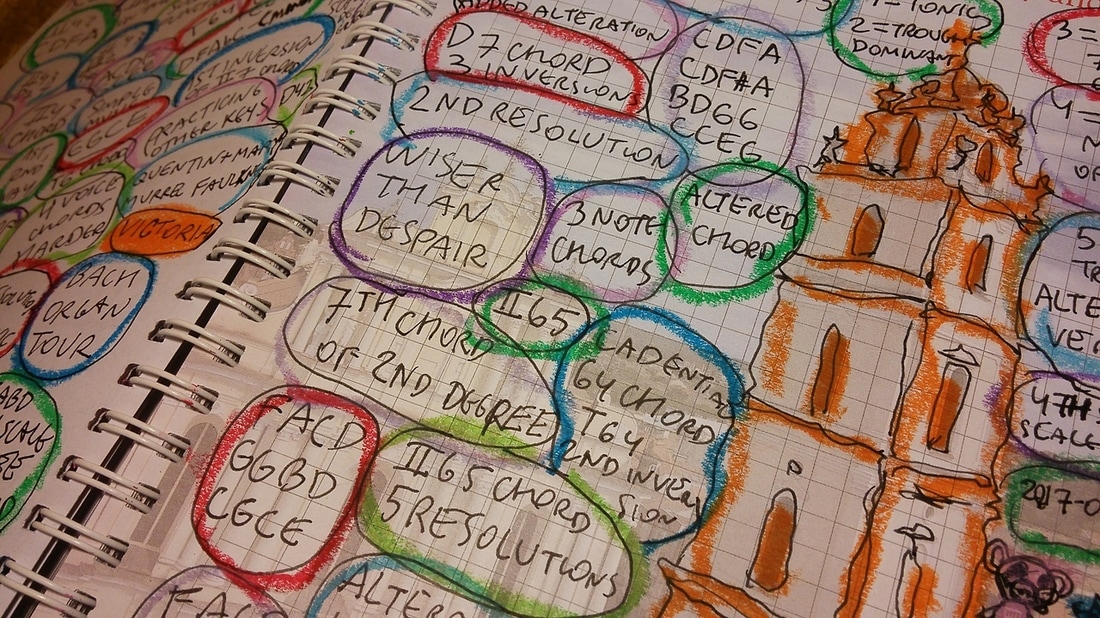
We had a harmony lesson with Victoria yesterday in which she told me she's reading Wiser Than Despair by Quentin Faulkner about the evolution of ideas between music and the Christian Church throughout history. This brought me some amazing memories when Vidas and I were studying at UNL and took this class with Prof. Faulkner about music and the church. He really is one of world's foremost experts in this field (along with being an excellent Bach scholar). Here's an excellent idea from this book of why do we sing in church: Because we cannot remain silent when we encounter the transcendental or the divine and words alone are not enough to express our sense of awe. So the communities that struggle with singing in church may also struggle with this sense of awe and gratitude. People who gather to church services because of pure tradition but they don't believe fully of what kind of miracles are taking place, don't want to engage and participate fully in the service and in the singing of hymns from their hearts. On the first class Prof. Faulkner had us write an essay about how would music liturgy look like in our ideal church service. It was interesting to explore our worldview of what kind of music should be included in the ideal church service situation, if we were completely limitless. What would your ideal music in the church situation look like? By Ausra Motuzaite-Pinkeviciene (get free updates of new posts here)
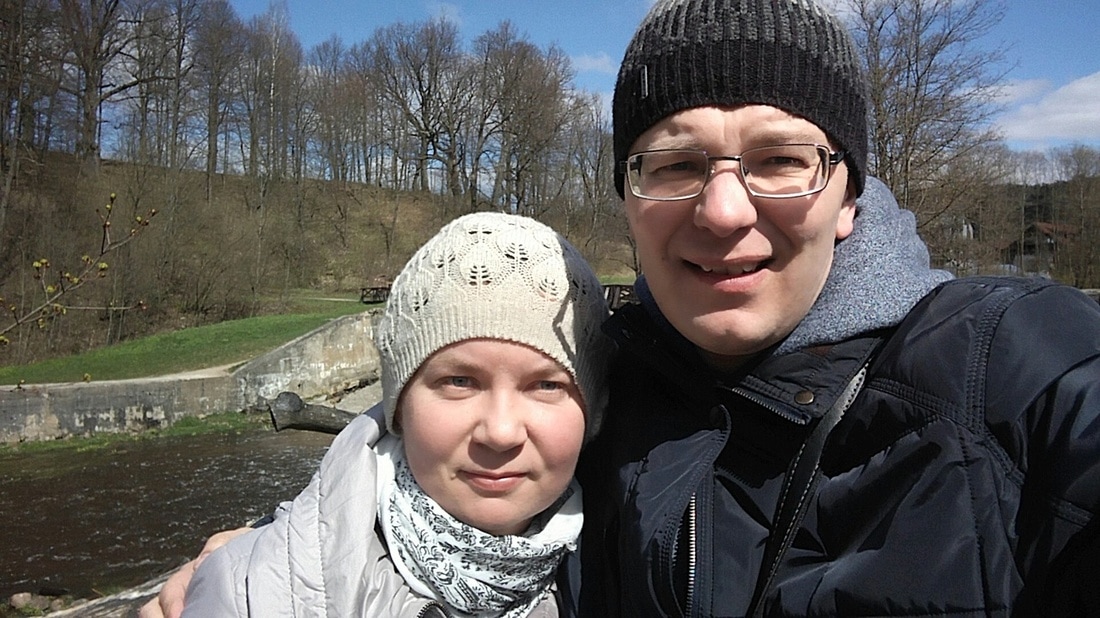
Some 17 years ago Vidas and I we were leading this vocal group "Gloria" at Vilnius University St. John's church and sung the first surviving Requiem Mass by Johannes Ockeghem (1410-1497). It might have been the first time this Mass was performed in Lithuania, who knows? The music is enchanting. We first fell in love with this piece by listening to the recording of the Hilliard Ensemble. This Kyrie heals and calms your soul and even perhaps your body, doesn't it? Here's how it sounds on the organ when Vidas recorded it while practicing for More Palatino recital. So for me this event from last Saturday brought some amazing memories from those 17 years ago. By the way, Vidas has recorded a live training on Facebook about some of the things he learned from this recital. If you're not on Facebook, I hope you'll enjoy it on YouTube. Also this morning added two bonus video trainings to his mini course on how to find more opportunities for organ recital. As of this writing, 60 organists have joined it so far. Have to run now and practice Kyrie from Bach's Clavierubung III and later prepare for my harmony lesson with Victoria. Organ practice really moves you beyond mundane existence. I hope you'll do it before you hit the bed tonight. What a joy! PS the above picture is from our yesterday's hike at Belmontas where we walked almost 8000 steps. This place is just 5 minutes drive from Vilnius center and perfect for people who want to get out of town really quick. It was very relaxing for both of us after our strenuous Saturday - Vidas played this recital and I sat in Musicology exams at school from 8:30 AM until 5:00 PM while listening to students SING and play modulations and sequences, sight-read melodies and talk about music history issues. By Vidas Pinkevicius (get free updates of new posts here)
Welcome to Secrets of Organ Playing Podcast #59! How to develop lives through music ministry? Listen to my conversation with Dr. Scott Elsholz who currently serves as Music Director/Organist at the Catholic Church in Bartlett, TN, where he leads a vibrant music ministry of five vocal and instrumental ensembles. Welcome to Secrets of Organ Playing Podcast #52!
How the work as an organist helps to communicate the ideals of Universal church in music? Listen to the conversation with Dr. Marie Rubis Bauer who is Archdiocesan Director of Music – Cathedral Organist at Saint Cecilia Cathedral in Omaha, Nebraska which houses the landmark Martin Pasi, Op. 14 dual temperament pipe organ. Welcome to Secrets of Organ Playing Podcast #48!
What does it take to raise sacred music leaders in the 21st century? Listen to the conversation with Dr. Martin Jean who is Professor of Organ and the Director of Institute of Sacred Music at Yale University. By Vidas Pinkevicius So you decided to come out of hiding and play an organ recital? Good for you. It's not too much fun living under the rock.
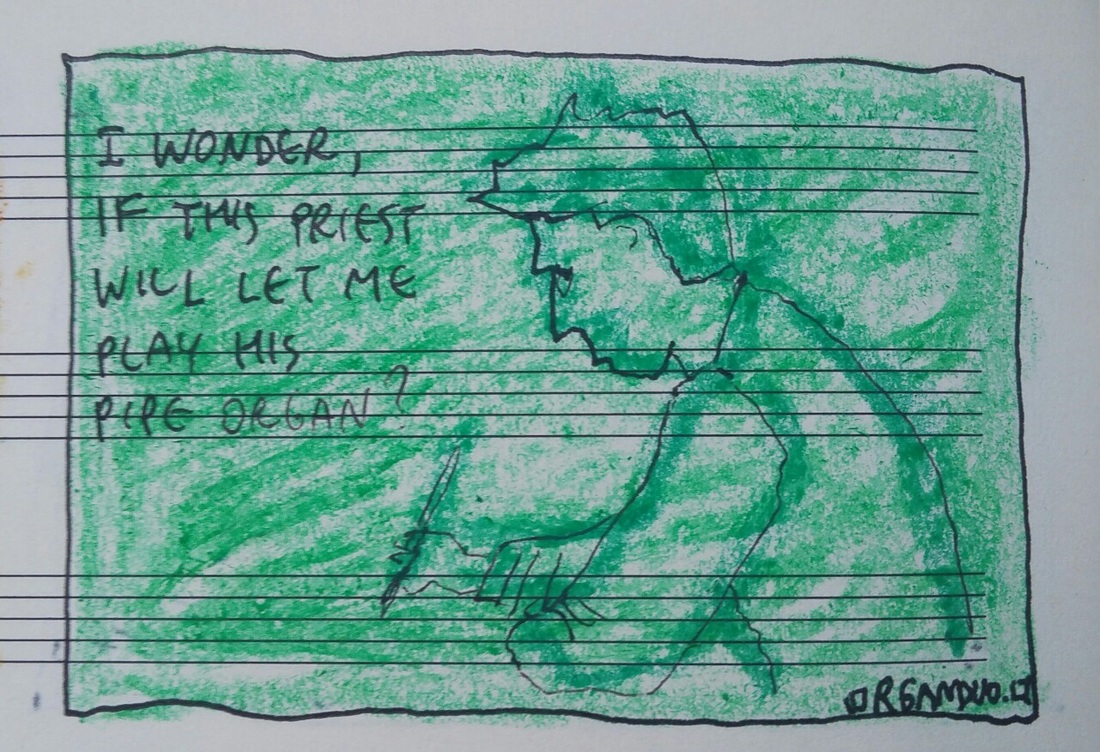
The first thing you need to do is to choose an instrument. If you look around your area, most likely you will find at least several organs in churches within 50 mile radius. To increase your chances of securing the place, I recommend you get to know the local organist, go to church service, compliment him or her for the work he or she does. Then you can introduce yourself and say you would love to play a recital in that church. When the church doesn't have the organist, sometimes you can get to know the priest or a pastor of that congregation. Introduce yourself and your idea to play a recital. Make sure you satisfy the idea of "What's in it for me?" which will likely pop into priest's or organist's head. Try to be honest and tell the truth what you can do for the congregation. Something along the lines, that you want to give the people joy of experiencing sacred music, lift up their spirits etc. Never forget that your recital is not about you but about the people you want to serve. Also remember that there are priests who don't want to hear secular music in their church so make sure you talk their language, too. The spell-word is "sacred music". |
DON'T MISS A THING! FREE UPDATES BY EMAIL.Thank you!You have successfully joined our subscriber list. Photo by Edgaras Kurauskas
Authors
Drs. Vidas Pinkevicius and Ausra Motuzaite-Pinkeviciene Organists of Vilnius University , creators of Secrets of Organ Playing. Our Hauptwerk Setup:
Don't have an organ at home? No problem - print out our paper organ manuals and pedals and start practicing today!
Categories
All
Archives
November 2025
|

RSS Feed