|
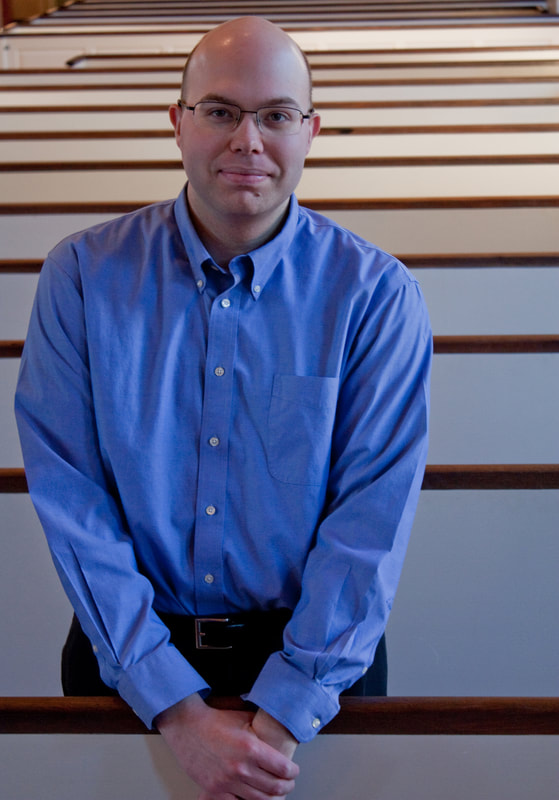
Welcome to Secrets of Organ Playing Podcast No. 728! It's Vidas and usually we do these conversations with Ausra but today I’m delighted to speak with a very special guest—someone whose music has brought inspiration, beauty, and calm to listeners and performers around the world. Dr. James Michael Stevens, joining us from Nashville, Tennessee, is a remarkably prolific composer, pianist, and educator. He currently serves as the Dean of the School of Music at Welch College, and his creative output is nothing short of astonishing. With thousands of published compositions, Dr. Stevens has developed a signature style that blends lyrical grace, spiritual depth, and heartfelt simplicity. Many of his works, especially his meditative piano pieces, have become favorites among church musicians, educators, and recording artists alike. His music resonates deeply with people looking for comfort, peace, and emotional honesty—and more recently, it has also found a home in the repertoires of organists. In this episode, we’ll explore how James approaches composition and stays so remarkably productive. We’ll discuss how he balances creative flow with discipline, what inspires the emotional tone of his music, and how sacred themes guide his writing. We’ll also talk about his experiences in music education, the challenges and rewards of publishing, and what advice he would give to aspiring composers and church musicians today. Enjoy the conversation! James Michael Stevens Website: https://www.jamesmichaelstevens.com/welcome.html James Michael Stevens All music at Sheet Music Plus: https://www.sheetmusicplus.com/en/category/arrangeme/?q=James+M+Stevens+Music+ASCAP?&aff_id=605733 James Michael Stevens Organ Solo Music at Sheet Music Plus: https://www.sheetmusicplus.com/en/category/instruments/piano-and-keyboard/organ/organ-solo/?prefn1=artists_composers&prefv1=James+Michael+Stevens&aff_id=454957 James Michael Stevens on Spotify: https://open.spotify.com/artist/7oMHPMTAKVFtskAXuQ4u1k?si=vk9WqmheTUWEfnAAJpUGIA You can support this channel by becoming a member here: https://www.youtube.com/channel/UCO4K3_6QVJI_HlI5PCFQqtg/join If you like what I do, you can buy me some coffee: https://www.buymeacoffee.com/organduo PayPal: https://PayPal.Me/VPinkevicius We support Ukraine: https://www.blue-yellow.lt/en My Hauptwerk setup: https://www.organduo.lt/tools.html Total Organist - the most comprehensive organ training program online: https://www.organduo.lt/total-organist Secrets of Organ Playing - When You Practice, Miracles Happen! https://organduo.lt Listen to my organ playing on Spotify: https://open.spotify.com/artist/0ckKPIvTWucoN3CZwGodCO?si=YWy7_0HqRvaZwBcovL-
Welcome to Secrets of Organ Playing Podcast 526!
Today's guest Carson Cooman who is an American composer with a catalog of hundreds of works in many forms—from solo instrumental pieces to operas, and from orchestral works to hymn tunes. He was already a guest on our podcast in episode 84 talking about creating and promoting contemporary music. His music has been performed on all six inhabited continents in venues that range from the stage of Carnegie Hall to the basket of a hot air balloon. Cooman’s music appears on over forty recordings, including more than twenty complete CDs on the Naxos, Albany, Artek, Gothic, Divine Art, Métier, Diversions, Convivium, Altarus, MSR Classics, Raven, and Zimbel labels. Cooman’s primary composition studies were with Bernard Rands, Judith Weir, Alan Fletcher, and James Willey. As an active concert organist, Cooman specializes in the performance of contemporary music. Over 300 new compositions by more than 100 international composers have been written for him, and his organ performances can be heard on a number of CD releases and more than 2,000 recordings available online. Cooman is also a writer on musical subjects, producing articles and reviews frequently for a number of international publications. He serves as an active consultant on music business matters to composers and performing organizations, specializing particularly in the area of composer estates and archives. In this conversation, Carson shares his insights about how he has managed to create on average one composition every week for 27 years. Enjoy and share your comments below. Listen to the conversation And don't forget to help spread the word about the SOP Podcast by sharing it with your organist friends. Thanks for caring. Relevant links: http://carsoncooman.com Carson Cooman's YouTube Channel Vidas: Hi guys, this is Vidas.
Ausra: And Ausra. V: Let’s start Episode 204 of #AskVidasAndAusra podcast. This question was sent by Kae, who is helping us to transcribe some of the podcasts into text and make them into blog posts. So, she wrote a question: Labas Vidai ir Aušra! She knows a little Lithuanian. So this means, “Hi Vidas and Ausra!” She continues: I was inspired by AVA192 to make a video of my newest creation--a lyric song, which meant I would have to sing (*shudder*)--and post it on YouTube for the whole world to see! I had a couple thoughts about it that I'll share with you: I try to make my lyrics as non-specific as possible, probably for 2 reasons. 1) I want them to be universally accessible. But 2) I think I also try to hide my personal life, even though songwriting involves putting it on display for the whole world--so I make lyrics that don't give away specific details. It's a weird balance I have to find, isn't it? ...Or do I? Another thing I was thinking about is: I want to encourage people to use and change and improve any music I create. I don't believe in copyrighting the kind of stuff I create, which is mostly keyboard music. What do you think about that? (I arrived at this conclusion after I discovered a beautiful piano concerto by Władysław Żeleński, and the library in Poland that is sitting on the sheet music wouldn't let me even borrow it for my school's concerto competition. Only one or two people have ever recorded it, and I suspect only those people have ever been granted access to copies of the music. How do they expect to honor Żeleński, their own country, or music itself, if they treat it like it's not music and leave it to gather dust behind red tape? No wonder this composer is so obscure! I would be so mad if a library hoarded up my copyrighted music after my death and refused to share it.) And she gives the video link, which you can also click and view: https://youtu.be/x8W8njPFT7Y And she writes further: Thank you for everything you do. The world is really a better place, with people like you. I can't wait to meet you in person this summer! Love, Kae So, Ausra, Kae is coming to Vilnius on the occasion of the song festival we’ll have in July! Thousands or even tens of thousands of singers will come, who have Lithuanian background, at least, from all over the world; and sing at this huge festivity, because this year the entire Baltic States--Lithuania, Latvia, and Estonia--celebrate the centennial of their independence! A: Yes, it will be very exciting, and we are looking forward to see Kae in Lithuania. I think we will have a great experience, and I hope she will like it here. V: There is so much to see and enjoy, I think. Each Baltic country has their own singing traditions; and together, we are quite unique in the entire world with these song festivities--massive festivals where thousands of people gather every four years, I think. So wonderful. So, Kae started to compose music... A: Yes, it’s wonderful; I think it’s wonderful. V: And not only compose, which a lot of people do, but she started to share her music. A: Yes. V: Which only a few people do. A: And it’s wonderful that she creates her own texts. V: Right. A: Lyrics... V: Lyrics. A: Because I remember the day when I was back in high school, I loved poetry. V: Uh-huh? A: So I what I would do is, I would pick up some kind of lyrics, and I would sit down at the piano, and would play whatever accompaniment, you know, just based on basic chords; and would sing those poems. And it was fun. I had a great time. V: Did you used to write down those lyrics in your own notebooks? A: Yes. V: Did you keep them? A: Yes, I still have them. There are like, 4 volumes of them! V: Do you look at them now, sometimes? A: No, because you know, actually, I don’t have so much time--and actually because I memorized almost all of them, and I could still recite maybe half of them from memory. V: Wow...You have excellent memory! A: Well...it’s not so good as it was, you know, 20 years ago...But still, still, it’s okay! V: Is it a useful skill, to have good memory? A: Yes, it’s a very useful skill. V: To remember everything? A: But sometimes not, because you would like to forget some things. V: To remember good things, and forget bad things? A: That’s right. V: Excellent. So, back to Kae. She created the lyrics non-specific, right? And generally accessible, to be universal, so that other people could relate to them, right?--not about her own life. In part, also, she wanted to protect her personal life. A: Mhm, yes. V: Right? Because if she puts something on YouTube, then thousands of people might see and hear and comment, and those comments might hurt. (Of course, you’re always free to disable those comments, if you don’t think that they matter. They can vent somewhere else.) A: That’s true. V: But I don’t know...What would you recommend Kae--to create something very personal, like, very very vulnerable, you know--about her own feelings or experiences, or something more universal? A: Well, you could look at two sides to this issue. Because on one hand, I understand why she wants to create more universal lyrics that it would be accessible to everybody and understandable to everybody, and she would not expose herself so much to the public. V: Mhmm. A: And it’s okay. But on the other hand, I think that if you would create more personal things, they might excite other people more… V: Personal? A: Yes, personal. V: Mhmm. Because they understand that you’re being vulnerable. A: And they might--your lyrics might touch their hearts more. V: Exactly. In your experience from reading poetry, do poets sometimes write personal-related poems, or are more of them general, universal? A: Um...they do it both ways. But yes, that poetry which shows the inner feelings excites more. V: Mhm. A: Because, look, we seem like each of us is unique--and yes, each of us is unique--but I think we all share the same feelings; and you know, everybody always has certain good experience and bad experience. You know, many of us experience love, and… V: Mhmm? A: And other things. So… V: In order to protect herself, she could simply publish them under a pseudonym. A: Yes, that would be a great idea. That’s what many poets did in their lifetime. Or writers. V: Of course, if she publishes a video, then her face is visible, right? But she could point the camera away from her face, right? A: Yes, if you would do, like, a profile picture...then you wouldn’t be so well recognized. V: Or maybe just looking at the score, facing the score, so that people will see the score. Or hands. A: True, true, true, yes. Yes. So there is always a way to make it work. V: And I’m looking now at the YouTube channel by Kae, and she has quite a few pieces arranged and performed--from West Side Story...an Estonian folk dance arranged for 2 pianos...right? Even some Polish composer, Leopold Godowsky. This is interesting; I think she could continue. Do you think, Ausra, that YouTube today is the best place to share your creativity, or not? A: Well, it’s a good place to share it, because so many people use it... V: Mhm. A: And you would have a bit larger auditorium. But also, I would share it on Musicoin. V: The audio file? A: Yes. Because you would get back more out of Musicoin, I would say. V: Especially if the platform grows, then the value of that coin grows, too. Then your entire revenue also grows. And put it on Steemit, too, because they have a DSound application which accepts audio files; or the video version of Steemit is DTube. It’s like YouTube, but on the Steemit blockchain. So you get also some revenue out of that when someone uploads your content. A: Yeah, so you have a few options; so do it. V: And it’s only the beginning of blockchain-based social networks and content monetization techniques; so...I’m sure there will be many others, and maybe better platforms to post your content in the future. So always be on the lookout for revolutions in this field, because blockchain is the future, I think, of media, and people should not neglect this, right? Because it directly rewards creators. So...and...Kae doesn’t believe in copyright. Do you believe in copyright, Ausra? A: Yes and no. Because in some cases it gets frustrating, like Kae describes about Władysław Żeleński. V: Mhm. A: But on the other hand, you have to protect your work somehow. V: Mhmm. That’s the thing--now, you can have not public domain music, but a Creative Commons License, which means you are free to share and distribute, and only you have to give credit to the person who created it. But it’s free, right, to do anything you want with it. But the thing with Creative Commons is that you still cannot really monetize it, right? You can’t live off your art. So there has to be some other way to monetize your brain, so to say. And one of those ways is probably blockchain-based, right, that we mentioned earlier. So copyright means that if somebody picks up that you have performed, let’s say, Władysław Żeleński’s concerto--so then, if this is copyrighted, a portion of your revenue will go to the copyright owner of that work. Maybe relatives of Władysław Żeleński. Or...I don’t know if the library has copyright. Probably not. But maybe the publisher has. I don’t know. So, in part, yes: people have to be rewarded for their work; that’s why we have copyright for 50 or 75 years after the composer’s death. But that’s a sometimes tricky situation; because you don’t always know if the person has performed or not--right, Ausra? A: Yes, that’s true. V: But now, blockchain-based platforms for copyrighted content are also being created, so people should check out them soon, also. It’s a new paradigm now, with blockchain--they can automatize everything and make it so easy to check and track, it’s like distributed a digital ledger, where everything you put on that ledger stays forever; and you can’t say, “No, no, I didn’t perform the concerto by Władysław Żeleński!” because the ledger says you did, you know? A: Huh. Yes--no way to hide! V: Mhm, yeah. Excellent. I just would add--I believe that creators should get paid for their work. And in what form or what shape, it depends. A: But yes, you also need to share your work; because otherwise it will just die. V: Exactly. If you hide--if you always protect it under copyright--nobody will notice it. So it’s a balance. Maybe when you are just starting, you could share them more freely; and when you are more advanced and mature, you could start to, I don’t know, hold back a little. A: Yes; that, I think, is a good suggestion. V: Right. And it’s always good to monetize your creativity, and control it--not give away copyright to other entities, like institutions or companies, because they will abuse your rights for sure. A: Yes, that’s true. V: Okay! Thank you guys. Keep creating, keep sharing your music--and not only music, you can do anything you want today. And keep sending us your wonderful questions, we love helping you grow. And remember, when you practice… A: Miracles happen. How many important composers do we know who only created music when they got a commission? None.
How many important painters do we know who only painted their art when they got a commission? None. How many important writers do we know who only wrote when they got a commission? None. We can't possibly create art which has a lasting impact, if all we do is to wait until somebody pays us for it. We can't possibly explore the boundaries of what works and what doesn't at school, if all we do is to prepare homework which was assigned to us. The age of following instructions is ending. The age of figuring out what to do next has come. |
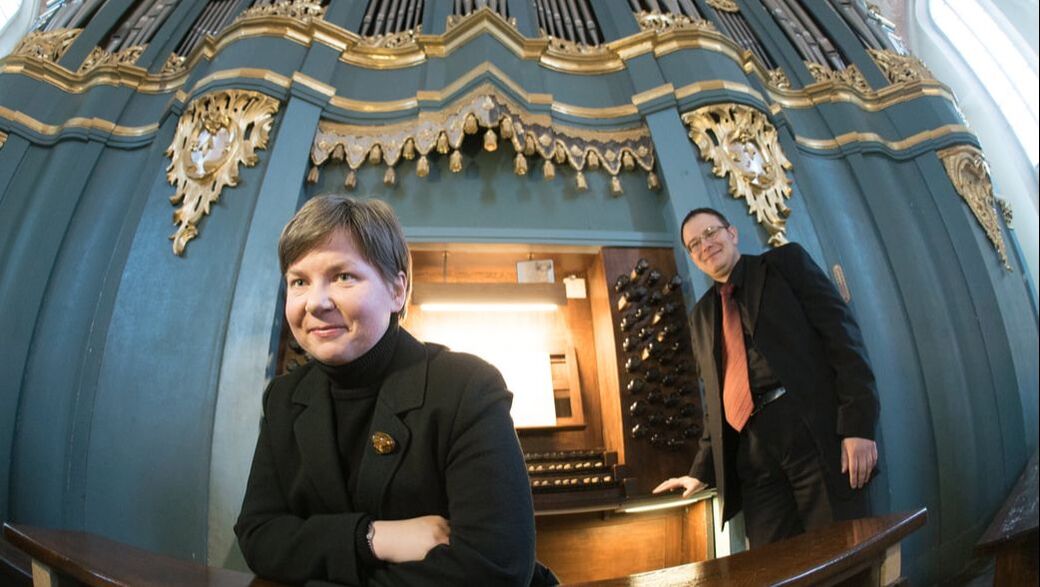
DON'T MISS A THING! FREE UPDATES BY EMAIL.Thank you!You have successfully joined our subscriber list. Photo by Edgaras Kurauskas
Authors
Drs. Vidas Pinkevicius and Ausra Motuzaite-Pinkeviciene Organists of Vilnius University , creators of Secrets of Organ Playing. Our Hauptwerk Setup:
Don't have an organ at home? No problem - print out our paper organ manuals and pedals and start practicing today!
Categories
All
Archives
November 2025
|


RSS Feed