|
Have you experienced frustration when practicing organ playing? This feeling can arise from incorrect practice habits and can inhibit the advancement of an organist. Moreover, many organists after feeling frustrated may skip practice sessions for a long time and eventually quit practicing the organ altogether. In this article, I will give you 3 tips which will help you not to get frustrated when practicing the organ.
1. Remember your goal. Usually frustration sets in when we are unsatisfied with our progress or the results we are seeing. However, all this negative feeling can be avoided if you remember your goal, dream or vision as an organist. It may be something general, like becoming a good organist or developing a solid organ technique or more specific, like learning any particular piece that you like or preparing for an upcoming recital or church service. Try to resist the thoughts that let you down and keep your mind focused on your goal. This way your mistakes and challenges will not seem as daunting to you. 2. Make a plan for your daily practice. Once you determine what your goal is, you have to create a plan of your daily steps to reach this goal. In other words, you will have to know what kind of specific action you have to take every day in order for your dream to become a reality. For example, imagine that your piece is 3 pages long, each page having 4 lines which makes total of 12 lines. Your daily plan might be to learn 1 line per day and repeat the previously learned lines. As you can see, it will take 12 days to learn the entire piece and a few more to make your playing fluent. Of course, if you want to progress faster, you can always put in more practice time and learn more lines per day. 3. Take a slow tempo. Usually when we make a mistake it is because our practicing tempo is too fast. Here you have to understand the difference between practice and performance. You see, although faster tempo might be required when performing any particular piece in public, you have to play differently when practicing alone. The best tempo for practicing is the tempo in which you can avoid making mistakes. So check how many mistakes you are making and slow down accordingly until they disappear. It really is that simple. You will not feel any frustration this way. On the contrary, you might feel some pride that you are seeing the results you want. Do not worry about the concert tempo. You will reach it gradually when you are ready. As the saying goes, slow practice makes fast progress. Most importantly, remember you goal, stick to your plan and small challenges will seem insignificant to you. Remember that every practice session brings you closer to your goal one step at a time. By the way, do you want to learn to play the King of Instruments - the pipe organ? If so, download my FREE video guide: "How to Master Any Organ Composition" in which I will show you my EXACT steps, techniques, and methods that I use to practice, learn and master any piece of organ music.
Comments
By Vidas Pinkevicius (get free updates of new posts here)
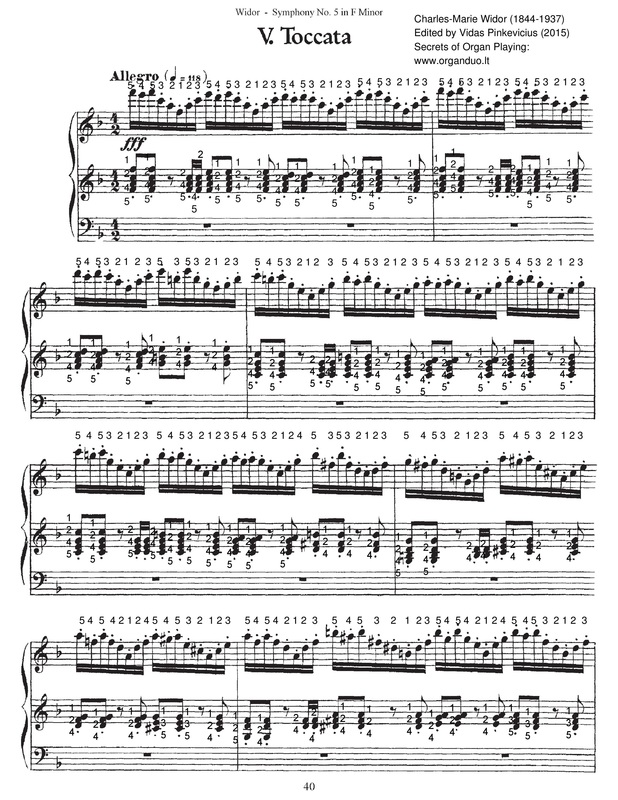
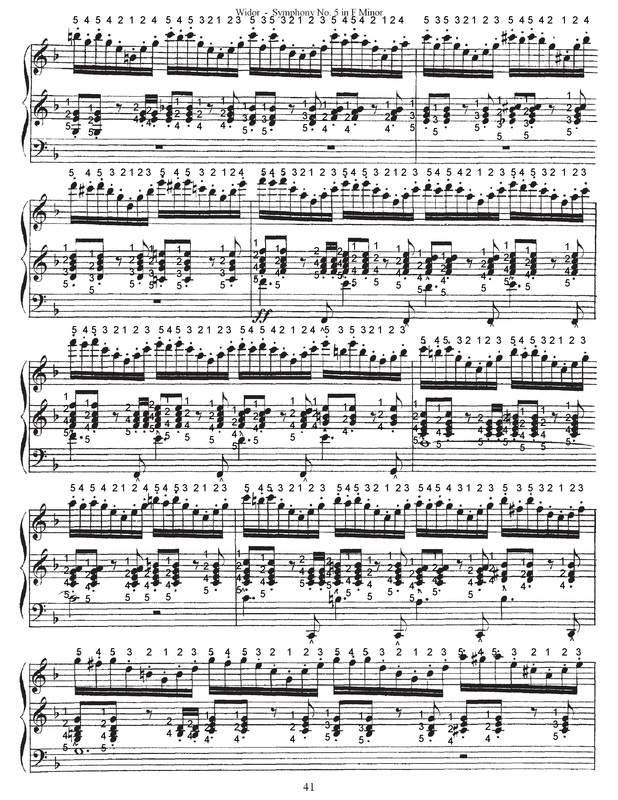
Toccata for organ from the 5th symphony by Charles-Marie Widor is one of the most popular organ works, second only to Bach's D minor toccata. Rapid tempo, perpetual toccata figuration and splendid harmonies make it a perfect piece for recital, postlude, or wedding recessional. It is a dream for many organists to be able to play this piece. In this article, I will give you tips on playing Widor's toccata on the organ. Practice on the piano. Since this toccata requires a fairly well-developed piano technique, I suggest you practice this piece on the piano. If you play it on the piano, you will soon notice any uneven notes. Try to work on making all notes sound even and precise. The more you practice this piece on the piano, the more comfortable it will be to play it on the organ. Do not rush. Practice this piece in a slow tempo because it is easy to play it too fast. If you play it in a fast tempo, chances are that the notes will sound sloppy and your playing will lack precision and clarity. Even after you master this toccata and perform it in public, take a rather moderate tempo. By playing too fast, it is a high risk of missing important structural and harmonic elements. In fact, Widor himself criticized organists, who play this piece too fast. Observe precise staccato articulation. When playing the sixteenth-note figuration, try to achieve the precise staccato. Many organists miss this important point and slur the notes which in a rapid tempo and vast acoustical space will lack clarity. The eighth notes in the other hand should also be played staccato. The best way to perform staccato in a French tradition is by shortening the notes by a half, e.g. by playing sixteenth notes and making sixteenth note rests. Option: play one octave lower. If you perform this piece on the organ which has screamy and high-pitched mixtures and very few 8' foundation stops in the manuals, you can play it one octave lower without the 16' stops. Playing this way will give your organ more gravity and the mixture sound will not be as screamy. This toccata is especially suited for such a trick because the left hand never goes below tenor C. Play scales in double thirds and sixths on the piano. As you probably are aware, this toccata requires to have a fairly advanced piano technique. This means, that your fingers must have the necessary dexterity, evenness, and independence. One of the best ways to achieve such a skill is by regularly practicing scales in double thirds and sixths on the piano. In order to successfully master such scales in all major and minor keys, you will have to use finger substitution technique to achieve a perfect legato. If you follow my suggestions and practice this toccata in a slow tempo, observing a precise staccato on the piano, and develop your technique by playing scales in double thirds and sixths, you can successfully master this wonderful composition. Just be patient, have your goal in mind, stick to your plan and your performance level of this toccata will become much higher. You can use my practice score of Widor's Toccata with complete fingering and pedaling for efficient practice. Because much of organ music consist of polyphonic works with several
independent melodies, it is important for the organist to be able to hear and play each voice independently. If you focus on emphasizing different voices, your playing will become very clear and much more interesting to the listeners. By hearing each voice independently you will let your audience appreciate the structure and the thematic material on a higher degree. However, if you want to achieve such level in organ playing, you must know the correct way of practicing polyphonic compositions. Practice solo voices first. If you take an unfamiliar polyphonic organ work, such as fugue and try to play it as written right from the beginning, there is a high chance of missing many important details, such as articulation and phrasing. In addition, you might make many mistakes. However, if you truly want to master a polyphonic piece and play each line independently, I suggest you practice solo voices first. Practicing this way might save you a lot of energy and you will avoid frustration. In fact, you will master each line separately and know how the piece is put together. This way you will build a solid foundation for your further practice. Make sure your fingering, pedaling, rhythms, articulation, phrasing and ornaments are precise in each voice. Practice two-voice and three-voice combinations. After you master each voice part separately and are able to play them at least three times correctly in a row, work on two-voice and three-voice combinations. This step will be more difficult to master, so take a slow and comfortable tempo in which you can play without mistakes. The most challenging combination will be the one which requires to play the left hand and pedal part together. Coordinate the releases. After you can play three voices together in a polyphonic composition, make sure your releases are precise. This means that you have to treat each voice separately with correct articulation. Often suspensions and syncopations in one voice must be played using a different articulation from other voices. Work repeatedly in fragments. The best way to practice either each voice or various voice combinations is in smaller episodes or fragments. This way you can either prevent making mistakes or to correct them immediately. Therefore, I suggest you avoid playing long episodes or the entire work, at least in the beginning stages of your practice. Note that you must try to notice and execute such details, as articulation, ornaments, fingering, pedaling and phrasing correctly. This way your voices will sound very precise and independent. By the way, do you want to learn to play the King of Instruments - the pipe organ? If so, download my FREE video guide: "How to Master Any Organ Composition" in which I will show you my EXACT steps, techniques, and methods that I use to practice, learn and master any piece of organ music. Are you struggling with your pedal technique and have a temptation to look at your feet while playing the organ? It is important that you overcome the need of looking at the pedals and focus your attention to the organ score. If you are experiencing such problems while playing pedals, it means you are at the stage of development as an organist when you don’t know your pedal board well enough. Therefore, you naturally want to look at the pedals. The sooner you get over this challenge, the better your organ technique will become. So, how to look at the score and be able to play the correct notes with your feet?
Play with the inside of your feet and point your knees inward. Very often organists who struggle with their pedal technique place their feet in such a way that the pedals are depressed by the outside of the feet. Such habit is especially common among men. This is because men are normally larger than women and they have different sitting habits. Usually when men sit, they do not keep their knees together. If you sit this way on the organ bench, this simply means, you will depress the pedals with the outside of the feet. However, the precision in pedal playing can be attained if you play with the inside of your feet. So this means, that even men have to try to keep the knees together or at least point their knees inward. Therefore, try to depress the pedals with the inside portion of your feet or with the big toes. If you play this way, gradually your technique will become much more precise, you will get used to the pedal board faster and will not need to look at your feet. Do not use force. It is not uncommon for organists with previous piano experience to use excess power in their playing. They transfer their background from piano to the organ and press the keys in the same manner. On the piano, dynamics can be achieved by using more or less power but on the organ this method is useless because the keyboard does not react to the applied force. We can see the same situation in pedal playing when organists depress the pedals with so much energy that there are unnecessary sounds. Such playing can even damage the pedal action. Is you use too much force when playing with your feet, you might feel some strain and tension in your legs and ankles which might lead to mistakes. So, if you want your pedal technique to become very precise, play the pedals mezzo piano. In other words, use only the amount of energy which is needed to depress the pedals and not more. If you want to achieve the level when you will feel and know your pedal board very well, focus on the organ score, point your knees inward, play with the inside portion of your feet, and do not use unnecessary power. If you are interested in perfecting your pedal technique, an invaluable resource is Organ Technique: Modern and Early by George Ritchie and George Stauffer. By the way, do you want to learn to play the King of Instruments - the pipe organ? If so, download my FREE video guide: "How to Master Any Organ Composition" in which I will show you my EXACT steps, techniques, and methods that I use to practice, learn and master any piece of organ music. If you are new to the organ playing, chances are that you naturally try to look down to your feet while playing pedals. This is not a very good approach which will hinder your progress as an organist. However, it is not easy to resist this temptation and to look at the score instead at the pedals. You must know the correct way of practicing which leads to success in pedal playing. In this article, I will give you 3 tips, which will help you to feel the pedal board without looking.
Practice repeatedly in fragments. This advice is very important. Whenever you play a challenging pedal line and make a mistake, try to resist the temptation of going all the way through the composition without stopping. Instead, force yourself to pay attention to details and work in smaller fragments. This is a great way to get used to the pedal board and stop looking at the feet. Practice smaller units, correct your mistakes, and make your pedal playing automatic. Do not lift your feet off the pedal board. As you practice your fragments of pedal lines, make sure that your feet stays in contact with the pedals at all times. When you have to move your feet to the next position, slide them while slightly touching the pedals with the toes. This way of playing is like reading books by touching the pages written in Braille language with the fingertips for the blind people. They can feel the shapes of the special signs which then convert to words in their minds. By the way, there are many blind organists who manage to play the organ successfully because they feel the keyboards. The same applies in pedal playing – feel the pedal board and you will know the right position of particular notes. Stay close to sharp keys when playing naturals and play on the edge of sharp keys. When you play the pedals and stay in contact with the pedal board you can try another technique which will help to make your playing very precise without the need of looking at your feet. If you need to press a natural key, stay close to the sharps. In fact, you can almost touch the sharp keys when you play the naturals. When you play the sharp keys, do not go too deep with your toes, just place your feet on the edge of the keys. This way it will be easier to orient yourself on the pedal board and gradually the need of looking at your feet will diminish. I understand that it may seem like a tiresome way of practicing but I can assure you from personal experience that it is well worth the effort. Just keep your mind focused on your goal and in a few months you will start noticing some tremendous changes in your pedal technique. If you are interested in perfecting your pedal technique, an invaluable resource is Organ Technique: Modern and Early by George Ritchie and George Stauffer. By the way, do you want to learn to play the King of Instruments - the pipe organ? If so, download my FREE video guide: "How to Master Any Organ Composition" in which I will show you my EXACT steps, techniques, and methods that I use to practice, learn and master any piece of organ music. Because pedal playing is a new skill for all beginner organists, the vast majority of them have a strong temptation to look down at their feet while playing pedals. However, the looking at the feet should be avoided because it inhibits the technical advancement of the organist. Just as playing with the fingers it is advisable to look at the organ score instead at one’s fingers the same applies when playing the pedals. In this article, I will give you the advice which will help you to play good notes on the pedals without looking down at your feet.
Write in pedaling. In order to avoid confusion and accidental pedaling which leads to mistakes and unnecessary tension, I strongly advice to write in all your pedaling. Pencil in your pedaling with the signs for toes and heels (left or right foot). If you write in your pedaling regularly in your scores, you will start to feel the predictable patterns which will help you make the right choices even without writing down your pedaling. However, pencil in the pedaling at least until you are comfortable playing with correct pedaling the Baroque compositions. For Romantic and modern organ music, it is best to write in the pedaling in every score. Use pedal preparation. This technique will increase your pedal playing abilities enormously. Simply prepare your feet for the next note in advance. For example, as you release the note in the pedal part, slide it instantly into position for the next note. Do not play the next note, of course, but let it rest and wait for its turn. In order to be implemented correctly, this technique must be practiced over and over. By the way, it is a very powerful technique which makes your pedal playing automatic without the need of conscious thinking. This, of course, reduces the chances of mistakes dramatically and you will not need to look at your feet while you are playing. At first, you will find that it is hard to remember the position for the next note. In this case, write in your pedal preparation in parentheses. Later, with the advancement of your pedal technique you will start to feel the next note in advance and will not need to think about the preparation at all. If you use my advice and write in your pedaling and practice pedal preparation regularly in your daily practice, after short few months you will begin to notice that the temptation to look down at your feet gradually lessens. This will happen because you will know your pedal board much better than before. If you are interested in perfecting your pedal technique, an invaluable resource is Organ Technique: Modern and Early by George Ritchie and George Stauffer. By the way, do you want to learn to play the King of Instruments - the pipe organ? If so, download my FREE video guide: "How to Master Any Organ Composition" in which I will show you my EXACT steps, techniques, and methods that I use to practice, learn and master any piece of organ music. Beginner organists usually struggle with reading three staves of organ scores. Although they may have some experience in reading piano scores with two lines, adding just one more line for the pedals seems a daunting task. Not only they lack the technical ability to play the right notes on the pedal board but also they have to face another challenge – their left hand naturally wants to play the bottom line. Prospective organists might get frustrated with these difficulties and quit practicing the organ. However, there is an easier way to read three lines of organ music which will help you to simplify this task.
Practice 1 line at a time first. Since 3 stave notation is new to beginner organists, it is not surprising why they find it so difficult to read all the lines together at first. However, we should remember that even two lines of piano scores were difficult to read at first. Therefore, I suggest you practice one line at a time in the beginning. For example, when you take a new organ composition, don’t attempt to play the entire organ score with pedals, but practice the right hand part at first, then play the left hand part, and, finally, master the pedal part. This will be the hardest task. Practice 2 lines later. When you can play your solo parts at least three times in a row correctly without hesitations and interruptions, put 2 lines together and practice them. You can work in the following dispositions: the right hand and the left hand, the right hand and pedal part, and the left hand and the pedal part. As in the previous step, try to achieve some fluency and play each disposition without mistakes, with the right articulation at least 3 times in a row correctly. The most difficult disposition undoubtedly will be the left hand and pedal part. Here you will have to repeat the most times. Stop at each measure when you make a mistake, go back a few measures and correct each mistake. Finally, practice 3 lines. If you are honest and practice sincerely the two previous steps this final step will not be as hard as it have seemed to you originally. Now you are ready to play all parts together. Again, work in smaller fragments for best results and correct your mistakes. Note that every step requires practicing in a slow and comfortable tempo. Although the concert tempo might be much faster, don’t worry about it at first. You will be able to play up to tempo naturally when you are ready. Practice sight-reading the same way. If you are interested in reading music at the organ, you can try practicing 371 Harmonized Chorales by Bach. Although their are short but their harmonies are spectacular. We know that Bach never wrote a treatise on harmony. But these harmonisations are like a real textbook of harmony. Many theorists after Bach analyzed them and developed a system of tonal harmony. You can practice these chorales (with bass part on the pedals) to improve your sight-reading abilities at the organ. Apply the same above steps and play solo voices, combinations of 2 voices, combinations of 3 voices, and finally, the entire four part texture. If you really want to develop unbeatable sight-reading skills, check out my systematic Organ Sight-Reading Master Course. To complete the practice material of this course will only take 15 minutes a day of practice but you will learn to sight-read any piece of organ music effortlessly. Every organist wants to achieve a high degree of fluency while playing the organ. It is rewarding to be able to perform pieces without mistakes, without faltering, and without stopping. However, achieving this level requires a very specific way of practicing without which your chances to succeed are not as high. In this article, I will give you five tips which will help you to play the organ smoothly, freely, and without interruptions.
Practice in a slow tempo. When you start practicing a new organ composition, it is crucial to play in such a tempo in which you could avoid making mistakes. Usually, this means practicing very slowly. Don‘t worry so much about the concert tempo. You will be able to achieve it naturally, when you are ready. Practice in voice combinations. If you have a challenging polyphonic piece, such as a fugue in front of you, it is best not to jump and play all the voices right away but patiently practice in solo voices first. Usually this is not too difficult. When you can play your piece fluently in separate voices, start working in two-voice combinations. Later advance to three voices and only at the end, when you can play this version correctly at least three times in a row practice all the voices together. Choose compositions of your ability. Although it is tempting to play your favorite pieces right from the beginning, always think about your technical ability level. So choose the pieces wisely. This may mean that some of your favorite organ works must wait until you are ready for them. For example, if your dream is to be able to play Widor‘s Toccata, start with easier French Romantic pieces first. Practice in fragments repeatedly. I have seen many of my students play organ music from the beginning until the end in their practice. Although this is not necessarily an incorrect approach, the best way to practice is to choose shorter episodes or fragments and practice them over and over. This way you can correct your mistakes right away and develop the right practicing habits. It is not too difficult to decide when you have practiced this fragment enough times. I suggest a minimum of 3 correct repetitions in a row. Write in fingering and pedaling. Although this particular point might be a little boring, but trust me, it is well worth your time and effort. You see, whenever you encounter a problematic place and make a mistake, chances are that you need to think about more efficient fingering and pedaling. Do not play the organ music with accidental fingerings. Since your fingers can remember the particular passages, it is very wise to reinforce the correct fingering. Since pedal playing is a new skill for every beginner organist, writing in pedaling is even more important. An excellent resource on using early fingerings is the book "Early Keyboard Fingerings", ed. Maria Boxall. As you probably understood, practicing this way requires certain amount of patience. It is important not to give up and start playing the organ without a method or a system. Always have your goal or a dream in mind of what you are trying to accomplish. Know that every correct practice brings you closer to your goal one step at a time. By the way, do you want to learn to play the King of Instruments - the pipe organ? If so, download my FREE video guide: "How to Master Any Organ Composition" in which I will show you my EXACT steps, techniques, and methods that I use to practice, learn and master any piece of organ music.   Bach's last unfinished composition "The Art of Fugue" is a masterwork of the highest degree. This work is a multi-movement composition based on a single theme. In this masterpiece, Bach perfected the fugue as a genre and exhausted all possibilities that this theme can offer. Although the composer never wrote a treatise on the fugue, this cycle serves as a textbook for creating fugues. In fact, many theorists who lived after Bach based their treatises precisely on this masterpiece. I think you will enjoy watching the opening clip from a documentary about Bach's The Art of Fugue, filmed in Arizona, Tennessee and Leipzig, Germany. In this video, the ultimate Bach scholar Christoph Wolff introduces this composition and in the background you will hear the leading Bach performer George Ritchie‘s interpretation of the Contrapunctus I on the Richards, Fowkes & Co. organ, Op. 14, completed in 2006 at Pinnacle Presbyterian Church, Scottsdale, Arizona. It is amazing to hear with how much calmness and tranquility G.Ritchie performs this Contrapuntus. After listening to this piece, I thought that the incredible vocal quality of the Principal 8 on this organ was simply astonishing. This documentary is part of the package of 2 CDs and a 3¼-hour DVD entitled „Bach Art of Fugue“. The DVD contains two films about J. S. Bach: 1) In 90 minutes, "Desert Fugue" features a leading Bach scholar Christoph Wolff discussing Bach's ultimate intellectual and musical creation, The Art of Fugue. As well, "Desert Fugue" includes George Ritchie's comments on the work and an interview with American organbuilders Ralph Richards and Bruce Fowkes regarding their Opus 14 built in the style of organs played by Bach for most of his career in and near central Germany (with emphasis on Thuringian and Saxon builders Gottfried Silbermann, Zacharias Hildebrandt, and Gottfried Trost). Briefly, the DVD compares the sound of a Dutch/North German organ with the very different, almost orchestral, sound of a central German organ of Bach's day. 2) George Ritchie lectures on Bach's compositional techniques used in the Art of Fugue, with musical demonstrations. He discusses the entire work and each of the 14 contrapuncti in an hour and 51 minutes. The two CDs contain: 1) George Ritchie's performance of the entire Art of Fugue, BWV 1080, on the Richards, Fowkes & Co. organ, Op. 14, completed in 2006 at Pinnacle Presbyterian Church, Scottsdale, Arizona, and built in the style known to Bach in his central German homeland. 2) George Ritchie's performance of Contrapunctus 14, Fuga a 3 Soggetti, as completed by Helmut Walcha 3) The CDs also contain George Ritchie's performances of other late works of Bach: Ricercar a 6 from the Musical Offering, BWV 1079, played on the Bedient organ at Cornerstone Church, Lincoln, Nebraska. Vor deinen Thron tret' ich hiermit BWV 668 and Canonic Variations on Vom Himmel hoch, BWV 769a, played on the Taylor & Boody organ at Holy Cross College, Worcester, Mass.; 6 Schübler Chorales played on the Brombaugh organ at Southern Adventist University, Collegedale, Tenn. A booklet of this DVD/CD set "Bach Art of Fugue“ includes stoplists, organ photos, registrations, definitions of musical terms, notes on the all of the works, and other useful information. After watching these two films, I felt I was transported to the immortal world of J.S.Bach and wished that this feeling never end. By the way, do you want to learn to play the King of Instruments - the pipe organ? If so, download my FREE video guide: "How to Master Any Organ Composition" in which I will show you my EXACT steps, techniques, and methods that I use to practice, learn and master any piece of organ music. Although organ and piano share the same order of keys on the keyboard, they have more differences than similarities in terms of touch. For prospective organists who have previous piano experience it is important to recognize and appreciate these differences. Understanding the different physical feeling when pressing piano and organ keys is vital for successful adaptation to the organ. Because of these differences piano players who want to start playing the organ must approach this instrument and press the keys not in the same manner as they would on the piano. In this article, I will describe the four main differences in touch between organ and piano.
If you have previous piano experience and are trying to play the organ, a great resource is Organ Technique: Modern and Early by George Ritchie and George Stauffer. You can also download my FREE video guide: "How to Master Any Organ Composition" in which I will show you my EXACT steps, techniques, and methods that I use to practice, learn and master any piece of organ music. |
 DON'T MISS A THING! FREE UPDATES BY EMAIL.
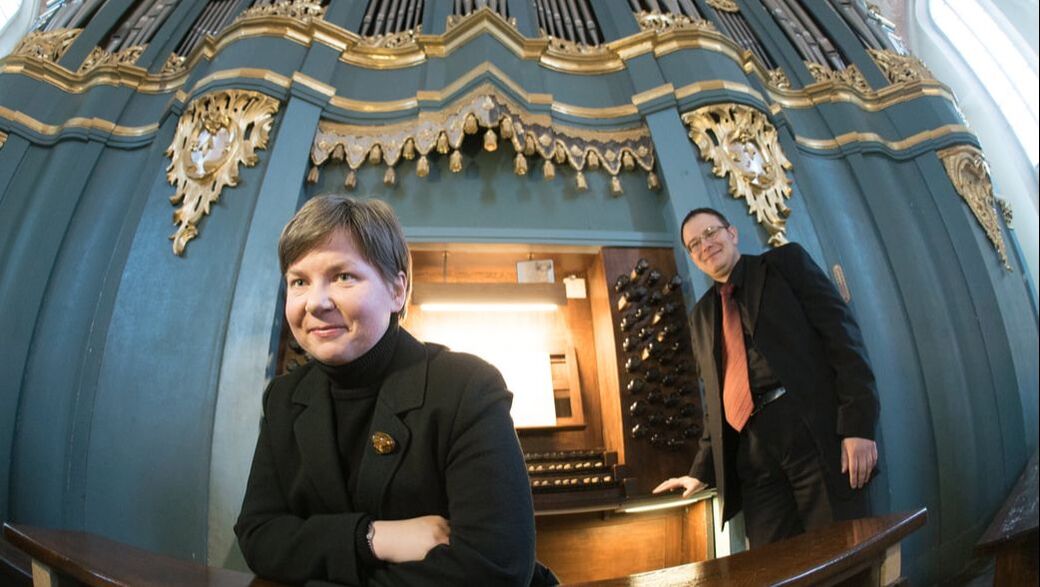 Photo by Edgaras Kurauskas Photo by Edgaras Kurauskas
Authors
Drs. Vidas Pinkevicius and Ausra Motuzaite-Pinkeviciene Organists of Vilnius University , creators of Secrets of Organ Playing. Our Hauptwerk Setup:

Categories
All
Archives
July 2024
|

 RSS Feed