|
Kae who transcribes our podcasts into text format is having a hard time keeping up with the heavy load of the material I send her because her work duties keep her extremely busy. She currently can do 2 transcriptions per week without being exhausted.
If you can type fast, understand organ related terminology, have a good command of English, are familiar with our podcast format and would like to share the load of transcriptions with her (in exchange for financial compensation or for subscription to Total Organist), please send me an email by Friday, January 26 and we will discuss the details.
Comments
Vidas: Let’s start Episode 140 of #AskVidasAndAusra podcast. Listen to the audio version here. This question was sent by Irineo, and he writes:
Hello there once again, maestro Pinkevicius. Now THAT IS an interesting subject you chose for your podcast. Actually, I suspect different keys have different "taste" or meaning depending on each individual. For instance, Bach's splendid Toccata in G-minor BWV 915 has a fantastic Fugue which is not only splendid, but jocular. It's extremely witty as far as I'm concerned. It sure DOESN'T sound "sad" or "dark" a bit. But there's supposedly this "treaty" about different keys and the way they "taste" or are perceived by people. I couldn't locate a good friend of mine who told me about it many years ago, nor could I learn its name. But I recall having read about a luthier who developed a very special instrument (harpsichord) and stated that keys might actually have their own "flavor". Like C having a tart/sour taste, D being tasteless, E having a sweet one, F a bitter one and so on and so forth. Can you perhaps guide me here, maestro? By the way, I'm still working on the translation of my short chorale (which has a feature I've yet to see in music history, I daresay) but as soon as I finish it, I'll upload it as you kindly suggested. Keep up the good work, you both! Greetings as usual. Very truly yours, Irineo. So, this is a big question, right Ausra? Ausra: Well, yes. Vidas: What do you think about it? Ausra: Well, I think it’s a fascinating subject, talking about different characters of different keys. And there is actually so much information written about it--not so much nowadays, but you know, in historical sources. Vidas: And today, this information is sometimes transmitted incorrectly, because the instruments might sound alike because of the temperament, and the player doesn’t feel the difference between the keys. Ausra: Yes, and that’s very true, because the equal temperament sort of loses all those colors that ancient instruments had, and historical temperaments had. Vidas: What’s your favorite key, Ausra? Ausra: Well, I don’t have one particular key, but I definitely prefer keys with flat accidentals, with flats. Vidas: Mhm. Ausra: Such as, for example, F Major, or E♭ Major, c minor, g minor, d minor--d minor, I like d minor a lot. Vidas: And what’s the difference between d minor, let’s say (this is with 1 flat), and e minor (with one sharp), for you--in your mind? Ausra: Well, I don’t know, but flat keys sound better to me, and it’s actually more comfortable for me to play. And even on historical temperaments, I think d minor is a much more used key than e minor; and that’s because of the dominant chord of both keys. Vidas: Which is...? Ausra: Which is, you know...in e minor, it would be B, D♯, and F♯. And basically, it’s quite uncommon to have D♯ on historical instruments. Vidas: It usually is E♭ instead of D♯. Ausra: Yes, yes, because E♭ is used more often; so if it doesn’t have a split key, it has E♭, not D♯. Vidas: And if it doesn’t--if you can play any kinds of keys--then it means the temperament is adjusted or modified. Ausra: Yes; and in d minor, the dominant chord would be A, C♯, and E; and C♯--everything is fine with it because C♯ is C♯, not D♭. Vidas: C♯ is much more common than D♭? Ausra: Yes. And I’m always wondering, when I’m thinking about the early music like Buxtehude’s f♯ minor Praeludium...I just can’t imagine how it could be played on historical temperament. Because it starts with F♯, A, and then E♯ and G♯. It’s unbelievable. I think maybe somebody just transposed it for, I don’t know, scholarly purposes! Vidas: F♯, A, E♯, and G♯, right? Ausra: Yes. Vidas: That’s E♯. Imagine--E♯ is extremely rare. It seems like you’re hitting the note F. Ausra: Yes, and it should sound quite badly on the mean-tone temperament. Vidas: From Buxtehude’s time. Ausra: Yes, yes. Vidas: Didn’t he order some kind of adjustment of the temperament, in his Marienkirche in Lübeck? Ausra: No, I have to check Kerala Snyder’s book about it. I cannot recall it exactly-- Vidas: He did it, but Ausra: I think he did something. Vidas: But was it about the same time or not? We cannot tell. Ausra: Yes. Yes, and because no autograph score is available of Buxtehude’s organ works, so we might just guess. Vidas: So, another option of course is to transpose this piece. Ausra: I know. And I think maybe some of the pieces were transposed, actually. Vidas: And...to transpose to which key, in this case? Up or down? Ausra: Well, that’s a good question. I think up. Vidas: To...? Ausra: G minor. Vidas: Oh! G minor is quite common, right? Ausra: Yes, yes, that’s very common, yes. Vidas: It only has 2 flats, and the dominant is… Ausra: With F♯. So that’s ok. D, F♯, and A. Vidas: One of the most common keys, actually. Ausra: I know, it is one of the most common. Vidas: That’s why Franz Tunder composed so many Praeludiums in G. Ausra: Yes. And Buxtehude, too. Vidas: Mhm. Ausra: There are quite a few Praeludiums in g minor. But what about you? What is your favorite key? Vidas: I’ve been trying to avoid this question, therefore I’ve been questioning you! Ausra: Well? Vidas: Um...okay. I like E♭ Major, maybe because of that famous Prelude and Fugue in E♭ Major by Bach. Right? It has this solemn character--maybe even a royal character. Why royal? Because you remember the opera by Mozart, Zauberflöte? Ausra: Yes, I remember it--The Magic Flute. Vidas: And in which key does the Overture start? Ausra: In E♭ Major. And because it has 3 flats, there are speculations that it might mean in general also the Holy Trinity, too. Vidas: Uh-huh. Ausra: Especially in Bach’s case. But also in Mozart’s case, it’s sort of the magical key. Vidas: Why is it magical? Ausra: Well, it’s related to the Masonic Order, and all those kinds of mysteries. Vidas: Ah. Ausra: And with alchemy. Vidas: And the number 3 is very sacred. Ausra: Yes, yes, it’s a sacred number in actually many religions and different cults--3 is a magical number. Vidas: Why couldn’t Mozart have written it in, let’s say, A Major, with 3 sharps? If it’s 3, then why not sharps? Ausra: That’s a good question. I never thought about it. Do you know why? Vidas: Sharps should be a little more difficult to play for his beloved clarinet. Ausra: And I think maybe it’s related to trombones, too. Because it’s a rare case: actually, trombones were used very often in religious music-- Vidas: True. Ausra: Like religious cantatas. And it was very seldom the case to use it in opera. And I think it’s much easier for trombones to play in flat keys--and for most brass instruments, as far as I know. Vidas: Exactly. Ausra: And I think that’s why he chose E♭ Major. Vidas: Exactly. Then, I like, of course...I like A Major, though. Remember the Prelude and Fugue by Bach, BWV 536? Ausra: Yes, I remember it. But when I think about A Major, the first piece that comes to my mind is actually not an organ piece, but it’s Mozart’s Variations in A Major, and that very famous theme. I think everybody knows it. Vidas: Oh, you mean the Variations from the sonata-- Ausra: Yes. Vidas: --where the last movement is the famous...or am I mistaken…? Which one is Turkish March? Ausra: I think it’s of that sonata, yes. So the first movement is not written in sonata form, but it’s variations--in A Major. Vidas: Mhm, exactly. And what’s the character of those variations? Ausra: Very sweet, actually, very sweet. Nice and sweet. Vidas: And what’s the meter, then? 6/8? *starts humming* Ausra: Yes, it’s 6/8. Vidas: *continues humming* Yeah, it should be like 6/8. Ausra: Yes, it’s 6/8. Vidas: And what dance could it remind you of? Ausra: Well, very often the gigue is written in 6/8, but it’s not that kind of character of the gigue. It’s more...it’s more like a barcarolle. Vidas: Barcarolle, or sicilienne. Ausra: Yes, or sicilienne, yes. Vidas: But a gigue is usually faster. Ausra: Yes, so it’s probably a sicilienne. Vidas: So maybe 9/8 or 12/8. Ausra: Yes. Vidas: So if it’s a sicilienne, it has a pastoral character/nature right? Ausra: Yes, and A Major is very suited for nature, for pastoral use. Vidas: Mhm. So guys, you see what we’re doing here: we’re remembering well-known pieces in various keys, comparing the characters, and then finding out similarities between them; and maybe discovering the meter, and what kind of dance goes with that meter, right? And then it appears you can have a system of keys, meters, and dances, also. True? Ausra: Yes. Vidas: So when you play any organ piece in any key, look at the key, meter, and the character, and see if you can find a similar one by another composer--maybe from another instrument or even period, which has a similar character, key, or meter. Ausra: Yes. And I’m sure that you might find some similarities between different composers. Because those keys were not chosen accidentally, or you know, a particular meter. Vidas: Exactly. They have symbolic meaning, always. Ausra: Yes, and there are quite a few famous theories of musicologists or composers that have talked about it, and made treatises; such as, for example, Jean Philippe Rameau; or, you know, also Quantz on playing the flute--he talked about keys, too. Vidas: Marc Antoine Charpentier Ausra: Yes. Vidas: And these are the main ones. And C. P. E. Bach, of course, should have… Ausra: Well, he did not talk so much about keys. He talked more about thorough bass that kind of stuff. Vidas: Ah. What about Kirnberger? Ausra: Yes, I think you can find things… Vidas: Mhm. Kirnberger was a student of Bach, so... Ausra: Yes, so by studying Kirnberger, you can think about what Bach thought about keys and meters. Vidas: Excellent. So...this is a fascinating subject for you to explore. And please send us more of your questions. We love helping you grow--don’t we, Ausra? Ausra: Yes. Vidas: Okay, this was Vidas! Ausra: And Ausra. Vidas: And remember, when you practice… Ausra: Miracles happen. 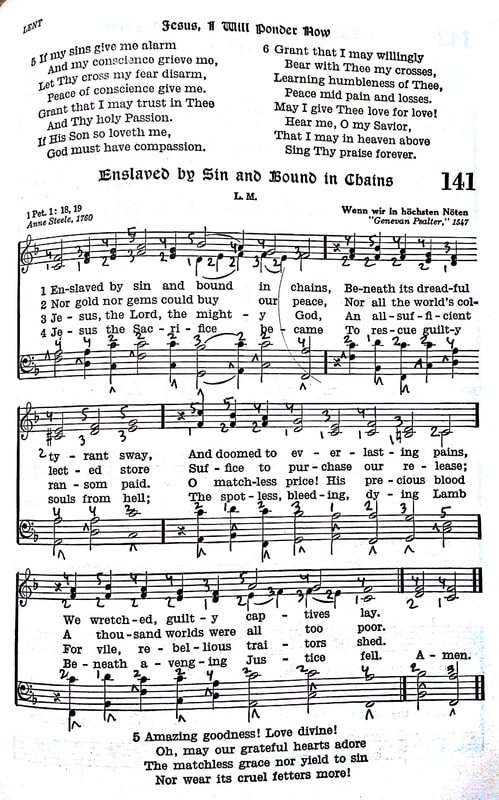 New training for basic level organists who need help with hymn playing: 10 Day Hymn Playing Challenge.
Would you like to spend the next 10 days learning the skill of hymn playing? If so, this challenge is for you. You will receive a PDF score with 10 hymns for the liturgical period of Lent with complete fingering and pedaling written in. 5 hymns will be in the early articulate legato style (composed until 1800's) and 5 - in the Romantic legato style (composed after 1800's). Master 1 hymn per day for the next 10 days. Feel free to spend more days with each hymn if you want, you don't have to rush it. Soprano and alto parts will have to be played with the right hand, tenor part - with the left hand and bass - with the pedals. NOTE: just like in any hymnal, the bass part is not written on the separate stave but notated together with the tenor. Basic level. PDF score - 10 pages. 50% discount is valid until January 24. This score is free for Total Organist students. Click here: 10 Day Hymn Playing Challenge And now let's go to the podcast for today: Vidas: Let’s start Episode 139 of #AskVidasAndAusra podcast. Listen to the audio version here. This question was sent by Fr. Michael he writes: “Dear Vidas, I am writing today to inquire if you by any chance know of any resource that may contain church hymns (a hymnal, etc.) that contains fingering and pedaling written in? No problems at all if there isn't, I am managing fine, but just thought I would pick your brain on this and see if such a resource exists.” Excellent idea, Ausra, right? Ausra: Yes. Vidas: We haven’t created any course which would include fingering and pedaling for hymns. Ausra: Yes, and I don’t know if such a hymnal exists. You could find, maybe, some separate hymns in some of the organ practice books, but it’s not a common thing to do... Vidas: Especially if you think about early types of hymns, and Romantic types of hymns… Ausra: Yes. Vidas: You’d need two different kinds of fingering and pedaling for that. Could we, let’s say, create a 10-day challenge for people like Michael? Ausra: Yes, I think that would be a great idea. Vidas: And this 10-day hymn playing challenge would include 10 hymns--let’s say 5 early type of hymns, and 5 more Romantic type of hymns, like legato. Ausra: Yes, that would be nice, yes. Vidas: And people could use our fingering and pedaling, and this pedaling and fingering would dictate the desired articulation, automatically. Ausra: Sure. Vidas: Would that be helpful, do you think? Ausra: I think so, yes. I think while playing these 10 hymns--5 earlier and 5 later--people could get a notion of how to finger them and to pedal them. Vidas: Because the underlying principle behind hymn playing--the foundational basis--is that you take 2 upper voices and play them with the RH (soprano and alto, that is); and then the tenor would be played by the LH. Ausra: Yes. Vidas: Right? And the pedals would be played by the feet. Ausra: Yes; and if the organ doesn’t have pedal, then you would play 2 voices with your LH. Vidas: Mhm. But let’s hope that people can use 10-day hymn playing challenge as a preparation for real organ literature; and then you would need pedals, I think. Ausra: Yes, sure. Vidas: Because pedal parts will not be very difficult, and beginner organists could easily master them. Not necessarily in 10 days, but the principle is the same. Ausra: Yes. But sometimes you have to do hymns on the piano, too, for church services. Vidas: Oh, and then you would play without pedals. Ausra: Yes, yes. I remember when we worked at Grace Lutheran Church in Lincoln. We would sometimes play on the piano, too--not very often, but yes. Vidas: How different is fingering, for that occasion? Ausra: Well, usually you try to pick up later hymns, to play more Romantic hymns more legato. Great hymns to play with piano! Vidas: Do you use sostenuto pedal? Ausra: Yes, yes, you can do that then. Because it’s appropriate on piano, to have and to use sostenuto pedal. Vidas: Sure. Do we need an extra course for that? For piano playing? Or not...Maybe for starters, let’s focus on the pedals. Ausra: Sure, yes, I think that’s a good idea. Because if you can play with pedal, then definitely you will be able to play without the pedals. Vidas: Well, for people who are playing organ without the pedals, or just keyboard, they would only need to adjust the LH. Ausra: Sure. Vidas: And play the 2 lower parts with their LH. Ausra: That’s right. Vidas: But the principle would be the same as for the RH. So we would probably use more or less interval fingering. What do I mean by that? If it’s an early type of hymn, intervals of equal length would be played by the same fingers. Right? Ausra: Yes. And in later hymns, you would probably have to use finger substitution. Vidas: To play it legato? Ausra: Yes. Vidas: So for example, how would you play intervals of the third? Ausra: In early hymns? Vidas: In early hymns. Ausra: Probably just 1-3. Vidas: Or...? Ausra: Or 2-4. Vidas: Sometimes in alternation. Ausra: Sure. Vidas: Because it helps to create strong and weak beats, right? Ausra: So that’s a part of articulation. Vidas: Mhm. Excellent. Interval of the fourth: how would you play it? Ausra: Probably 1-4 and 1-5. Vidas: Mhm. Interval of the fifth? Ausra: Hahahaha! Do you think you would have to play intervals of fifths? Vidas: Parallel intervals? No! But just one, once in a while. Ausra: Oh, well, if it would be one interval of the fifth, then 1 and 5 would be appropriate. Or sometimes maybe 2 and 5 too. Vidas: Especially if you are playing an old 17th-century organ. Ausra: Sure. Then it’s not so nice and not so comfortable to use the thumb. Vidas: And the keys are much narrower. Ausra: Yes. Vidas: Interval of the sixth? Sweet interval. Ausra: Well, 1 and 5. Vidas: I almost said 1 and 6! Ausra: Yes, 1 and 6...Yes, if you have 6 fingers on one of your hands, you could do that! Vidas: Like, Hannibal Lecter would play with 6 fingers easily! So, 1-5 for sixth, for early hymns, that is; and if you need to use finger substitution to create legato for later hymns, you would use what? 1-4, substitute to 2-5-- Ausra: Yes. Vidas: And then again, 1-4, 2-5, like this. And wider intervals, like a seventh or octave, obviously…? Ausra: 1 and 5, of course. Vidas: Good. So that’s it for both hands, the same thing. For the pedaling, do you have special rules for that? Ausra: Well, if you play early hymns, then you use only your toes; but if you play later hymns, then you have to use your heels too, because you need to play legato. Vidas: And what’s the rule for playing pedals with the same foot? R-R or L-L? In which occasion would you use the same foot? Because most of the time you use alternate pedals… Ausra: Well, when it’s very far away, when you are either very far on the left side or you are very far on the right side-- Vidas: Mhm? Ausra: Then you would just use one leg. Vidas: And there is the second instance, when the melody changes direction. Ausra: Yes. Vidas: It goes up, up, up, up, up, then left right left right left right... Ausra: And then goes back... Vidas: Goes downwards. So the last note would be R-R. Ausra: That’s right, yes. Vidas: So guys, that is how we will actually be creating this 10-day challenge. If you want to pedal or finger your own hymns, go ahead and join us in your favorite hymns and hymnals; but we’ll be happy to provide for you 10 fully fingered and pedaled hymns for you to practice. Ausra, how many days do you think that would take for people to master? Ausra: It depends on the level. It would be nice to master one hymn a day; but maybe you would need more time to do it. Vidas: Some people could; therefore we would name this course as a 10-day challenge. Ausra: Yes. Vidas: But it easily can be extended into 10 weeks, right? Ausra: Sure. Vidas: Because there are people who can only manage just one hymn per week. Ausra: Yes. Vidas: And remember, if you practice just fifteen minutes a day, you will see the progress over time, over these 10 days or more. Right? It might not seem like a lot, but like people have noticed before, it really adds up. Ausra: Sure. Yeah, so...I hope you’re looking forward to our hymn playing course! Vidas: So, we’re going to start creating fingering and pedaling after we’re finished with this recording. But by the time you will be listening to this podcast conversation, and maybe reading the transcribed version, maybe this course will already be available! Ausra: I hope so! Vidas: So check it out and see if you like it. Click here: 10 Day Hymn Playing Challenge And let us know, if you practice from this resource, how it’s helpful or not. We love helping you grow. This was Vidas! Ausra: And Ausra. Vidas: And remember, when you practice… Ausra: Miracles happen. I’m so delighted to be able to teach you about avoiding mistakes when playing in an equal tempo today. Listen to the audio version here.
You see, recently one of my “Unda Maris” studio students played in our church and he had a trouble of keeping equal tempo and avoiding mistakes. I thought to help him with some of the tips which might be of value to you too because you also probably need to avoid mistakes and play at a constant tempo. So the problem is usually with the tempo that is too fast. A lot of people try to slow down when they practice and this is good. But this tempo still needs to be considerably slower. You see, when we play the organ we don’t necessarily feel the limits of our abilities and we pick the tempo that sounds well, the piece of music that we’re playing sounds well in this particular tempo but it doesn’t mean that this tempo is suitable for us at the moment. So when students played their piece and made mistakes usually it usually means they played too fast. So the normal tip would be to slow down and try to play at the 50 percent slower tempo. So that would be the first tip I could give you. Maybe slow down from let’s say 80 beats per minute to 40 beats per minute. That would be OK. What about if your concert tempo is at 60 beats per minute? Well, you could slow down to 30 beats per minute. If you still make mistakes after slowing down 50 percent, then you need to reduce the texture. What do I mean by that? Imagine if your piece of music has 4 voices and you’re playing it extremely slowly at 40 beats per minute and you still make those mistakes. This simply means you need to take this texture apart and play, let’s say just 3 voices at the moment. If that is too difficult for you, then play maybe 2 voices together. And if you still make mistakes, play it very slowly but only one voice. That’s why I always recommend to start your practice of a new unfamiliar piece with a single line only in most cases if you want to avoid mistakes completely. So soprano, alto, tenor, bass - all those lines could be played extremely slowly and without combining them first, just one voice. After you master this particular step, you are free to go to the next level and play 2 parts together. So that would be soprano-alto, soprano-tenor, soprano-bass, alto-tenor, alto-tenor and alto-bass, and tenor-bass combined. And the next thing would be to practice 3 voice combination - soprano-alto-tenor, soprano-alto-bass, soprano-tenor-bass and alto-tenor-bass. You see, how many steps we took in order to achieve this final combination - 4 parts combined, both hands and pedal, in other words. 14 steps before the final 15th step - 4 parts together. So don’t forget to do this. Of course, you don’t have to do this all the time if the piece is very easy, if the piece is of homophonic nature, if it moves in chords or if it’s a melody and accompaniment. Then you just need just 7 combinations: Right hand, left hand and pedals alone. Then right hand and left hand, right hand and pedals, left hands and pedals and the all parts together. If it’s not polyphonically complex music. So try these tips in your practice and let me know if it helps. It helped me and it helps this student that I’m trying to help in our “Unda Maris” studio. OK guys, please send us more of your questions. We love helping you grow. And remember, when you practice, miracles happen. Vidas: Let’s start Episode 138 of #AskVidasAndAusra podcast. Listen to the audio version here. This question was sent by Rivadavia. And she writes:
“I am studying at least 15 minutes a day as suggested and have discovered that sometimes laziness or tiredness goes away and I can study for at least 1 hour in all. I love reading your podcasts, because I learn a lot from the difficulties that advanced musicians have. As I said in another email, I am a beginner (some sheet music from Ana Magdalenna Bach's book is still a bit difficult for me…) and I am no longer a child, but I intend to study until the end of my life because I like to learn music more and more. I am also very happy to be in contact with renowned organists, as well as you, since I am in an early stage and, in another circumstance, I probably would not even come close to musicians like you. Reading one of the last podcasts, the name of Bernard Winsemius was mentioned. I had the opportunity to watch a video on YouTube of this organist playing a work by Nikolaus Bruhns and found it very cool the way he played. The mastery over the instrument and the score. Sometimes when I'm too lazy, I'm out of work, I watch this video and I get motivated enough to do AT LEAST the fifteen minutes of practice. I have a piano-type MIDI keyboard at home, and I use free "Grandorgue" software to simulate organ sound. If you have never used it, it is very interesting and there is also the "Hauptwerk", but the full version is paid for. Of course they do not replace the wonderful real organ, but it helps to fantasize a little and learn to use the stops. Well, in that regard, I have a question. I know that there is an infinity of stops, but of the 10 or 20 most important, which could not be missing, which are considered the most fundamental? Is it possible to answer this question? Thank you so much for your generosity in helping so many people around the world, like me.” So Ausra, first of all: ten or twenty most important stops--in your opinion, where do we start? Ausra: Well, I would say the Principal stops are the most important. Vidas: An organ, large or small, should have a principal, right? Ausra: Well, unless it’s a practice organ like the one in our house. It doesn’t have principals because it doesn’t have enough space, and it would be too loud. But in general, yes; the Principal is the most necessary organ stop. Vidas: And those principals can be of various length. Ausra: Sure. You can have Principal 16’ in the pedal; sometimes manual, too, in a large organ; then 8’, 4’, 2’, and even smaller. Vidas: Mhm. Let’s see...of course, we need some flutes, right? Ausra: Yes, definitely; this would be the second most important stop. Vidas: Out of the flutes, what would you like the most, to have? Ausra: Out of the flutes? Well, you know...I don’t know, if I prefer like Chimney Flute, or Gedackt-colored flute. Which one do you like the most? Or organ flute like Flute Harmonique, French style. It depends on the concrete stop; I could not say that, for example, “This one is my favorite.” Vidas: The most interesting stop in the flute family, for me personally, on the St. John’s Church organ, might be Flauto Major, from the first manual. And of course, Flauto Minor, which is one octave higher, at 4’ length. Um...yes, I do like the Rohrflöte, and Gedackts as well. Ausra: For me, my favorite flute at St. John’s Church is the Flute 4’ on the second manual. Vidas: They call it Jula, right? Ausra: Yes. That is my favorite. Vidas: True. And it’s so deep in the organ, so it’s a little bit muffled, and it suits very well to play it alone. Ausra: Yes. Vidas: Do we need anything else, or would it be enough, to have just flutes...? Ausra: Well, actually, these would be enough, to have already the sense of organ. Vidas: But you mentioned the Principal chorus with mixtures, imitations… Ausra: Yes, yes, yes, then I said that you can have higher pitched, even than the 2’; so the mixture would probably be the most recognizable organ stop, for amateurs; because if you watch a movie, or any kind of, I don’t know, documentary-- Vidas: Mhm... Ausra: And if you would have organ playing, you would get pleno sound, with mixtures. Vidas: Mhm. Ausra: That’s how people in general have recognized the organ. Vidas: True, true. Let’s imagine we have some string stops, also. Ausra: Yes. These are very nice too; but probably not as common as principals and flutes and mixtures. But also it’s important to have them, and they are nice string quality stops. Vidas: Viola, Salicional... Ausra: Viola gamba… Vidas: And undulating stops, too, like… Ausra: Like Unda Maris... Vidas: Viola Celeste. Ausra: Celeste. Vidas: They work very well. Ausra: But also, you can have organ without it, and you still can play a lot of music. And, well, reeds are common, too; but also, not every organ has it. I would say in Lithuania it’s not such an often-encountered stop. Like in Italy, too. Vidas: Mhm. Ausra: You would not find many reed stops on historic Italian organs. Vidas: Alright, so...now let’s build a hypothetical organ with twenty stops for Rivadavia. Ausra: Ok, how many manuals? Two? Vidas: I would say with twenty stops, you would need two manuals. Ausra: Two manuals, and pedals. Vidas: Not three. Ausra: Of course, not three. Yes. Vidas: Two manuals. So on the first manual might be...what, seven? Or six. Or eight stops. Six, seven, or eight? Ausra: Hahaha! Vidas: Let’s divide it into the sections. Ausra: Well, ok, let’s do eight stops. Vidas: Eight on the first manual, and then eight on the second manual. Ausra: Maybe seven on the second, and five in the pedal. Vidas: And then five in the pedal, right? Ausra: Yes. Vidas: We’ll see. So, out of eight in the Great, of course...do you think that it could have 8’ Principal, or 4’ Principal foundation? Ausra: Well, now I’m thinking about it, it’s not too small an instrument for 8’ Principal. 8’, I think. Vidas: I think 8’ would be fine, yes. Ausra: Good. Vidas: That’s one, right? Ausra: Yes. Vidas: Do we need 16’ Bourdon? Ausra: That would be very nice, yes. Vidas: Two. Uh, some kind of flute, of 8’. Ausra: Definitely, you definitely have to have… Vidas: Let’s see, maybe Gedackt? Ausra: Maybe Gedackt. Vidas: Gedackt. Three. Now, four: do you need some strings on the first, or no? Ausra: Well, not necessarily, I would say. Vidas: Ok, so let’s go to the 4’ level. Ausra: Yes. Vidas: Octave 4’? Ausra: Octave, yes. Vidas: And Flute 4’. Ausra: Definitely. Vidas: So that’s five. Ausra: Yes. Vidas: Ohh...we’re using stops very quickly now! Ausra: I know! So, we have three left, so I would say it should be...Would you put Principal to foot, or Flute to foot? Vidas: Principal. Ausra: Principal. Ok, then we have a nice Principal chorus. And then of course, mixture: what kind of mixture would you add? How many of those? Vidas: Uh...I would say three or four. Ausra: Yes. And then, would you add a reed? Vidas: Trompette. Ausra: Trompette 8’? Ok. Vidas: Mhm. So that’s eight stops in the great. Ausra: Yes. Now let’s move to the second manual! Vidas: Okay. Second manual should be a little bit smaller in size, right… Ausra: Well, since we decided to have seven stops. Vidas: Okay. So maybe it would be built on the foundation of 4’ Principal… Ausra: Yes. Vidas: Which means we could have a Rohrflöte. Ausra: 8’? Principal 4’? Vidas: 8’. Principal 4’. Of course, don’t forget the strings… Ausra: Yes. Vidas: Before the Principal 4’, we could have a Viola, right? Ausra: Yes. Vidas: Viola--just one, or two? Viola, and maybe Viola Celeste. Ausra: Yes. Vidas: Two. Ausra: So these would be 8’ stops, both of them, yes? Vidas: Right, both of them. So...and the fourth would be Principal 4’. Ausra: Yes. Vidas: What’s next? Ausra: So now we have three stops left. Vidas: Do we need a flute 4’? Ausra: Yes. Vidas: Mhm. What kind of flute? Ausra: Well...what would you suggest? Something like at St. John’s? Or not necessarily? Vidas: This is atypical for a global audience, right? Maybe we could name a more typical stop, right? Something like Flauto Traverso, or something like that… Ausra: Yes. But it would be 4’. Vidas: 4’. Ausra: And then I think you should add Flute 2’, too, not from the second manual. Vidas: Yes, so that’s number 6. Ausra: That’s 6, yes, and now we have to have some sort of treat. Maybe Oboe 8’, or Krummhorn 8’--what would you suggest? Vidas: Oboe or Krummhorn, or Vox Humana? Ausra: Yes. Vidas: Hmm. Hard choice. Ausra: Haha! Vidas: Oboe...and Vox Humana or Krummhorn. Would this organ have a swell box? Not necessarily. Ausra: Not necessarily, yes. Vidas: So then, maybe...You go ahead! Ausra: I would have probably an Oboe. Vidas: Ok. That would be probably a more Romantic option. Ausra: Since we have already those two string stops… Vidas: Mhm. Good. So that’s seven. No mixture, right? Ausra: No mixture. Vidas: But… Ausra: But that’s okay, I mean… Vidas: But that’s okay, unless we could sacrifice one of the… Ausra: Pedal stops? Vidas: No. Maybe one string. Ausra: Yes, that’s a possibility, too. Vidas: And have a mixture instead of Celeste. Ausra: Maybe you want to have a mixture on the second manual, too. Vidas: Or sacrifice one pedal stop. Let’s go to the pedals now. Ausra: Ok. Vidas: What would be the lowest Principal based in the pedals? Ausra: 16’, of course. Vidas: 16’? Ausra: Because we have the 8’ Principal in the first manual, so we have to have Principal 16’ in the pedal. Vidas: Mhm. Ok. So that’s one. Ausra: Or...you would not add Principal? I think it’s fair, to have 16’ Principal in the pedal. Vidas: Yeah, let’s have 16’... Ausra: Because our pedal division is not so big, not so large--we have only 5 stops. It would be nice to have a Principal 16’. Vidas: And of course, then, Subbass 16’. Ausra: Subbass 16’, yes. Which is a flute stop. Vidas: What else? You would need, probably, Octavbass 8’. Ausra: Yes, yes, Octavbass 8’. This is a Principal stop. Vidas: And Flautbass 8’. Ausra: Sure. Vidas: Right? That’s four. Ausra: And then what else would you do? An Oktave 4’, or…? Vidas: Or reed? Ausra: Or reed, yes. That’s a hard question. I probably would have Octave 4’. Vidas: Or… Ausra: Because you know, you could actually couple the Trompette from the first manual. Vidas: And I would choose the reed, because every division, now, would have a reed-- Ausra: Except pedal. Vidas: And a different pitch level than the manuals. 16’ Posaune. Ausra: And how the Pleno would sound without mixture? Vidas: You could have a manual coupler, right? Ausra: That’s right. Maybe--okay, and which reed would you choose, then? Posaune or Trompette? Vidas: I would go with Posaune. Ausra: Posaune 16’, yes. Vidas: Mhm. So. We have five stops in the pedals, and seven in the second manual, and the first one, on the great-- Ausra: And of course you would add couplers, like you know, that you would be able to couple both manuals together, and to also add the pedal. Vidas: Yeah, second to the first, second to the pedals, and first to the pedals. Ausra: Sure. Vidas: That’s it. Ausra: Yes. Vidas: That’s all we need. Ausra: And actually, with such an organ, you could play a lot of music. Vidas: True. Will it have mechanical action, or not? For you? Ausra: If I would build an organ? Yes. The action would be mechanical. Vidas: Mhm, because the touch would be more sensitive; you could have more connection to the instrument. Ausra: Yes. Vidas: Excellent. So guys, this is our sample 20-stop organ on two manuals and pedals; if you like it, you can build it for Rivadavia! Or build it for yourself! Alright; this was Vidas. Ausra: And Ausra. Vidas: Don’t forget to send us more of your questions; we love helping you grow. And remember, when you practice… Ausra: Miracles happen.  Welcome to Secrets of Organ Playing Podcast #129!
Today is a special podcast. Our subscribers who know me probably are aware that I am quite a spontaneous person, I don't like to plan too much. So yesterday when I received an email from a Finish organist Airi Saloniemi asking for an opportunity to try our largest pipe organ in Lithuania at Vilnius University St John's church, I spontaneously said, "Yes". So now because of this Airi and her husband Tuomas Saloniemi are next to the organ bench besides me. Airi is an organist and cantor in Vantaa which is a city next to Helsinki, capital of Finland. There is an area called Korso and they have a small church (17000 members in a congregation). She works there every week, playing services and leading choirs. Tuomas, like Airi studied at Sibelius Academy and he plays tuba. It was at the Sibelius Academy that they met each other. Recently he decided to switch careers and now works in communications for a healthcare company but still plays tuba occasionally. In this conversation, Airi and Tuomas share their experiences about playing organ and tuba, what are challenging and exciting things to them, about their practice ideas, especially the famous 10000 hour rule. Airi is a connector and she makes things happen because she organizes concerts in her church and Tuomas has communication and marketing skills which are vital for anyone living in today's world. I actually suggested Tuomas to start a podcast about tuba music and tuba players since there is a lack of in-depth conversations in the tuba world. Listen to the conversation And don't forget to help spread the word about the SOP Podcast by sharing it with your organist friends. If you like it, feel free to subscribe to our channel on Musicoin. By the way, you can upload your own recordings to YOUR channel to maximize revenue. If you have some audio recordings of your organ performances, you can do the same. Feel free to use my invitation link to join Musicoin: https://musicoin.org/accept/MUSICa45e5f26ede2be5dd4411747 Thanks for caring. Relevant links: Airi and Tuomas on Facebook Vidas: Let’s start Episode 137 of #AskVidasAndAusra podcast. Listen to the audio version here. This question was sent by Dan. He writes:
“Hi Vidas, just wondering, as of late, have you moved the podcast feed over to another provider? It looks like you have, as clicking the links to listen for example, on your latest post on your main site, takes me over to a site called musicoin.org. Apparently you can play directly from their site, but that for me, doesn’t seem to be working. I use a Screen reader, (VoiceOver on macOS 10), so I’m not sure if it’s an accessibility issue with their site, whether you have to have an account over there to listen, or what exactly is up with that. I was getting episodes just fine before, in my podcast app of choice, that being downcast, but lately I haven’t been. If a lot of subscribers are still on the old feed, and using apps such as downcast, overcast, iTunes, or Apple’s podcast app, or any podcast downloading apps available on the android side of things, they won’t be able to get your latest episodes. If you could, please provide me with a link that I can stick into my podcast app, to subscribe to the new feed. Doing a search in any podcast app, still brings up the old feed in search results. Thanks, and take care. Dan from Ontario Canada.” Ausra: Well, this is a very technical question; so Vidas, maybe you will answer it. Vidas: First of all, it might be frustrating for old users who have been listening to our podcasts for some time, because we haven’t updated our SoundCloud channel, right? Because we put every new podcast to Musicoin, right? He’s right--Dan is right; we use Musicoin.org. That’s because this platform is built on revolutionary blockchain technology and is dedicated to treating musicians fairly. What do I mean by that, Ausra? Ausra: Well, that, you know, musicians get paid more. Vidas: More? Ausra: Yes. Vidas: With SoundCloud, they don’t pay at all, actually. You pay a subscription for an entire month-- Ausra: That’s true. Vidas: Or a year (around $100 USD). And you don’t get anything in return. So, it’s almost the same with any other podcasting services. You, too, might host your videos on YouTube, and you could have an advertisement, and you could get a little bit of revenue; but that’s actually basically nothing compared to Musicoin. Ausra: Yes, so Musicoin seems the most fair for musicians. Vidas: So, right now, for example, looking at my Musicoin profile, I have...right now, earned after about basically more than 1 month, I have earned something like 3,600 Musicoins (currency symbol is $MUSIC). And one $MUSIC is worth about 4 or 5 cents right now. So you can do the math. That really is a beneficial way for any musician to try out, I think--this platform. And for blind listeners like Dan, I think the solution will be very simple: in the new year of 2018, the Musicoin team is planning to release their app for phone. And they will be easily listened to on the phone, then. And not only Dan, but anyone who uses phones for listening to audio on the road. So, that’s why we’re doing this, because it’s a good experiment for any musician, and we would like to report how it works. And after one month, I have reported, in some place--in one post--that it was like $110. So it’s a good start I think, for people--it’s just the beginning of this platform. If you join early, you would do, I think, quite well in the future. You can use our invitation link to join this; and of course, feel free to subscribe to our channel at Musicoin. Ausra: Sure. Vidas: Right? So yes, this was a technical question, but we have explained the reasoning why we are uploading our audio content. Not only this podcast, right? Ausra: Yes. Vidas: We are uploading other music that we perform, and older podcasts from other platforms, too. So it will catch up to the current state, and this will be a very robust and comprehensive platform and channel for future reference, too. Oh, and by the way, you can divide your revenue between up to 8 people! For example, if I have a guest on my podcast, I can divide my revenue and share with that guest, if he simply is on Musicoin, too. If I have an ensemble of up to 8 people, I can easily divide that revenue between the members, and they automatically get their share. Whenever somebody is playing back the audio content, whether podcast or instrumental music or vocal song, then currently this platform gives you 1 $MUSIC. As I mentioned before, this $MUSIC is now worth about 4 or 5 cents. And the value of that $MUSIC is likely to increase over time, because as this platform gets traction, more and more people will start using it. And as the value of the $MUSIC gets to 10 cents, then they will start giving the artists only a fraction of a full $MUSIC, but not less than 2 cents--that’s their promise. And for 2 cents, it’s a decent amount of pay--a very fair amount of revenue for every musician--for every independent musician. You will not get better treatment for musicians anywhere, on any other platforms. And it’s of course free to join, for listeners, free to listen, and of course, free to upload your music--you don’t pay any fees at all. And you get $MUSIC instantly, directly, automatically, to your account; and then, once you get enough $MUSIC, you can transfer them to your desktop wallet; and then from there, you can exchange them to the currency which is called Bitcoin; and then from Bitcoin to any other currency including dollars, euros, pounds, anything else. So it’s an intermediate way of storing your $MUSIC in a wallet, if you want to cash out in the future. Wonderful! Thanks, guys, for listening. Please send us more of your questions; we love helping you grow. This was Vidas! Ausra: And Ausra. Vidas: And remember, when you practice… Ausra: Miracles happen. During the last rehearsal of our Unda Maris organ studio, I asked one of our students who doesn't even read music to choose 4 notes and improvise something interesting. Would you like to know what this process is like and where it can lead you? If so, my tips are for you.
I didn't sleep well last night. So what happened is I got a nasty headache and no inclination to practice yesterday. But... I did it anyway. Can your practice help reduce physical pain you might be feeling? Listen to my thoughts.
Are you thinking of skipping organ practice today? Don't be. If you improve just 1 percent today, miracles will happen in the future. Listen to these thoughts to find out why.
|
 DON'T MISS A THING! FREE UPDATES BY EMAIL.
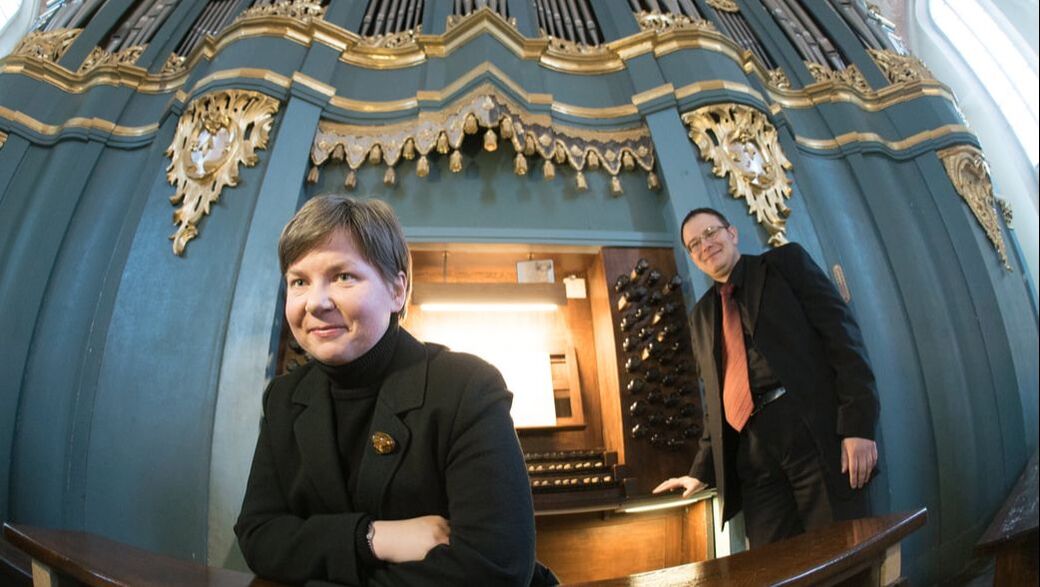 Photo by Edgaras Kurauskas Photo by Edgaras Kurauskas
Authors
Drs. Vidas Pinkevicius and Ausra Motuzaite-Pinkeviciene Organists of Vilnius University , creators of Secrets of Organ Playing. Our Hauptwerk Setup:

Categories
All
Archives
July 2024
|

 RSS Feed