|
Vidas: Hi guys, this is Vidas!
Ausra: And Ausra! V: Let’s start episode 566 of Secrets of Organ Playing Podcast. This question was sent by Dave, and he writes: “Vidas! I did your year-long subscription some years ago… and after that found a local organ teacher. I just wanted to let you know that after 40 yrs, I successfully accomplished (another) audition for going back to college to get a Bachelor's degree in Church Music with an Organ Performance certificate. I just started this new semester at a college here in North Carolina; where I have an opportunity to practice on a wonderful Fisk instrument (currently enrolled in Music History, Harpsichord and Organ.) Your course was very helpful in getting back to my “roots” and kick-starting this entire adventure. So, while I’m not currently enrolled, I do get your weekly messages (and even read them) and I do look at the weekly competitions. Just wanted to say “thank you” for your “nudge” back into the world of organ playing. Dave” V: What are your thoughts, Ausra, for starters? A: Well, I think you should be very pleased to receive a message like this, because it’s a direct praise to your work, and I think it’s a very nice letter! It’s nice to help people, and to get this feedback, because otherwise you would never know if your courses work or not. V: You know, what’s a amazing to me is that after 40 years, he got back to college! That should be done more often, I think, in the world, when senior people have more time in their days and can study things! A: Now it’s becoming more and more common, and let me correct you a little bit. I think that in the future, we won’t have seniors at all, because nobody can retire after the economy is changing so swiftly, and people are living for more years. So, let’s see… now in Lithuania we have to retire at the age of 65. Yes? V: Yes. A: But I think until the time we will be getting to retire, I think that age will be probably 75. V: Is it even possible? A: I don’t know. V: How will they approve it? A: But I think they will find their ways to do it in order to save money from the pension funds. V: Won’t the community protest? A: Well, who cares about community. But what I’m trying to say is that the life is changing basically everywhere, and people have to stay in business for more years, and therefore they have to change their major very often, or to find new possibilities to make a living and to earn an income. So I think playing organ can be one of the options. V: Especially if a person likes playing, likes music, then this passion can become a side income for him. A: Sure. V: Or her. Have you have ever heard Fisk instruments before? A: Yes, I have heard them. V: Where? A: In the United States, of course. V: I think I heard at Oberlin. Yes? A: Yes. V: We’ve been there. It’s actually been more than once. At Oberlin, it’s a French style instrument. And also, at Rochester. Remember? This church where Hans Davidsson played? A: The 3rd part of Clavier-Übung, yes? V: Clavier-Übung, yes. A: Yes, I remember that. Anyway, often the people who live in Europe think that America has no fine organ instruments, and they are so wrong! Because America has all these extremely good organ builders such as John Brombaugh, and Gene Bedient and Fisks, and Taylor and Boody, and now Martin Pasi is building all these wonderful instruments in America, and Bruce Fowkes, and all others! They are extremely professional, and their instruments are splendid! V: Yes. They all congregate under APOBA – Associated Pipe Organ Builders of America. Yes. A Fisk instrument, I haven’t played it before, but heard it a few times, and of course, we have heard recordings. A: Sure. Many times. V: Excellent. So it’s great that Dave is back in organ playing studies. What can we wish for him? That he participate in our weekly competitions! Yes, he does say that he looks at that. I think our contests give people opportunity to record themselves and to get better at playing different repertoire every week. For example, if he’s studying at the college level, bachelors degree, he might not be required to prepare a new piece every week. He can have a program for let’s say, one semester and then after the semester, he would play a jury or a recital or something. But with weekly contests, you need to prepare at least something—at least a short piece—a minute, two, three, four, five minutes, whatever you can, and this in time greatly facilitates your learning process, and with time you can learn longer pieces faster. Remember like @partitura, or Auke Jonbloed, was playing just a couple of minutes per week. Right? His recordings were really short. But now, he’s easily playing 5 minutes, and difficult trio compositions, and chorale preludes. A: Could he also submit harpsichord pieces for our competition, or not? V: Not for The Secrets of Organ Playing, but there is a Sonic Groove Live contest on Steem, that accepts all kinds of live performances on all kinds of instruments. A: But couldn’t he perform, let’s say, some of his harpsichord music on the organ and then submit to our competition? V: Oh, that would be wonderful! Yes! Sometimes it works. Cross instruments, yes! Wonderful, so that’s an idea for people like Dave who are following our messages, even reading them, and even listening to the people’s performances but haven’t taken the step towards submitting their own entries. Maybe they are hesitant, maybe they are afraid what others will think. We can assure you that we never criticize harshly. Right Ausra? A: Yes, that’s right. V: If we ever have to say anything about your performance, it would be a constructive criticism with points to improve on, which is really valuable, right? A: Yes, I wish so many times that people would tell me what they really think about my playing and not just telling me nice things. V: Okay guys, this was Vidas, A: And Ausra! V: We hope this was useful to you. Please send us more of your questions; we love helping you grow. And remember, when you practice, A: Miracles happen!
Comments
Vidas: Hi guys, this is Vidas!
Ausra: And Ausra! V: Let’s start episode 559 of Secrets of Organ Playing Podcast. This question was sent by Arthur, and he writes: “Hello Vidas, I resigned up for Total Organist in August and was just trying to download some music that you have composed tonight and for some reason I can’t download it without paying extra for the music. Is this the case for Total Organist members? Are the compositions of yours and music which has had fingering applied to it something that we have to pay extra for? Looking forward to hearing from you. Arthur” And I wrote to him: “Thanks Arthur! Up until now my compositions were not available for Total Organist community. If you think they might be interesting to people, I can add them to the list. Please let me know.” And Arthur continued: “Hi Vidas, I didn't realize that they weren't part of the Total Organist "package" as it were. I listen to and watch your youtube improvisations as a way of studying what you do with harmony and have gained very much from doing this. I recently heard a recording of one of your works that was put on Contrebombarde.com - which is a site where organists from all over the world post music which they have recorded on a Hauptwerk virtual organ. This particular piece of yours was posted there by Carson Cooman. I really enjoyed the piece and wanted to study the score to analyze it and learn about some of your composition techniques from this process of analyzation. The particular piece of music was ‘Meditation in D, Op. 35’. Here is a link to the post: http://www.contrebombarde.com/concerthall/music/36764 For me it is one thing to learn by listening but there are some things that I learn more easily from looking at the music. On the other hand, I understand the need and desire of a composer to make an income from their music so I'm not asking you to do something that isn't part of what you have already set up. Sincerely, Arthur” And I wrote: “Thanks Arthur! I hope you will enjoy playing this piece.” and I sent him the score of my ‘Meditation in D, Op. 35’ to which he replied: “Thank you very much, Vidas! I really appreciate it and know that it will be a piece that I'll play for our church here in Pleasant Hill, California more than one time - so many people here will enjoy it as well. Warm regards, Arthur” So, Ausra, what do you think? Should my music be available to Total Organist subscribers? A: I guess because you are an author it’s for you to decide! V: What would you do if it was your music? A: Well, good question. I would have to consider it very seriously. V: What points would you have to consider? What would the consideration imply? I mean, what are some pros and cons? A: Well, I probably would include them to the Total Organist package. V: Expand the value of the entire program. A: Yes, and that way, you also will become more popular as a composer, I think. V: You know, you’re right in some part, of course. The reason I haven’t included in the past is that I didn’t know that it was a need. You know? Nobody really from the Total Organist community inquired about that. That’s one point, and another point is that with Total Organist, we teach people how to play the organ, and the needs for this group is different than the needs of organists who are looking for new music that I create. But sometimes they overlap, like in Arthur’s case. A: Yes, I think is the kind of piece that is well suited for church music, and it’s not that hard to learn, so it might be beneficial for church musicians. V: On the other hand, yes, I have played most of my pieces in liturgical settings, and they worked in my church, so there is no reason they shouldn’t work in other churches. Right? Except that sometimes they’re too difficult, sometimes maybe the requirements of our organ might be too great for what they have. If they have one manual and it’s a three manual piece, let’s say, but I think in my catalog, there are a variety of pieces that he could choose from. And there are really playable one or two manual organs as well, and three manual also. It’s really a good point that Arthur is asking, right? A: So how many opuses do you have now? V: I think… let me check… A: You have lost the number? V: Yeah. Let’s see. I have my catalog up in our Secrets of Organ Playing store, and there are collections of various scores and training programs, and one collection towards the end of the page is Vidas’ compositions. So that’s what I put all my music in, and let me sort these courses by date from new to old… and the newest is “Echo” from “Organ ABC.” Before that, “Dulcian” from “Organ ABC,” “Contrabourdon” from “Organ ABC,” and “Bellows” from “Organ ABC,” and before that was “The Advent of our God", Op. 70. So I guess Op. 70 is the latest one, complete opus, because what I’m doing with “Organ ABC” is I’m releasing separate parts so that people could play, beginners basically could play, with fingering and pedaling written in—those simple one page pieces. But later, when it’s done, I will compile them into one collection of all 26 pieces that are like a part of the Latin alphabet. But that will be later, and the opus number will be assigned, probably, at a later date. So I guess opus 70 for now is the last one, and right now I am transcribing my organ improvisation based on the “Silent Night” Christmas carol from 2016, I believe. It was improvised during the recital—Christmas recital, I think, on Christmas carols. And just recently, our friend and student John Higgins from Australia sent me an email asking if I would consider transcribing this piece, and I thought it would be a nice composition to have, because it worked for me as an improvisation, it’s a beautiful tune, and people could play it for next Christmas. So I’m working on that and basically taking audio dictation from my audio recording and notating what I hear on Sibelius notation software. It’s a slow process, therefore. I need to repeatedly listen to a small fragment over and over. A: I guess it’s much easier for you to improvise than to transcribe your improvisations. V: Definitely! You know, I have this fantasy that somehow this technology development would advance so much that I could upload an mp3 or another sort of audio file, and automagically the nice score would appear after improvisation. That would be really… A: I don’t think it will happen the near future. V: If I played a piano keyboard instrument with no acoustics, no sound distortion, that would be much simpler, but with organ and different registration, what the software hears is multiple octaves and overtones. It’s simply, for now, too difficult to process sound. But I think it could get there. It would be magic, right? You play in the church, you record, and then go back at home, upload the file, and in a few minutes you have a score, and next time, the next day, you can improvise something new and release the score an hour later. Wouldn’t it be great? A: Yes, but I’m a bit afraid of that, because we would be overloaded with your improvisations. V: With my...? A: Yes! V: Not only mine, perhaps. I always wondered why so few great French improvisers notate their improvisations. In Paris, there are quite a few people improvising, but very few of them are real composers. I suspect it’s because it’s easier for them to play than to write. But if the process was facilitated, imagine how this would benefit the organ world in creative ways. Right? A: Yes. Who would learn all that music? V: People like Arthur who would rather play somebody’s music than to learn to improvise. You see? I am always amazed when people play my music, especially at the Unda Maris studio, for example. Last time, somebody wanted to play my music, and I said why don’t you learn to improvise, too, and take my composition only as a starting point, maybe as a model, but grow from there. A: Well, I don’t think that people in Unda Maris studio have that ability to improvise yet. That’s my opinion. V: Ability to improvise, everyone has that, but just what kind of level. Right? And I don’t think they have the desire to improvise yet. That’s the most important thing. Some of them do, like my Unda Maris member Maris, but he has to learn to play from the score, too. Without the scores, it’s pointless. A: I have nothing to add to this. V: Okay guys, I guess we will end this conversation with the question for all of you. If you think that it would be helpful for the Total Organist community to have access to my organ compositions at no additional cost, please let us know, and if there is enough demand, we can really start uploading those scores into the Total Organist training material file. That would be easy, right? A: Yes. V: And for now, I have just uploaded this work to one person who asked, basically Arthur. Okay guys, this was Vidas, A: And Ausra. V: Please send us more of your questions; we love helping you grow. And remember, when you practice, A: Miracles happen! UPDATE: Upon careful consideration I decided to offer my compositions without extra cost for Total Organist members. Not only I hope this will expand the value of the program immensely but also many more people will have the chance to enjoy my music. So when you sign in into our Basecamp communication channel for Total Organist and click on "Announcements" you will see this announcement about my music as a separate post with the coupon link for free downloads. Enjoy!  Dear friends!
In the spirit of Thanksgiving we are very grateful for each and every one of you for being with us on this journey and letting us help you achieve your dreams in organ playing! Just a short notice that we are offering Total Organist Thanksgiving discount until December 2nd. Monthly or yearly membership is 50 % off. Check it out here Here's what some of our Total Organist students are saying: Ruth: "You are the finest in the world. This program provides terrific encouragement for me. I see how something should be played ideally. I can hope to do the same, one day. At least, that is my hope. I am grateful for the constant encouragement." Jeremy: "I love it. It is a place of encouragement in some parts (the daily updates on what we've been working on) and also pushes me to become better by taking weekly classes or watch videos etc." James: "I feel bad when I get the next week's email and I haven't even finished the one from two weeks ago haha!" Also all our scores and training programs in our Secrets of Organ Playing Store are 50% off during this time as well. Check it out here
Vidas: Hi, guys, this is Vidas.
Ausra: And Ausra. V: Let’s start episode 458, of Secrets of Organ Playing Podcast. This question was sent by Alessandro, and he writes: Dear Vidas "The Total Organist" has the taste of being very intriguing and complete. But from your video I have not well understood: 1) The total duration of the course 2) The total price of the course 3) If one has to master every section of a level before passing to the next level, or the pupil can choose exercises by carefully looking at what he can already do and knows and what are still his/her weak points? 4) The pace of tuition: if I'm a slow learner what happens then? May I see and re-see the videos again and again? May I also write an mail asking for explanation (I'm sure that I may, since I did it in the past) 5) Can i get in touch with other learners Sorry for bothering you, but I need to Clarify these points Thank you very very much for your answer Alessandro V: Well it’s nice, Ausra, that the people are wondering about Total Organist, and we need to clarify some things probably. A: Yes, and I think you are the best who could do it, so please be so kind and explain us. V: But you don’t go away. I might also ask you some feedback. A: Okay. V: Alright. So number one was the total duration of the course. It’s obviously open duration. It’s no set ending. Once you start the course, you freely progress through the trainings that you have chosen. And you can unsubscribe at any time, by the way. Two: the total price of the course, right now, is in two options: if you pay monthly fee then it’s 69.00 dollars per month. If you pay a yearly fee, then it’s 699.00 dollars. Number three: he wonders about passing to next level—how to choose the level probably, right? A: Yes. V: So the level you choose, it’s written in several layers. The first layer is beginning level, then comes the basic level, then intermediate, and then advanced level. So, if you are considering yourself, let’s say a basic level organist who can play some things but not very well, then this section is for you and you can freely choose anything from that section. If this is, first you try for a couple of days, right, and if it’s really frustrating, then you need to go back one level and practice from the beginning level. Or, if it’s too easy for you, then jump to the intermediate level. That’s how you decide what’s suitable for you. I think that’s what he means, right? A: Yes, I think so. V: Number four, the pace of tuition. I mean, he is worried about, if for example he receives weekly trainings in his email inbox and he’s not able to master each weeks exercise on time, can he progress at his own pace? A: I think he can do that. V: Yeah! Of course he should archive those emails, not throw away, and practice at his own pace, and sooner or later he will master that particular course, I think. And the same is with videos: you can watch many times, as many times as you want, anything that is available. Alright, and the last point is ‘can he get in touch with other learners’? And that’s why we have Basecamp. A: Yes. I thought you are going to talk about Basecamp. V: Basecamp is wonderful because they have this ability to chat, which is called Campfire. And people can really make wonderful discussions there. Not only like, not only myself when I announce something for everybody, but people can really go at it and say some things to the group. Alright. Wonderful. Do you think this will be helpful to Alessandro and others who are hesitant and not sure about Total Organist? A: Well, I hope that it will be useful. V: And if not, keep sending us more questions, more particular questions about that and we might clarify and focus even more. Thanks guys. This was Vidas. A: And Ausra. V: And remember, when you practice… A: Miracles happen!  Ausra and I hope everyone will have a great Midsummer's Eve with plenty of food, music and celebration.
This day is not far away and it can become your new start in organ playing. That's why we are offering Total Organist Midsummer Discount until June 30. Monthly or yearly membership is 50 % off. Check it out here Here's what some of our Total Organist students are saying: Jeremy: I have been a member for about a year now, and have used several of the courses to my sight reading, transposition, Bach articulate legato, hymn playing, and improvisation. Also, I have really enjoyed learning historically informed fingerings. Ruth: I like it very much. It is inspiring, informative, and encouraging, I believe, not only to me but also to organists of all levels. I have been learning about composers and periods of music in a variety of countries. Merci pour tout! Thank you for everything. Anne: I love Total Organist. The work that Vidas and Ausra have put into it is amazing. I like having access to all the classical music that they have edited and videos they post. The fingerings and pedal markings are very helpful when I start a new organ piece. I especially like being able to read how other organists from all over the world are solving problems in playing the organ. It's very helpful to me in my journey to learn to play this magnificent instrument! If you have been thinking about starting your Total Organist journey, until June 30 is the best time because besides 50 % discount you will also get the 1st month free. Check it out here Oh and by the way, any score, training or program in our Secrets of Organ Playing Store has 50% discount too.
Vidas: Hi guys, this is Vidas.
Ausra: And Ausra. V: Let’s start episode 428, of Secrets of Organ Playing Podcast. This question was sent by Ariane. And actually it’s not a question, but a feedback, because Ariane is one of our Total Organist student, and once a month they get this question where we ask them “How is Total Organist working for you so far?”. And Ariane wrote: Joining Total Organist is the best thing I’ve done since Christmas, and I keep telling everyone I know how amazing this program is. A: Wonderful. V: Hmm. This sort of feedback is so amazing to get, right Ausra? A: Yes, it is. V: Because, of course we love seeing people praising our program, that’s common sense and human nature, but also when we see people improve themselves, and become more advanced in their playing and reach another level faster than they would on their own. And with Ariane’s feedback, it’s quite obvious that she’s very happy about that and motivated to reach even further. A: Yes, and I can believe it because Total Organist comprehend so many issues that are important to each organist, both church organists and concert organists, because it includes everything: hymn playing, sight-reading, improvisation, repertoire playing, and so on and so forth. So everybody can find something to improve in this program. V: I think it’s modeled after us, after our vision of the organist itself. What kind of person does the organist have to be? What kind of specialist? Is it enough just to play the hymns if you’re a church organist? Is it enough just to play the repertoire if you’re a concert organist? Is it enough just to play your favorite pieces if you’re playing for your own enjoyment? Our vision is something more: you always try to do a little bit more than you’re capable right now, challenge yourself more, stay curious and open new horizons. Hence, we incorporated almost anything that is possible in organ playing. We’re not expert in every field, but we have good knowledge in many fields, and people also can choose: sometimes, if you’re not motivated to do all the things that we’re offering, maybe you can do some things, find some angle of organ playing that suits your goals and vision. And in general it’s much better than just sitting on the organ bench and playing without any goal, for example. A: Yes, because in general I see the organist as a central figure in the church. Not replacing the priest you know, but like a cultural center of the church. So he has to communicate with the church staff, and also with the congregation and choir members, and conduct choir. V: Plus, organists are most often the second if not first most educated person in the parish. A: That’s right, so you need to be a learned musician yourself so that you can inspire other people around you, maybe teach some kid, give some lessons. So I think organists are a crucial figure in the church, especially in remote areas, where churches are a cultural center for the congregation and the town. V: And for an organist to grow, for each of us to grow, we all need three types of people, not one, not two, but three I would say: this idea comes from James Altucher. He’s a blogger, podcaster, marketer and entrepreneur. And he says basically that we need people that are at our level, above our level and below our level, in our life. So of course we need people who are equal to us, sort of on the same boat, because we keep motivating each other right? For example, you and I Ausra? Do you consider me below your level or above your level? Or equal? A: Hahaha, that’s a tricky question! Because in this question I have like a triple answer to you. V: OK, give all of them. A: Because if we would take musical level, I would consider ourselves on the same boat, except that I’m not a good improviser as you are. So in improvisation level, I see you above myself. But if we talk about domestic life and our sort of daily routine, cooking, cleaning etc, I would say that you’re quite below me. What do you think? Do you agree? V: I couldn’t agree more. But I have to contradict you with improvisation. You think you’re below me in improvisation because you’re afraid to try. And when people are trying new things, they start to develop themselves much faster. If they’re afraid to try, they start to discourage themselves and think that they’re not worthy, or somebody else is better. And I’m not specifically talking about you, I’m talking about everyone that I know, including myself. Because even though I improvise, there are plenty of people I know that are better than me, like those masters you here sometimes in recitals. But that’s OK because I’m not trying to be like them, I’m trying to be like me, and that’s what I suggest to you and others as well. So Total Organist helps to stay on track and motivated by finding our peers on that program. On BaseCamp we have this chat everyday, and questions being asked, and people can really support each other. We also need people that are above our levels like masters, who could be beacons in our life, right? And hopefully, for our students, we should be beacons, because they look up to us, right? But also for us, we need other people that are above our level as well, right? Other masters from around the world, or maybe famous composers that have lived before us, that could be an inspiration as well. And then, we need people below our level, whom we could inspire and teach and elevate, and motivate to grow. And that’s what our community is all about. All those 3 types of people are present there, plus, minus and equals. A: Yes, and helping each other, which is so important. V: Yes, that’s according to James Altucher, very good idea I would say. No one is living in a cave, alone, like a hermit. And we need to stay in a group, in a community, even though we might never see each other physically, but today with technology we can easily connect with just about anyone on earth. So I’m really amazed by Ariane’s response, and I’m really happy that she’s happy. And she’s telling everyone she knows about our program, she’s evangelist, our ambassador, which is really great. A: True, because when you praise your own program people might get suspicious but then somebody else says a nice thing, which is very pleasant. V: Hmm. But sometimes we need to tell good things about ourselves as well. IF we know that this program is really working, is great and suitable for many people, why should we stay silent you know? A: True. V: In a perfect world, our students could spread the word for us, but it doesn’t always work that way, because our students also look up to us: if we’re not confident about our program, they won’t be confident either haha. So we’re telling everyone right now that this program is working. Ariane and tenths of other people around the world are a proof of this, and if you want to grow faster in your organ playing than on your own, consider joining us. We’ll see you on the inside. And remember, when you practice… A: Miracles happen!
Vidas: Hi guys, this is Vidas!
Ausra: And Ausra! V: Let’s start episode 429 of Secrets of Organ Playing Podcast. And today, I’d like to talk a little bit about what Jeremy wrote about Total Organist when I asked him how is total organist working for him so far. He wrote: "Just so much to learn! Loving every second as it gives me something to work on daily." V: Do you know what he means, Ausra? A: Well, I guess that I do. V: We have plenty of materials in that database that we’ve prepared—fingering and pedaling and training, and programs, and anything you’d probably wish, too. And it’s constantly improving and updating. So, the good thing is that we have subdivided the Total Organist achives and training materials into the levels of difficulty. You know, Ausra? Beginners, Basic level, Intermediate level, and Advanced level. A: That might be very useful, because sometimes it’s confusing, and you don’t know which one you need. How does one determine which level he or she is in? V: Well, there are quite a few ways, but the first way, very intuitive way, for example, if a person thinks he or she is at the advanced level, they could download a score from the advanced level and sightread it. If it’s too difficult for them, then go one level earlier, into the Intermediate level, and if that’s too difficult, maybe go to the basic level, and something like that. Then, sooner or later, you will discover your true situation. Another thing that is possible to do with Total Organist is that you look at your interests. Some people like Bach’s music. Some people like Harmony and Theory. Some people like Hymn playing. Some people like improvisation, and Sightreading. And we have courses and training for any area of that level of expertise. So, you don’t have to play all of it that we provide, but you can choose what works for you, for your goals. A: Excellent! V: Now Ausra, do you think that Jeremy and others download those materials on a frequent basis? Maybe not daily, but something like that, or do they practice one score for more than one week? A: I think it depends on the score—what kind of a score it is. If it’s a more advanced organ composition, then yes, you wouldn’t be able to learn it, maybe, in a day. You would need some time to work on it. V: You know what an interesting thing is, that whenever I sightread organ music, I record it. And my hands are clearly visible from above. And then, I upload this video to YouTube, and then distribute that video to our team of transcribers who work on fingering and pedaling for these scores. And as soon as they’re done, they send me the link of that score, and as soon as I’m able to double check their work and finalize the score and upload it online, then I’m sharing the link with the Total Organist community as well. So, they don’t need to wait for the rest of the Secrets of Organ Playing community to get it, because we have a waiting line, which may form quite in the future waiting list. But the Total Organist community would get it first. A: Excellent! So it’s very beneficial to belong to this community. V: You know, and just so you know, for example, yesterday, I submitted “Sinfonia No. 9 in F minor” to transcribe by Bach to Jan, who has just finished transcribing the “Sinfonia” by Bach, also, and she needed more work afterwards, so I went to YouTube and gave her more work. And, before that, obviously, I recorded a “Andante Sostenuto” by Widor, and this is an assignment for Juan, who has just finished something else. And, by the way, yesterday, I recorded a long video, maybe 30 minutes long, with the piece by Vierne, “Carillon de Westminster,” because one of our subscribers, I think it was John, asked for the fingering and pedaling for this wonderful piece, and I haven’t done this before, so yesterday, I put a camera above my hands, and recorded it for half an hour and uploaded it to transcribe for Alan. So hopefully, this piece will come quite soon, too. A: It’s a great piece! V: Maybe by the time you guys hear this conversation or read the transcript of it, maybe by that time, this score will be already available. So guys, if you want some kind of material to work on on a daily basis, and support from other members of the Total Organist community, we would highly recommend this course. And not only we, you see, Jeremy recommends it wholeheartedly, as well. Thanks guys, this was Vidas, A: And Ausra. V: Please send us more of your questions; we love helping you grow. And remember: When you practice, A: Miracles happen! DON'T MISS A THING! FREE UPDATES BY EMAIL. 
Until April 28 all our scores and organ training materials in our Secrets of Organ Playing store are with 50 % discount. Just enter code EASTER2019 at the checkout.
Total Organist is 50 % off until April 28 as well.
DON'T MISS A THING! FREE UPDATES BY EMAIL.
Vidas: Hi Guys! This is Vidas…
Ausra: ...and Ausra. V: Let’s start episode 416 of Secrets of Organ Playing Podcast. This question was sent by Tim, and he writes: Dear Vidas, The course is working out fine for me, and I’m able to keep up to date with it. Sometimes, I do a few days ahead, depending on work commitments. I usually use a tempo of around crotchet = 16, and I find I am able to get all the articulation correct in all of the parts. Looking forward to the rest of it. Kindest regards, Tim. Ausra, I think Tim is talking about our Organ Sightreading Master Course. A: I see. V: And the requirement, of course, is to sightread the piece rather slowly. For some people, it’s possible at 60, quarter note = 60, but you could do it slower. So in general, this course is a great resource for people who want to perfect their sightreading skills. A: I think it’s crucial thing for every musician to be able to sightread things. V: Mm-hm. A: It makes life much easier. V: You know what I’ve been doing recently? I’ve been opening every day my Orgelbüchlein collection, and putting it on the organ rack at church, and recording myself from above my head so that hands will be visible and I would sightread 1, 2, or 3 pieces every day in a slow tempo, but with ideal articulation, fingering, and pedaling. So, I’ve actually found out that this makes my playing more elegant in general and my skills keep sharp. A: Excellent. So, how is it going? After you will be done with entire Orgelbüchlein, what will you play then? V: I think I might go either in two directions. Either to sightread the 3-part sinfonias by Bach - I haven’t played them for a long time. Or, I might go to something more legato like Brahms or maybe Franck’s L’Organiste. A: Don’t you think Franck’s L’Organiste would be too easy for you to sightread through most of those pieces? V: Sure, but you know, to keep the fingering precise, that’s not too easy. A: And of course, for us, some harder pieces in L’Organiste. V: Mm-hm. A: Some Sorties. V: Right. A: At the end of many cycles there is Sortie, which is probably more complex because it has all the themes from entire cycle. V: Mm-hm. I shared Vater Unser yesterday, from Orgelbüchlein, this recording on Steemit and Whaleshares, and people have been reacting positively about that, even though they are not organists at all, you know, they are not specialized in classical music probably at all, but they appreciate seeing my hands and listening to good music anyway. A: Yes, I think it might be even more interesting for non-musicians sometimes. V: So, do you think Tim could also record himself while he sightreads? A: Well, it depends on what his goal is. But sometimes, it’s good to record yourself and to listen to what you have done, and compare one of your recordings to another one, and see how you are progressing. Because what you hear when you are playing live is not the same as what you will hear after you listen to your recording. V: Mm-hm. A: Because sometimes, during actual performance, you might get quite a wrong idea about what you have done or how have you played. V: Right. Of course, it also depends on how sensitive a person is to the critique or public reaction, right? I’ve been doing this for a number of years now, recording myself, livestreaming, and I am quite OK if somebody criticizes me, I can ignore that criticism or take it, you know, in some constructive manner. I wouldn’t probably take it too personally now. A: Well, and what you’re talking about, you are talking about putting your recording for a live audience, for public in general. What I was talking about was more about educational part of performance. V: That he would… A: He would use this recording for himself, not to check how he’s doing. V: Aha. A: Not to make it public. But of course, it’s up to person to decide. You like to exhibit yourself. Somebody maybe doesn’t so. V: Exactly. A: We are all different. V: Yeah. And we all need different apps and different tools and different approaches to practice. So, guys, keep what’s working for you and discard what is not. And we are sharing our ideas. For example, my ideas probably are a little bit or more different from Ausra’s too, right, in some ways. So you could choose our approaches, pick and choose actually, from both of us, what works for you. And maybe adjust them. Not take it, like as it is, but maybe adjust to your own situation. It’s not like medicine. We are not medical doctors and we don’t prescribe you medicine to take three times a day without any consideration. Here, I probably think that you would benefit from adjusting to your own situation. A: But anyway, sightreading is beneficial for any musician. So, keep doing it! Keep sightreading. V: In your harmony and music theory classes, ear-training classes, do you think a lot of kids sightread? A: Well, all my kids sightread, that’s for sure. V: What about outside those classes? Do they sightread in their own instrument? A: Some of them do. V: Some of them. The best ones. A: Yes. V: The most committed ones. A: Sure. V: Exactly. These kids will go much further than those who do not, probably. Okay, guys, we hope this was useful to you. Please send us more of your questions. We love helping you grow. And remember, when you practice… A: ...Miracles happen! DON'T MISS A THING! FREE UPDATES BY EMAIL.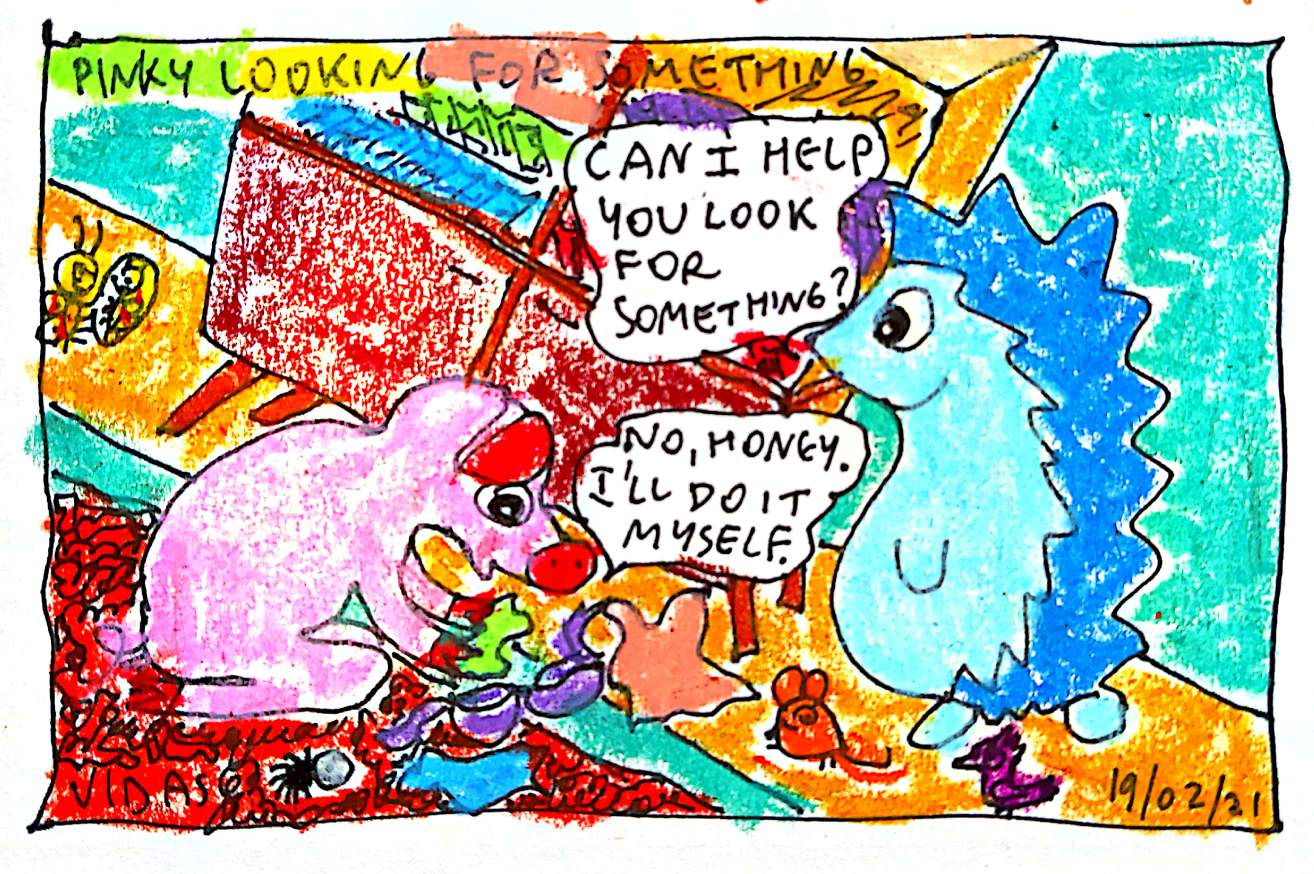
Vidas: Hi guys, this is Vidas!
Ausra: And Ausra! V: Let’s start episode 399 of Secrets of Organ Playing Podcast. And today, I’d like to read some of the feedback we received about the Total Organist program, because I asked recently this question of our members: “How do you like Total Organist, so far?” And, Ariane, Jeremy and Ruth replied with their comments. Ariane: I love the program! I feel very much at home with the organist community and feel that my practicing and learning matters. I am working my way slowly through a couple of courses and the nice thing is I can totally work at my own pace. Thanks Ausra and Vidas! Jeremy: It is fantastic to have a community which understands the issues of being an organist, finding practice time, and the work of preparation for services and music. Ruth: Total Organist means a great deal to me. It is putting me in touch with musicians around the world. It is stimulating through its presentations and discussions. I am truly grateful for this experience! V: So, once in a while, people send these feedback to us, and this is really nice. A: Yes, it’s wonderful to know that we are useful to somebody, and we can help people in the area that we love ourselves, and help others to experience it and to know it. V: So, for example, Ariane appreciates the community, and probably she means that she can keep in touch with other members of our program through Basecamp. A: I think that’s a very nice thing, because I saw that in many actual places, an organist by him- or herself might feel quite lonely! Don’t you think so? Because they are playing such an instrument that they are always alone! V: Right. Even if you are leading a choir or accompanying the choir, if you are playing, you are practicing on the organ bench mostly alone! A: So, I guess it’s very nice that there is a platform where you can meet people like you and share your experiences! V: Yesterday, I went to our monthly book club meeting, and you couldn’t go because you felt ill. And, it reminds us also a little bit about this community, and once a month we meet and discuss the books that we read, and we are looking forward to the next meeting. Right, Ausra? So, it’s kind of similar to the Total Organist community. It’s only online, we don’t meet face to face, yet, but the experience is similar. We share common interests and support each other. Ausra, do you think that practicing alone would be slower in terms of advancement? A: I think yes, because it’s always nice to have encouragement from others and to share experiences. That way, you can grow faster, and overcome problems easier. V: And Jeremy also comments about the community, that he appreciates the most, and Ruth appreciates that she is in touch with musicians around the world. So, I guess it all comes down to this community. It’s a rather compact community—we have around 80 people in our group, maybe more—but not all of them are active on Basecamp. Everyone probably receives those questions at the end of the day to report what you have been practicing today, or what you are struggling with, or something like that, but people do, they write, and sometimes I don’t even need to interfere in their discussions. I see that a few people get together under one comment, and support each other. That, to me, is a sign that people care about others in the group. A: That’s a good sign, I think. V: Yes. They’re invested with their time and their energy in this group and want to see other people succeed, and by seeing and helping others succeed, they also succeed faster. A: True. V: It’s a nice feedback cycle to have. Of course, other people are lonely and individualistic, right? For those people, group settings and group environment probably is not as...I would say… attractive as sitting on the bench alone with the music and the instrument and with their thoughts and ideas. What about you, Ausra? A: Well, I always thought about myself as a very unsocial person—very individualistic. But the more I live, the more I understand that really, we are social. V: Social animals! A: Yes, just like dogs. So, I guess that sooner or later, everybody comes to that… V: Understanding? A: ...understanding, yes. V: The sooner, the better! A: Yes. It doesn’t mean that we don’t need our time to be alone, but we still need to communicate with others—to socialize. V: And you know, we are drawing our comics, our Pinky and Spiky comics, and putting them on Steemit, and we also have this little community where people can participate in contests of drawing those animals and comics themselves. And the theme changes every week, and it’s sort of very nice to see people get involved, and also to support each other and comment each other. It’s an open group, not a closed group like Total Organist—anybody can join, but the principle is the same, I guess. Ausra, do you feel excited when somebody comments your drawing? A: Yes, actually I’m waiting for those comments. It’s part of my day. V: So, probably it’s true to say that other people are waiting for other people’s comments as well, and it’s a cycle, as well. So it’s the same with Basecamp and Total Organist here. Kind of people who support each other, care for each other and wait for those comments, and they can count on them, because the questions arrive at the end of each day! And they get automatic questions: “How was your day?” or “What are you practicing today?” and you don’t need to think about what to write; you just document you just document, a little bit, your activities. To me, that’s a very valuable tool to have for people to help them grow. And I hope we’ll see more involvement from our group in the future, too, Ausra. A: I hope so, too. V: Ok, guys, this was Vidas, A: And Ausra. V: Please send us more of your questions; we love helping you grow. And remember, when you practice, A: Miracles happen. |
 DON'T MISS A THING! FREE UPDATES BY EMAIL.
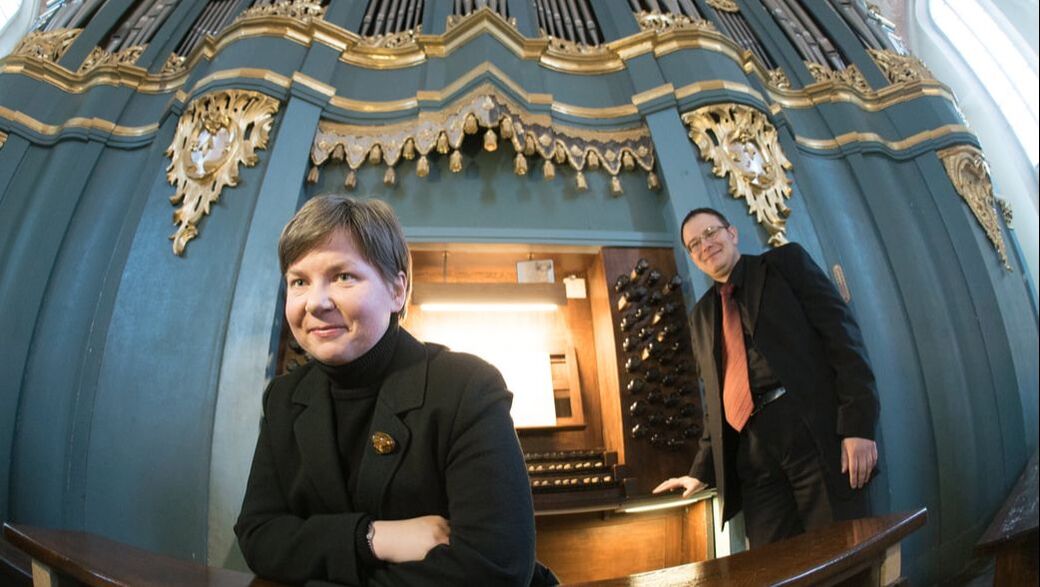 Photo by Edgaras Kurauskas Photo by Edgaras Kurauskas
Authors
Drs. Vidas Pinkevicius and Ausra Motuzaite-Pinkeviciene Organists of Vilnius University , creators of Secrets of Organ Playing. Our Hauptwerk Setup:

Categories
All
Archives
April 2024
|

 RSS Feed