|
Vidas: Hi guys, this is Vidas.
Ausra: And Ausra. V: Let’s start episode 302 of Secrets of Organ Playing Podcast. This question was sent by Henry, and he writes: I would like to start accompanying the congregation using an electronic keyboard. My question is, when and how do i start learning congregational opening hymns? Please i need your piece of advise on this issue. V: So, Ausra, opening hymns for congregational singing—I guess Henry should start learning them right from the start! A: That’s right. How else could you start to learn them? V: It depends on his level of ability, of course. A: True. V: If he can play four part harmonizations or not, yet. What to do if he can’t play four parts right away? Maybe sight read a bunch of hymns one voice at a time, two voices? A: Yes, that’s right. And that electronic keyboard, I assume, doesn’t have the pedal board, yes? V: Probably not. So then to me, accompanying hymns on the keyboard without pedals is more difficult that with pedals. What about you? A: True. V: Why? A: There is not much you can do on an electronic keyboard without a pedalboard. V: And your left hand, then, is very busy. A: True. V: Okay, so Henry might benefit from our “Hymn Playing Workshop”, probably, or “10 Day Hym Playing Challenge,” right? What do you think about that, Ausra? A: True! I’m just not sure why he is asking only about opening hymns. Will somebody else play the rest of the hymns? V: Right, it’s unclear. I can’t imagine the situation without him playing everything else. A: Or is he talking, maybe, about introduction of the hymns? V: Oh, you mean playing hymns like normally people would play, but adding introductions! A: Maybe that’s what he means. V: Okay, so then it’s another problem. He needs to creatively introduce hymns. A: True. V: What’s the easiest way? A: Well, just to play the last phrase or four measures of the end of the hymn. V: The last phrase. A: Yes, the last phrase. V: Or maybe eight measures—two phrases! A: Well, that wouldn’t be a phrase. I phrase is two measures. V: Yes, I meant two phrases, like a sentence. A: Yes. V: Is it okay to end the introduction with the dominant chord? A: Yes, in some cases that might work. V: You change the last cadence to the half cadence, and finish with the dominant chord, and what happens then is very interesting. The congregation is propelled into singing the first verse right away. A: Yes, that might work. V: Because what happens with the half cadence, Ausra? What’s the feeling? A: That something is unfinished and you have to continue and finish it. V: Like a question mark. A: Yes, it is like a question mark. Very good comparison. V: This year, when you started the harmony with kids, are you already talking about cadences or not? A: Yes, I’m talking about cadences all the time. V: So, how are they doing in playing or writing down cadences? A: Some better, some worse, as always. V: Do they have to write down cadences or play them in your school? A: Both. V: Both, right? I see. What do they like more, to write or to play? A: Some of them like writing more, some like playing. It depends upon the person. V: But playing is rather more difficult, probably. A: Yes, often it’s more difficult. V: Because you don’t have much time to think, just play rhythmically. A: But not for piano majors or choir conductors. V: Usually people who play melodic instruments such wind instruments or strings, they can’t play piano very well. A: Yes, it’s hard for them. Yes, it’s harder. V: Can they still advance with sufficient practice? A: Of course! Everybody can advance with enough practice. V: So Henry could also advance, probably. A: Yes. V: Do you think, Ausra, transposing hymns would benefit him? A: I think every musician needs to know how to transpose and to do that occasionally. V: Why? A: That’s a very useful tool. Well, it broadens your perspective. You get better acquainted with various keys, and it’s sort of like exercise for your brain! V: Like Sudoku? A: Yes! V: Musical Sudoku. A: I think even better. V: So it could postpone Alzheimer’s and similar illnesses. A: True. V: I see. Wonderful. So guys, you see, you can sometimes create your own exercises out of real hymns or even musical compositions that you are playing right now. Imagine you’re playing a piece of organ music: a chorale prelude. Is it possible, Ausra, to take an excerpt of a chorale prelude and to transpose it into other keys? A: Yes, of course, why not? V: What are the principles, when you do this? How do you think? I know you are a teacher, and you can’t imagine yourself, probably, as a beginner, but what do you think about when you transpose? A: Well, I think about a given interval, by which I have to transpose it. Well, sometimes, I add a different clef, too. That’s a possibility, too. V: What do you mean? A: Well, let’s imagine that this piece is written, let’s say, not in the treble clef, but in alto clef. That’s it. V: And alto clef means that on the middle line, there is treble C. A: That’s right. V: Okay. A: Or some other key. Soprano key, Tenor key. V: There are five C clefs, A: Yes. V: Three F clefs, and two G clefs. A: Yes, but I think the most common way to transpose, I think, is on a given interval. Think about it. V: How beneficial is it to think about scale degrees instead of intervals when you transpose? In which kind of music would that work? A: Well, it depends on how you think when you’re playing a piece in the home key—if you’re thinking in scale degrees or not. If you’re thinking then yes, it would be easier probably to transpose, thinking about scale degrees. I don’t think that myself. V: I don’t know many people who think in scale degrees. A: Me, too. V: Because, it’s harder for your brain, and we always strive to do easier things. A: Well, I think it’s not that it’s harder, but I think it’s more of a math approach, a less musical approach, thinking in scale degrees. There are some people who are very good at it. V: Some are better than others. A: That’s true. V: So, you can think about scale degrees, think about intervals, and even think about different clefs when you transpose. Those are the main three principles. A: That’s right. V: And, it can work for hymns, too, when you have to transpose either an entire hymn, or just a part of it like soprano, or bass. Right. So, Henry and others who struggle with learning congregational hymns could really benefit from transposing and sight reading in a home key, too, many many hymns. At first, it’s a slow process, right Ausra? A: Yes. V: And what happens later in three months, let’s say? A: It gets easier and easier. V: Would it always be as easy as sight reading? I mean can you sight read a hymn in a foreign key right away with fluency? A: Yes. V: Yes, I believe so, too, because if you, for example, want to get certified by the American Guild of Organists, in certain levels of examinations, they have transposition exercises of hymns, too. So transpose up a half step or whole step, or downwards. Up a major or minor third, or downwards, too. We have this course “Transposition for Organists, Level 1” which would be helpful for people, too. Thank you guys, this was Vidas, A: And Ausra! V: Please send us more of your questions, we love helping you grow. And remember, when you practice, A: Miracles happen.
Comments
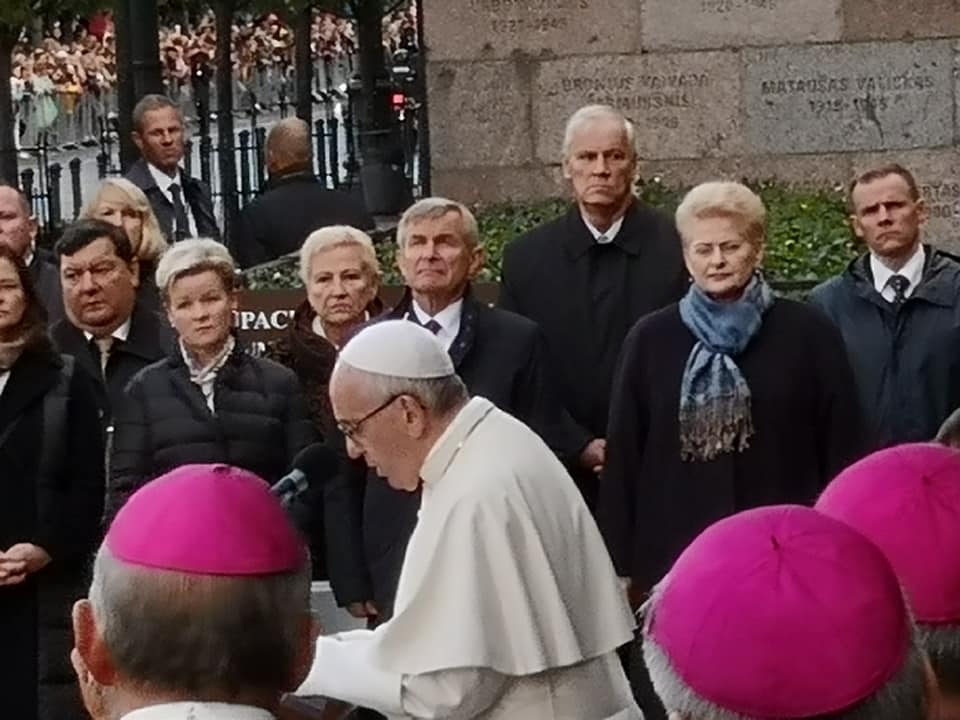
On September 23, 2018 when Pope Francis visited Lithuania, I had an opportunity to make music on the organ, together with choral polyphony and Gregorian chant while he was visiting Museum of Genocide Victims in Vilnius.
The performers were chamber choir "Aidija" and Schola Cantorum Vilnensis", led by Romualdas Grazinis and myself at 3 manual digital Johannus organ which stood inside a special tent in front of a huge crowd in Lukiskiu Square. My role was to improvise versets and accompany Gregorian chant. Towards the end we were not sure when the Pope would appear so we kept performing a mix of Tu es Petrus and Ubi Caritas... If you want to find out what happened, here's the audio recording. Let me know your thoughts... SOPP301: Do organ builders have online databases with specs on every instrument they’ve built?10/9/2018
Vidas: Hello guys, this is Vidas.
Ausra: And Ausra. V: Let’s start episode 301 of Secrets of Organ Playing Podcast. This question was sent by Dan, and he writes: Hi Vidas, back in June, i’d tried out a small Casavant organ, in a place which is used for people to stay at, they do corporate events there, and other stuff, and the owner of the place, doesn’t really play the organ. She wants me to play it on a couple dates in November. It’s a 1929 Casavant organ, and it’s their opus 1375. When I’d tried the instrument, I was mainly using the crescendo pedal to control it. Those can give you sometimes less than desirable results. I’d asked her if she could provide me with a stop list for the organ, so I could know what it has on it, so I can have finer control over the instrument. Her response was that she doesn’t play the organ, and that we’d have to get somebody in to help. Does Casavant, or any other organ builder for that matter, have an online database with specs on every instrument they’ve built that I could access? OR would it be worth contacting Casavant about this? Secondly, the instrument hasn’t been looked at as far as tuning and maintenance for at least a year or two, and they don’t seem to have a regular contract with an organ technician. I suggested that they at least get one in, to tune the instrument, as when I’d tried it, it really needed it in my opinion. Any advice in this situation would be appreciated. Thanks. Dan V: So, it looks like Dan encountered a historical instrument by Casavant, and he wants to know what the stop lists are, right? A: Yes. V: So the easiest way would be to take a picture of the stops when you are there, and you won’t need any databases, then. A: True. Especially, because he already has played this instrument, as I understood. V: But, some of our subscribers are blind, actually, so if this would be the case, then taking a picture, for Dan, wouldn’t work, right, if he can not see? So, I guess every respectable organ builder has its own database online, so you can just google Casavant and Archives and, I guess, they would find it. A: True. V: And the second question would be about the instrument tuning and maintenance. And Dan suggested they get a technician to look at it. Is that a good idea, Ausra? A: Sure. Definitely. I would do it in his case, because I think any instrument needs at least once a year to have a look. V: Twice even. Every season change, right? A: That’s right. V: But at least once. And it doesn’t have to be an overseas expert from another continent or even another country, it can have a local organ technician come in and help the tuning and the regulation of the instrument. Sometimes you need it not only to be tuned, but sometimes you need to regulate the mechanics of the instrument. Maybe there are some ciphers, you have to fix that. Maybe the couplers need to get adjusted if it’s a mechanical instrument. What else, Ausra? A: Well, it might be almost anything. You never know what might happen, so you need to check it. V: For example, yesterday, I checked an organ in Vilnius University St. Johns’s’ church. The chapel, where they have everyday weekday masses, and the reason I checked and fixed it a little bit, two keys, is that today, Ausra is going to teach organ on that instrument, right? A: Yes. V: Would you like to share with us what the occasion was? A: Well, in Vilnius today, we are actually starting a school for church organists. V: The National Association of Organists is organizing….they call it organ school, or maybe church music school of Gregory. St. Gregory, right? A: Yes. V: And Ausra has been invited as an organ and harmony teacher. A: That’s right. V: So, how many students will you have? A: I’ll have two organ students and everybody else as harmony students. V: Group lessons. A: Yes. I think in total there will be about 14 students. V: So, for organists today on that chapel organ, you will have an introductory lesson, right? A: That’s right. V: What are you planning to do? A: I’m planning to introduce myself and get acquainted to see what level they are, and to bring them some repertoire. V: It’s hard to plan beforehand, before you know what they can do or not. A: That’s right. I selected some pieces, but I don’t know if they will work, because I don’t know how technically advanced they are. V: Have you selected the pieces in various levels of difficulty? A: Yes, sure. Some are easier, some are more difficult. V: So, I guess they will find something. A: Yes, something will work, and for the next lesson, I’ll bring more music. V: And, you also will have in the future some harmony classes, right? A: That’s right. V: What’s your first class about? A: About how chords are made. V: Right. How to put the three notes together. A: Yes, actually four notes. V: Four! A: Because it’s usually four notes. And about closed and open position. V: Mhm. A: And about all the basic stuff. V: Interesting. We will be looking forward to know your feedback from the organ classes and harmony classes that you teach, and I guess our students from other countries will also benefit from that. A: Well, you know, I don’t know how I will teach harmony in four sessions! V: Just four sessions? A: Yes, before the midterm. And then there will be six sessions before the final exam. V: Four midterm, and then six, and then final. A: Yes. So can you teach, you know, harmony in ten sessions? V: Basics, maybe. A: Basics, yes, for some people, not for everybody. V: Sort of level 1, right? A: That’s right. V: Remember we have this course, “Harmony for Organists, Level 1,” so until the dominant seventh chord or a little bit more, but you know better than I. A: Okay, let’s go back to Dan’s questions about about that Casavant organ. It’s interesting, for instance, that in Lincoln, USA, we have also played Casavant at Grace Lutheran Church, and it was a nice instrument. I really enjoyed playing it. V: It had reverberant acoustics! A: Yes! For the United States, yes, something like two seconds. V: Wonderful. So I’m looking now at the Casavant organ building Website, and let’s see what they have….do they have instrument’s specifications….recent instruments. Obviously it’s not recent in Dan’s case, but let’s see. They build so many, right, and… A: Yes V: The latest opus is 3,794. Wow. But, they have actually an email on that page. You can contact Casavant, and maybe they can provide the stop list of your desired opus. You know, you just specify the location and opus number, and maybe they can send it to you. A: I hope they keep such kind of data. V: Obviously, they do. You can, if not online. A: I think they started to put them online when the Internet began. V: Right, and that was obviously before the time of the Internet. So, it’s nice that Dan travels to try out other instruments, right? A: I think it’s important for every organist to try new instruments and a new environment. V: It gives new perspectives, and if you try a variety of instruments—mechanical, pneumatic, electro-pneumatic, electric—all kinds of action types, you get sort of very broad perspective of what can be done, what sounds better than in other locations, and you learn more from just visiting those instruments. A: That’s right. V: Thank you guys, we hope this was useful to you. Please send us more of your questions; we love helping you grow. This was Vidas, A: And Ausra, V: And remember, when you practice, A: Miracles happen.
Vidas: Hi guys, this is Vidas.
Ausra: And Ausra. V: Let’s start episode 300, of Secrets of Organ Playing Podcast. And this question was sent by John. And it doesn't start like a question, but rather like feedback or response to another question that we discussed earlier about improvising alternate hymn harmonizations. So John writes: There are a number of books of varied accompaniment [published by companies such as Kevin Mayhew and Novello], but these are for hymns sung by English-speaking congregations. Eric Thiman composed two books of excellent accompaniments [published by Novello and OUP, still available]. A very effective way of beginning a final verse is by playing a flattened seventh on the pedals. Other devices include: introduce a dominant pedal towards the end of the hymn, changing major chords into minor [if possible], playing the alto line above the treble, placing the treble line in the tenor [fauxbourdon - this is quite difficult and needs to be written out in full]. My advice would be (i) get hold of Thiman's books to see the techniques he uses and (ii) if you require a varied accompaniment for a choral, write in out if you are a beginner. Do not try improvising harmonisations until you are proficient. There is no fast-track route I'm afraid. I have just seen a single copy of C H Lloyd's "Free Accompaniment of Unison Hymn Singing" available on Amazon—this is a very rare book—brilliant accompaniments written by a master. Good luck! John V: That’s a lot of advice, right Ausra? A: Yes. V: And quite solid advice, I would say. John knows what he is talking about. A: But I think he took them all from that book that he advertises. V: Could be. We could discuss a little bit, what he is suggesting. For example, at the beginning of the final verse, you should play a flattened seventh on the pedals. Let’s imagine, C Major, flattened Major would be B flat, right? But in C Major there are no accidentals, so how would this sound? A: I don’t think it would work for every hymn, what he is talking about. V: Uh-huh. A: That dominant pedal point toward the end of the hymn, that nothing special. That’s very obvious too, in general,,, V: Okay. A: to have a pedal point. V: What about changing major chords into minor? A: That’s a possibility, yes. That’s if you would look at the collections such as, Cesar Franck’s ‘The Organist’. You would find it in each of the piece that he switches very often from major to minor. Because it’s a very easy thing to do, and you don’t have to do a modulation in order to do that. So that’s a very common tool. V: It is just a juxtaposition of two modes. And you mention Franck; yes he takes the same theme, right? A: That’s right. Yes V: Only rewrites it in minor. A: Yes. V: With no accidentals. So if the theme of the hymn is in C Major, you could just add three flats. A: That’s right. V: In many cases it would work. A: But not always, as John mentioned too. V: I imagine it would not work very well if we use harmonic minor; if this augmented second between the sixth and the seventh scale degrees would be, somewhat uncomfortable to listen and to sing. A: And again, because it’s hymn singing, you need to look at the text, because of that particular stanza where you would like to switch from major to minor or otherwise, because it might not suit the text very well. V: Uh-huh. So if the language talks about,,, A: Joy, and you will switch suddenly to a minor, I don’t think it would be appropriate. V: Mmm-hmm. And vice-versa. And you can add major in the minor hymn. A: I know. For example during the Lent, probably wouldn’t be good. V: Right. I find it easier to add major keys in the contemplative hymn, let’s say for communion, and play it softly, just like a meditation. Mmm-hmm. What about playing alto line above the treble? A: Well we talked many times about this but actually he suggested to play tenor voice above the other voices. V: Uh-huh. A: Because for alto voice, I don’t know, about this particular case that John talks, but in general while teaching harmony for many, many years, what I noticed that alto voice is the most,,, V: Stationary? A: Stationary. And it’s the most stationary voice and I don’t think it would sound so well in the soprano, in the treble range. V: Unless, we could add eighth notes. A: Yes. That’s true. V: Or interesting rhythms. A: Yes. Because in general when I look at the four voice harmonization, I can tell if it’s good or not just from looking at the alto voice. If it’s stationary, I know that it’s no good. V: No good, or good? A: It’s good. V: Ahh. A: If it jumps a lot then I’m looking for treble, and for mistakes. V: I see. If it jumps a lot your student is looking for treble. A: That’s right. Because, sort of like tenor voice, it’s like an inversion of soprano voice. So you can easily switch these two voices. But alto stays stationary... V: I see. A: ...most of the time. V: Right. What about the advice of writing down varied accompaniment? A: I think that’s a good idea, but I wouldn’t do that for myself, because I wouldn’t have time to do it. V: That’s probably for beginners more. A: Yes, but imagine if you are playing a church service, well you have to play what, at least four or five hymns for each service, and sometimes even more. So if you would start writing down the accompaniment for each of those hymns, I think it wouldn’t be enough for you, hours in the day. V: What if this is a full-time job and you are immersed in this position and have forty hours to do your preparation? A: Well, maybe do it once or twice, but in the future I would rather spend that time practicing, actual thing than writing it down. V: And then you will gain the skill of doing it on the spot. A: That’s right. V: Faster. A: Like with my ninth-graders, in music theory course, we start playing sequences on the piano. And some of them actually write them down. And I’m actually really not supporting these things, because I’m telling them in order spending all that time while writing, and memorizing it, rather just sit and play it. V: So, although John writes, there is no fast-track route, but I would think that the idea of ‘not trying improvising harmonizations until you are proficient’ needs to be somewhat understood not literally, right? How can you get proficient if you are not improvising hymn harmonizations? You have to improvise them, and make mistakes, and then get frustrated and get more mistakes. But it’s a process which needs to be done, I think. A: Yes. And I think sometimes you have to take a risk. That’s no different approach, how people learn for example, how to swim. V: Mmm-hmm. A: Somebody just tells that, drop somebody into the middle of the lake, and you either swim, or you will... V: Sink. A: Sink. I’m not telling that you have to sink and do these extreme things, but I think sometimes it’s worth risking. You cannot write everything down. V: Mmm-hmm. Right. And those mistakes will teach you many things, too. A: True. V: You learn more from mistakes than from good playing, I guess. Thank you guys. I hope this was useful to you. Ausra is also joining me, right? A: Yes. V: In hoping that you can apply those tips in your practice. And please send us more of your questions. We love helping you grow. And remember, when you practice... A: Miracles happen! SOPP299: Could please talk about how to improve finger accuracy, especially with fast passages10/7/2018
Vidas: Hi guys, this is Vidas.
Ausra: And Ausra. V: Let’s start episode 299 of Secrets of Organ Playing Podcast. This question was sent by John and he writes: “Hi Vidas and Ausra, Thank you for your amazing blogs lately, there's been some great discussions and I value the different perspectives you both bring. I'm wondering if you could please talk about how to improve finger accuracy, especially with fast passages. Specifically I'm trying to play In Dulci Jubilo BWV 729 by Bach, your training videos were great and I surprised myself how fast I was able to learn it (for me), it still took 2 months. Now my problem is trying to speed up to concert tempo. Most professional organists on YouTube seem to play this piece in 2:40-2:50 minutes, your Christmas Concert video shows you play it in about this time. I seem to be able to play it in about 3:10 mins quite ok without mistakes, but when I go faster, I seem to slur lots of notes by brushing against the key alongside, for example playing the note A I might bump the G sharp alongside. It feels like my fingers fumble, and I make mistakes in random places and even lose my place completely. This makes me feel quite uneasy and I don't have any confidence that I can get through the piece without messing it up. So I need to go about 10-20% faster and it seems a big jump in difficulty. I have noticed I struggle with fast pieces in general. Is it normal to take a long time to increase the tempo after having learnt a new piece? What exercises should I do to be able to play fast tempo pieces accurately? I want to play this piece as the postlude for the Nine Lessons and Carols service on Dec 16th, so I still have time, but this will be a big occasion with lots of people and the former retired organist will be there so I don't want to stuff it up! I hope your day goes well, Take care, God bless, John...” V: That’s a nice message. A: Yes, that’s a very nice message as John always writes to us. Well, let’s try to help him. V: OK. In Dulci Jubilo the most characteristic thing is probably passages in the upper part. Sometimes they run in soprano but sometimes they go between both hands and Bach learned this technique presumably from visiting Buxtehude in Lubeck. A: Yes. V: I think the main difficulty with those passages is 3 sharps of course. It’s in A Major. A: So what we could suggest for John if he has the possibility to practice those scales. V: Right. A: I would work on scales in A Major. V: A Major. Probably in related keys as well because Bach has modulation. A: In D Major probably, E Major. V: F Sharp Minor. A: F Sharp Minor yes, it’s a parallel key. V: And C Sharp Minor maybe. A: True. In general I think playing scales is important technique to develop and it helps a lot when playing repertoire. V: B Minor too because it has 2 sharps. So playing scales and arpeggios too because these passages have arpeggiated figures as well. Maybe we could suggest to John to isolate one passage and look how it is put together and maybe transpose it to different keys. The only passage, nothing more, just the passage. Would that work? A: Well that might work but in general I think he needs to strengthen his finger muscles. V: Oh, so Hanon exercises. A: Yes Hanon exercises would be another resource to look at and to work on. But overall I think that you don’t have to look at other performers and compare your tempo with another. Because the most important thing is that you wouldn’t take too fast tempo. You need to take tempo as fast as you can still control everything because otherwise that freedom is OK for now. Maybe you will speed it up a little bit but don’t rush. V: And maybe when John comes back to this piece maybe couple years later he can play without any trouble in less than three minutes. A: That’s right. So I think listeners will forgive you if you will not play very fast but they will not forgive you if you mess up everything even if you play it fast. V: One or two mistakes is OK obviously but in things like that we tend to get scared of mistakes and one mistake leads to another and another to another and pretty soon we panic. A: That’s right. And for listeners it’s so uncomfortable to listen to such a performance because you know that you are not guilty of something but you feel that way. V: Umm-hmm. You feel sorry for that organist and sort of helpless because you can’t jump in and play for him. A: That’s right. So I always think you need to take a tempo in which you can control the situation because otherwise things might just get out of your control. V: So probably the most beneficial would be Part 1 and Part 2 Hanon exercises and he could stack up maybe ten to twenty exercises in a row. Maybe not necessarily learning all of them together but maybe one day he would learn number one and then repeat a few days, after a while he would add number two so then he would have two exercises in his repertoire, three, four, five, and I don’t know in three months he would have maybe entire first part ready to play in a medium tempo and then his hands get tired, his fingers would get tired too, but sooner or later they would be stronger. A: That’s right and it’s very good to practice on the piano too. Because in order to improve your technique you need to practice mechanical instruments, either mechanical organ or mechanical piano because electronic keyboard does not give for you enough for your fingers to work on. V: Resistance? A: Yes. V: Some very new keyboards they have this artificial resistance which is similar to real organ but not many people play them. A: True. V: So I guess I could also recommend playing on a table just mechanically lifting and hitting the table with fingers those exercises because it’s a pain to listen to them, right, for the family for example. They are very un-musical and boring unless he takes different modes and adds some sharps, not only in C Major. OK guys, please send us more of your questions, we love helping you grow. This was Vidas. A: And Ausra. V: And remember when you practice… A: Miracles happen. 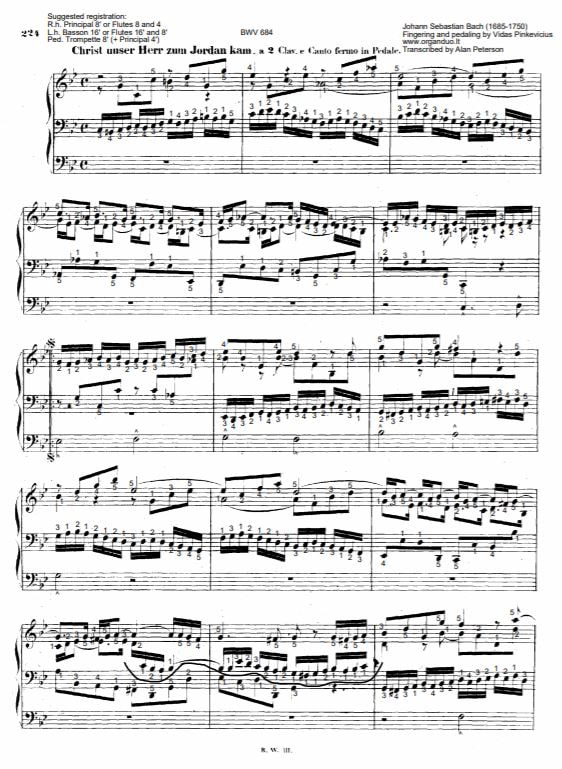 Would you like to master Christ, unser Herr zum Jordan kam, BWV 684 by J.S. Bach from Clavierubung III? I have created this score with the hope that it will help my students who love early music to recreate articulate legato style automatically, almost without thinking. Thanks to Alan Peterson for his meticulous transcription of fingering and pedaling from the slow motion video. Intermediate level. PDF score. 4 pages. 50% discount is valid until October 13. Check it out here This score is free for Total Organist students. SOPP298: I am quite confused about how one should register Bach's Trio Sonata in E flat (BWV 525)10/5/2018
Vidas: Hello guys, this is Vidas.
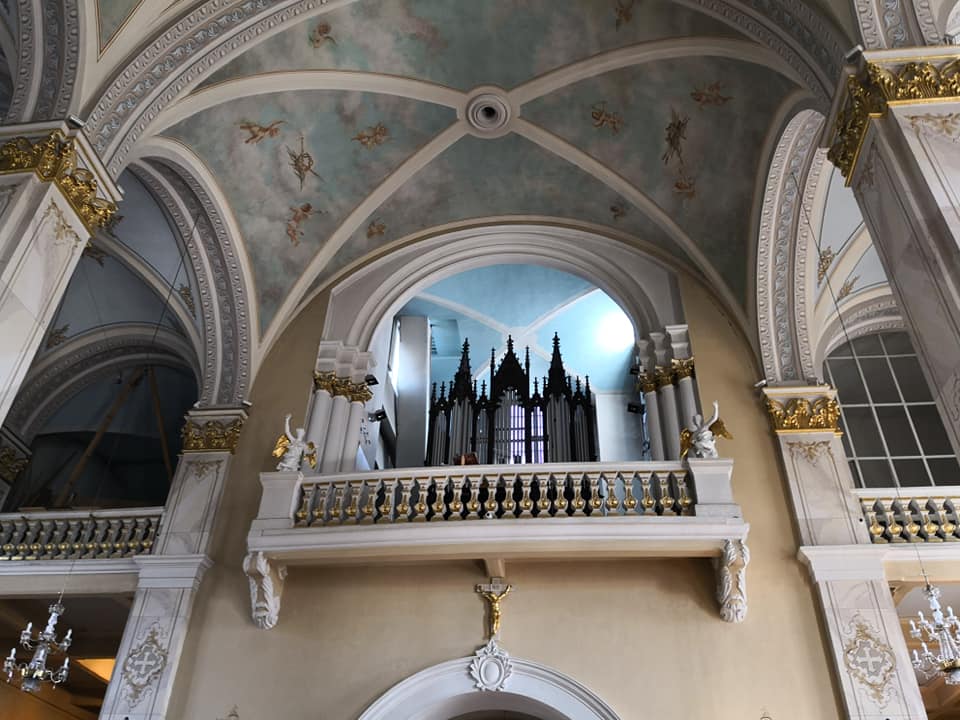
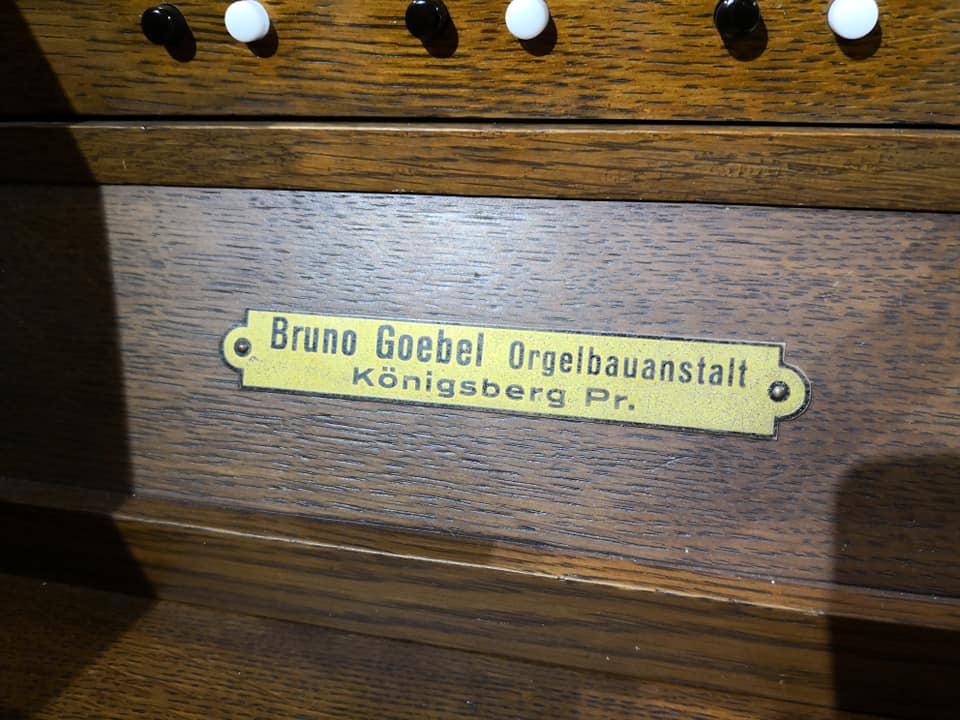
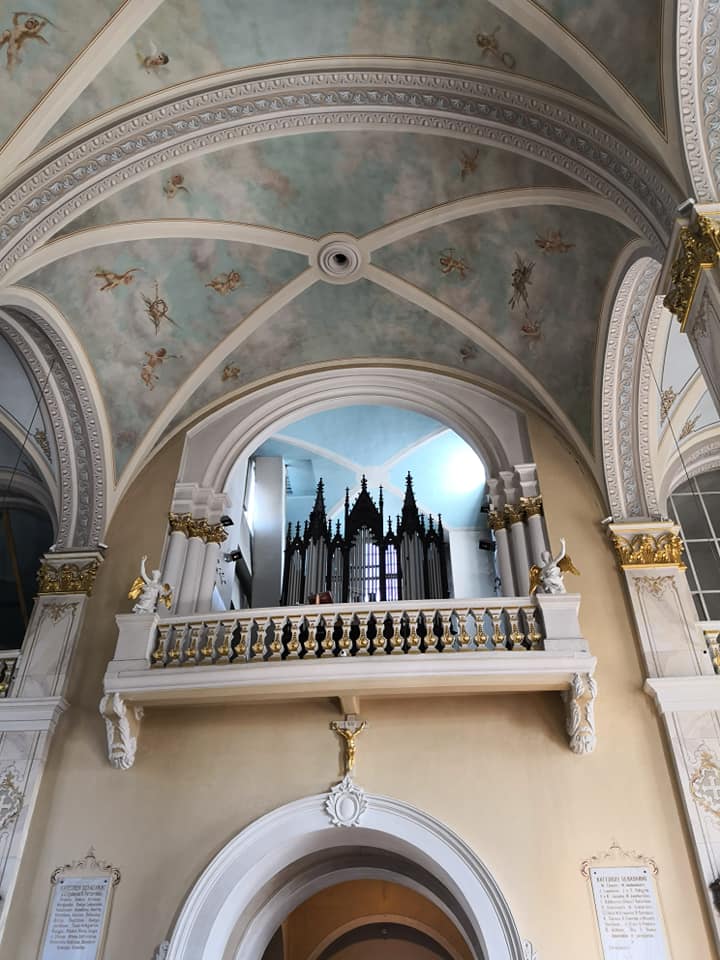
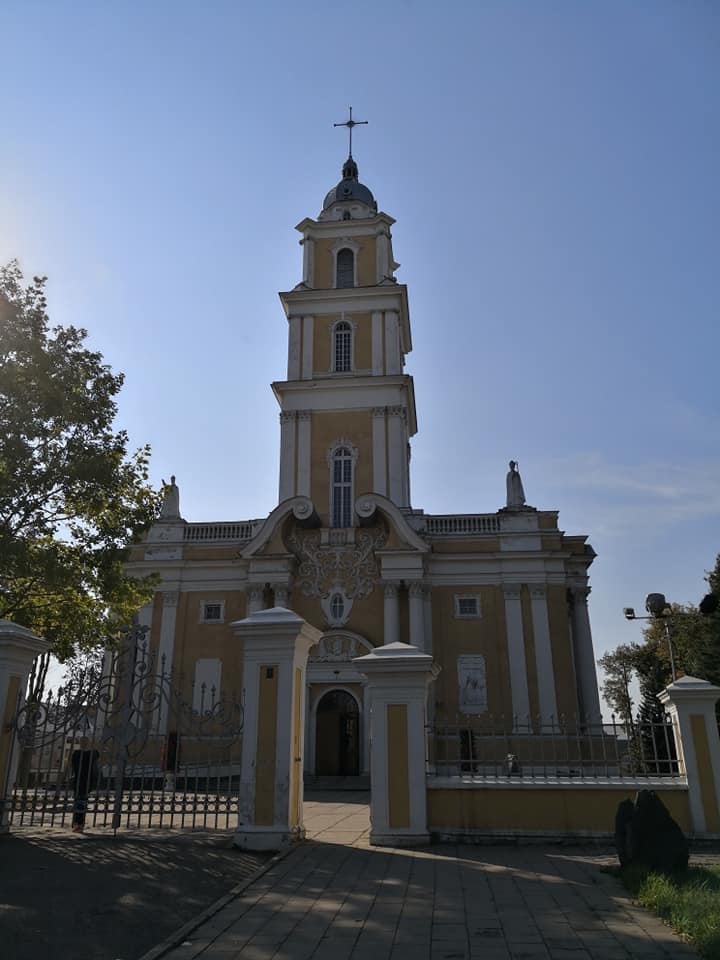
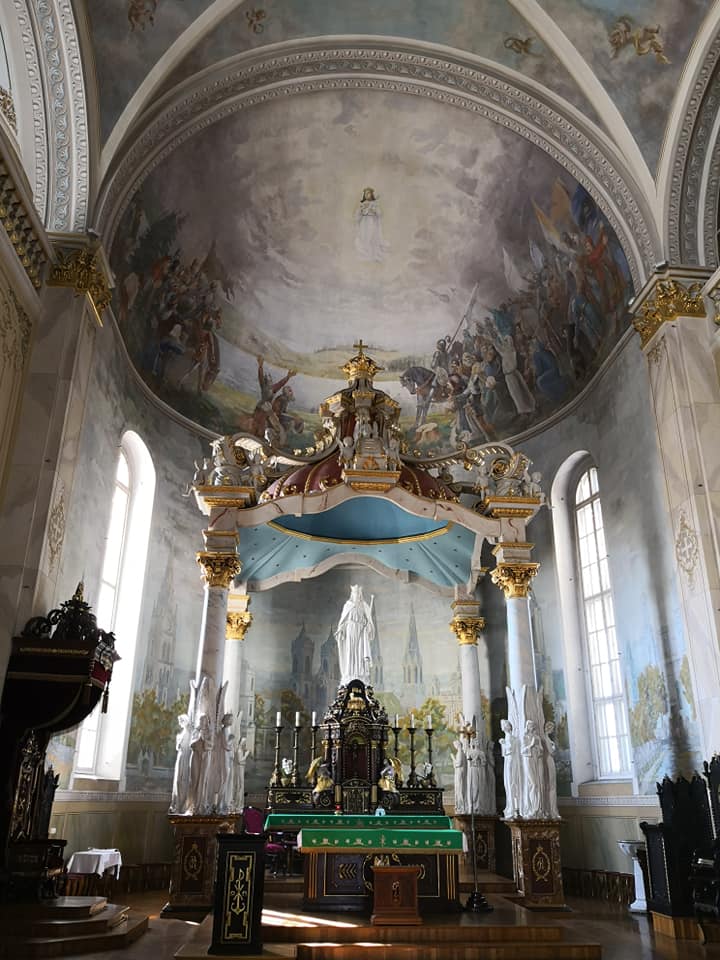
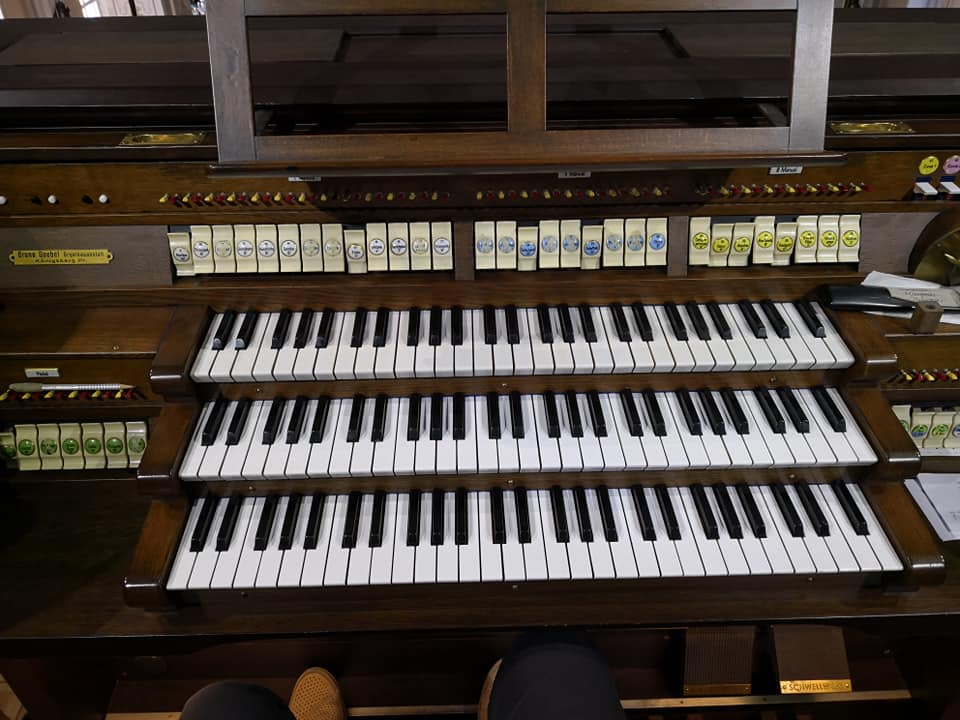
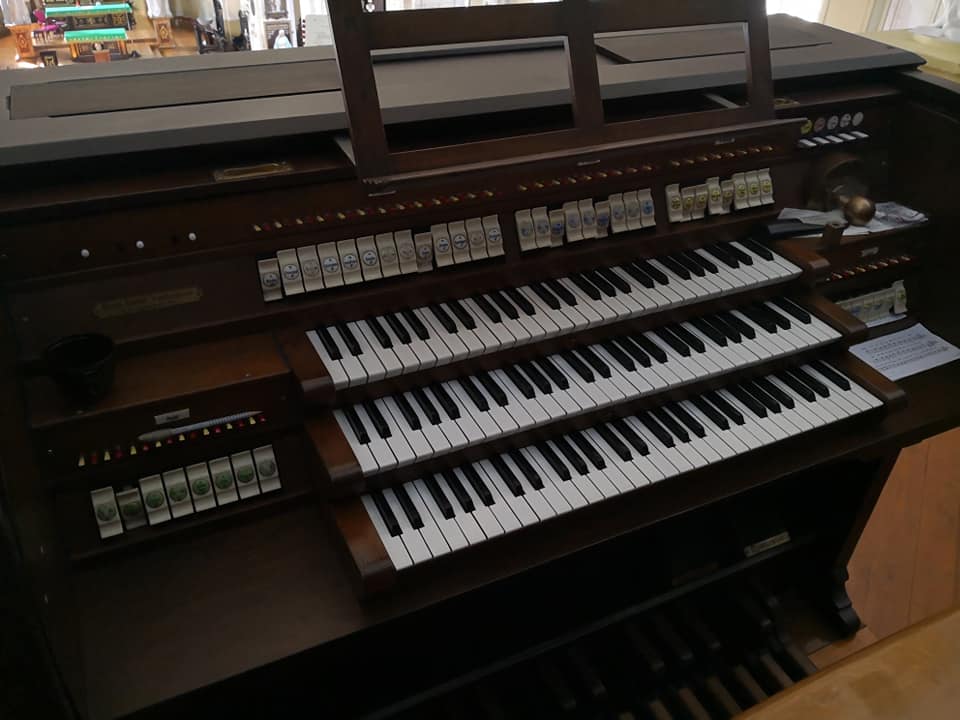
Ausra: And Ausra. V: Let’s start episode 298 of Secrets of Organ Playing Podcast. This question was sent by Anne, and she writes: Dear Vidas, Could you help me out a little with registration? I am quite confused about how one should register for many compositions by Bach, in particular his Trio Sonata in E flat (BWV 525). I understand that it was not common practice in his time to list out particular stops one should pull for each piece, and that it depended rather on the organist himself and the place he was in. But I don’t know where to start. If it doesn’t trouble you too much, I’d definitely appreciate your help. Regards, Anne V: So, Ausra, how could we help Anne for starters? A: That’s a very good question! Actually, a very deep question, and this question actually was discussed a lot in the past, and I think will be discussed in the future, because there are so many possibilities and so many ways how people register Bach’s Trio Sonata. Well, I remember myself as being a student at the Academy of Music in Lithuania, and I and other students often registered Trio Sonatas without a 16’ stop in the pedal, and I think that was the first mistake that we did. V: Why is that? A: Well, when thinking about Trio Sonata, I always think about Baroque ensembles. V: Like instruments—instrumental ensembles. A: Yes. Especially those string ensembles. And usually, for lowest voice, you have a low instrument. V: Like Double Bass. A: Yes. V: Or in baroque times it was called Violone. A: That’s right. Or Bassoon, too. So I think you need to have a 16’ stop in the pedal. Although, then it provides sort of a problem, because when you add 16’ in the pedal, you need to articulate and to be very precise with how you press the pedals down, because otherwise, they might drag you down. And another think that I did then that I wouldn’t do now, I used actually gap registration a lot for my hands. And by gap registration, I mean adding 8’ and 2’ stop for the right hand without 4’. Now I probably wouldn’t do that, either. V: Or 4’ and 1’ but playing one octave lower. A: Yes, that’s right. V: I think gap registration came into fashion a lot with Neo-Baroque style after the 1960s, maybe. But if we compare all treatises and performance editions from the 18th century, obviously, gap registrations were not prominent at all. One of the nice places to look is this collection of chorale preludes by Kauffmann, “Harmonische Seelenlust,” and every piece there has a registration, which is quite rare. A: That’s a very rare case that we have real compositions with real registration suggestions. V: So there, you can find all kinds of interesting elements: doubling the same pitch level stops, a lot of flue registrations, reed registrations, too. You can be quite creative then, and to our ears, that sounds quite strange. A: Yes, because I remember in my youth playing a Trio Sonata, I would never double stops. I would never use, lets say, two 8’ in one hand. V: It’s completely acceptable, I think, especially in a slow movement. A: Another good source to look at would be, probably, the book by Barbara Owen about baroque registration in general. It’s a thick book, and it’s very thorough, and you can find very good suggestions in it. V: If you were playing E♭ Major Sonata today, for example, how would you register the right hand? A: Well, probably 4’ and 2’, but it depends on the organ, truly. V: You have so many options there. If the organ is nice and each stop is so characteristic, you can build, maybe, ten versions of the same registrations. A: That’s true, but let’s say, for example, you could do, maybe, principle 8’, and then flute 4’ and 2’. Because if you would take all the three principals, that might be too loud. Or, if you don’t have principal 8’, maybe add flute 8’ and then principal 4’ and flute 2’. So, you need to experiment and to find out what suits you. Maybe you don’t want to have a 2’. Maybe it’s too high pitched for you. V: Maybe 2’ pitch is just for the third part. A: That’s right. Maybe then just use a couple of 8’ stops and one 4’. And then, for the last hand, of course, I wouldn’t put, probably, the 2’ for the left hand. I would only limit myself to 8’ and 4’. V: I like, very much, if the organ is nice, and those sounds can be quite colorful, I like to play with 8’ and 4’ stops quite often. That can be two flutes, 8’ and 4’, in both hands, but different characters. One of them can be principal either 8’ or 4’. Do you think two principals, 8’ and 4’ would sound good? A: Well, it depends on how skilled they are. They might be just fine. V: In a small organ. A: True, true. And then in the pedal, I would add 16’, 8’, would you add a 4’, too? V: No. A: Me, too. I think it would be just too much. So probably, principal 16’ and principal or flute 8’, I think should work. V: Yes. Sometimes Subbass 16’ works well. A: That’s right. V: In our Saint John’s Church organ, I can put two 16’ stops, too. That reinforces the bass. I like heavy bass sometimes. A: I know. I like it, too. And I remember that Dr. George Ritchie always...the only adjustment he would make to my registration, he sometimes omits some of my pedal stops, because I also like heavy bass. V: It’s because the bass is the foundation of harmony, and listeners should hear it quite clearly. A: True. And, because if they are thinking about larger church acoustics, if you would listen to the choir singing, the higher voice it is, the better it sounds—the louder it sounds. And, with the low voice, it’s very hard to project them in a big room with large acoustics. V: And low voices sound good when they sing softly. A: That’s right. V: What about the reeds? Would you use reeds in Trio Sonatas? A: Well, that’s also a good question for discussions. V: Nice. If you imagine Trio Ensemble playing the Sonata, maybe an oboe would play one part, A: Oboe. I think in some cases Oboe or Krummhorn would probably work quite well. Probably maybe for the right hand, then. V: What about mutations? A: Well, I don’t know. I probably wouldn’t use them. What about you? V: Maybe in one hand, it could sound colorful, like 2 2/3’ A: But you really need to listen to what mutation you have, because some of them sound quite unnatural and sort of squeaky. V: Maybe in one hand you could have 8’, 4’, and 5th (2 2/3’) and in another hand, you could have 8’, 4’, and 3rd (1 3/5’) or a high pitched 3rd (1 1/3’). Both hands would play with mutations of different pitch levels. That could work. A: What about strings? V: But that’s my second choice. With strings, I especially like them for probably a slow movement. A: Yes, for the middle movement, I think, it would work just fine. V: Because they need a slow tempo to be able to speak. A: Yes, and then for the solo in the middle movement, of course, you would have to use strings, flutes—soft stops. And then, of course, for the last movement, I would play it a little bit louder than the last movement. V: Yes, something similar, but maybe with 2’. A: That’s right. V: Or even 1’. A: Sometimes it might work. V: If the organ is nice, you can have so many colors, right? If it’s not nice, you’re limited. Sometimes, you could use just one principal: 8’ in one hand and 4’ in another hand but an octave lower. A: That’s a possibility, too, but you need to check the Diapason, if it will fit. V: Compass! A: Compass, yes. V: If the left hand part doesn’t go below tenor C, then you can play one octave lower. A: Yes, then it should work. V: You have to check. And since, I think, both upper parts are triple parts, I think that should work, playing an octave lower. A: I think, yes, in the E♭ major Sonata. V: Alright, so that’s, I think, enough to Anne for starters, to think about. A: Sure. V: Thanks, guys, for sending us these questions. Please send us more; we love helping you grow. And remember, when you practice, A: Miracles happen. 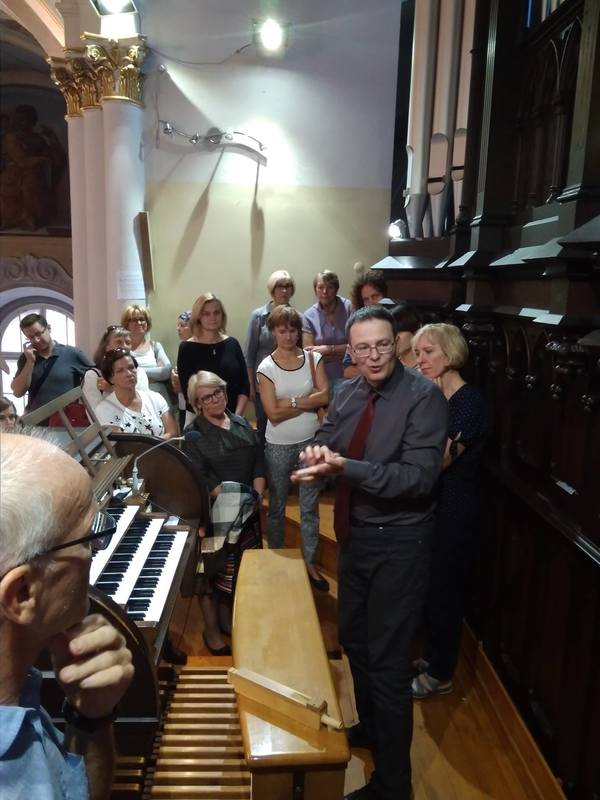 I hope you'll enjoy this improvisation on the Bruno Goebel organ at the Cathedral in Panevezys which I played before my organ demonstration there on September 21, 2018. The organ was built in 1931 and has 3 manuals, 25 stops and pneumatic action. It came to Panevezys from the chapel in Konigsberg. There is room for 13 more stops which could be added in the future. Goebel made a new organ console with 38 stops which would fill the Cathedral space. In 2008-2014 the instrument was restored by the Lithuanian organ builder Antanas Šauklys workshop. Here is the full specification list If you want to watch entire organ demonstration, here is the video (demonstration starts around the 10 minutes mark). Please let me know what you think.
Vidas: Hi guys, this is Vidas.
Ausra: And Ausra. V: Let’s start episode 297, of Secrets of Organ Playing Podcast. This question was sent by Dineke. She writes: Much pleasure with my pedal course. The first week I was some ill and the printer was new....I am studying with pleasure and it s just have been good I had basic knowledge of Theory..... we continue....beside my usual lessons. Nice you had a good Saturday with books meeting. Many greetings from Dineke. V: So this message was sent quite a while ago, right? When... A: Well at the beginning of the month. V: Yes. When our friends came over to our house and we discussed a few of the books we read over the summer. And next month we also will have similar meeting too. I think it’s good to read, right, Ausra? A: Yes. To bad what most of our friends read is only Lithuanian books. And that sort of... V: It’s a limit then. A: Dead, end. Yes. V: Mmm-hmm. Because there are not too many choices then. A: That’s right and Vidas and I, we mostly read English books. And even if there is a book written, let’s say by, Spanish author for example, I want to read it, not with translation into Lithuanian but with translation into English. Because I think it’s better. V: Right. Right, you’re right Ausra. And sometimes it’s interesting to read books not in your direct professional sphere. A: That’s right. V: Or area. Because then, you can really discover new things you didn’t even know existed. And sometimes not even books, but articles. I’ve, for example, found out that on the platform Steemit where we are posting our comic strips about Pinky and Spiky, there is a nice community called Curie. And Curie selects and basically finds fascinating and exceptional content, exceptional articles. Because sometimes they get buried down underneath some garbage posts, right, on social media. But they discovered new wonderful content, and they upload basically, give their likes, there, and people can follow the trail of quotes that Curie community gives, And I’ve been doing this for the past couple of weeks, I think. And reading articles that are not necessarily related to my direct interest, you know. And I’ve been discovering so many new things. It’s so fascinating. And all these articles are written by regular people, you know. Most of the time they are documenting their day, day-to-day activities, what they do, they travel, they work. And for them it’s usual. For me, it’s quite unusual because they live differently. And it’s so broadening my own perspective too. That’s inspiring. A: Well, I’m actually very glad that Dineke enjoys our pedal course. V: Right. It’s a rigorous course. It starts right away with C Major scale over one octave. And it’s not easy because C Major doesn’t have any sharps and it’s easier to play pedal scales with a little bit of sharps—a few, two or three sharps or flats. Because then you can play toes on the sharps and heels sometimes on the white keys too. But she apparently is sticking with the pedal course, which probably means that in a few months she will develop this wonderful ankle flexibility that we’ll need and which allows to play all kinds of difficult pedal passages then later on. A: And what do you think she means by that she has, that it’s good that she has a basic knowledge of theory? Do you think it’s because different keys have different accidentals? V: Uh-huh. That’s obviously it. Because, the way the scores is written down, is every day we’re practicing scales with ascending number of accidentals, major and minor scales too. So for people who don’t know music theory and circle of fifths and key names, tonality names, it’s confusing, right? But it’s good that she has this knowledge. And actually she does have her own organ professor. She is just supplementing her own organ studies with our course, right? Nice depth. It works for her too, to advance in her own organ playing too. A: Excellent! V: Right. Do you think sometimes, people can get different conflicting ideas from different professors when they study with us and with others? A: Oh yes. V: Mmm-hmm. Have you seen people, these people write to you? A: Well, yes. It’s usually, it’s about the same all the time. It’s about our understanding of early music, of baroque music. V: What do you mean, how is it different from other people? A: Well, it’s not so different from other people, but from some people. V: Mmm-hmm. A: That they still had learned not following the historical approach. And then playing Bach, legato, and use the heels in the baroque music. V: And it sometimes even not the case with organ professors who are teaching these people but maybe with a person who looks online at Youtube videos, right? There are so many Youtube videos now, and so many different versions of the same piece. So if you’re playing one piece, you can listen to ten different versions, and say that, ‘Oh, I like that version’. So, that person plays legato, right. And you’re teaching articulated legato. Maybe you are wrong, right? Because I like that version better. So, what could you tell that kind of person? A: Come and try historical instrument, and you will see that legato technique doesn’t work. V: Mmm-hmm. Because keys, pedal keys are generally differently constructed. And manual keys are also different. The touch itself, when you depress the keys is sort of different on the mechanical instrument. Especially on the historical mechanical instrument too. Sometimes very light, sometimes very heavy—depression of the key. And the keys are shorter so there is no easy way to use all fingers in early music, in music from 17th century, let’s say. To put the thumb on the sharp keys, it’s very inconvenient. Especially if an action is very light. Then you could hit the wrong key very easily. Did you discover yourself, one time, that kind of instrument? A: Yes, of course. V: Where was it? A: It was in Sweden, in Gothenburg. V: Oh, in 2000. A: Yes. V: Mmm-hmm. Tell us more. A: What I can tell you? But then you come yourself and see, for yourself. V: No no. It’s not enough. You have to paint the picture—what’s happened. A: Well, it’s just completely different world. I could talk about it for an hour. And maybe not in this podcast. V: Mmm-hmm. So maybe, just for information of people who are wondering, the keys are very differently constructed there, and you need to really try to go to those places. Maybe not necessarily to Sweden, but maybe to organs that are closer to you, right? Sometimes in the country where you live, there are replicas of older instruments too. V: Thanks, guys. This was Vidas. A: And Ausra. V: Please send us more of your questions. We love helping you grow. And remember, when you practice... A: Miracles happen! 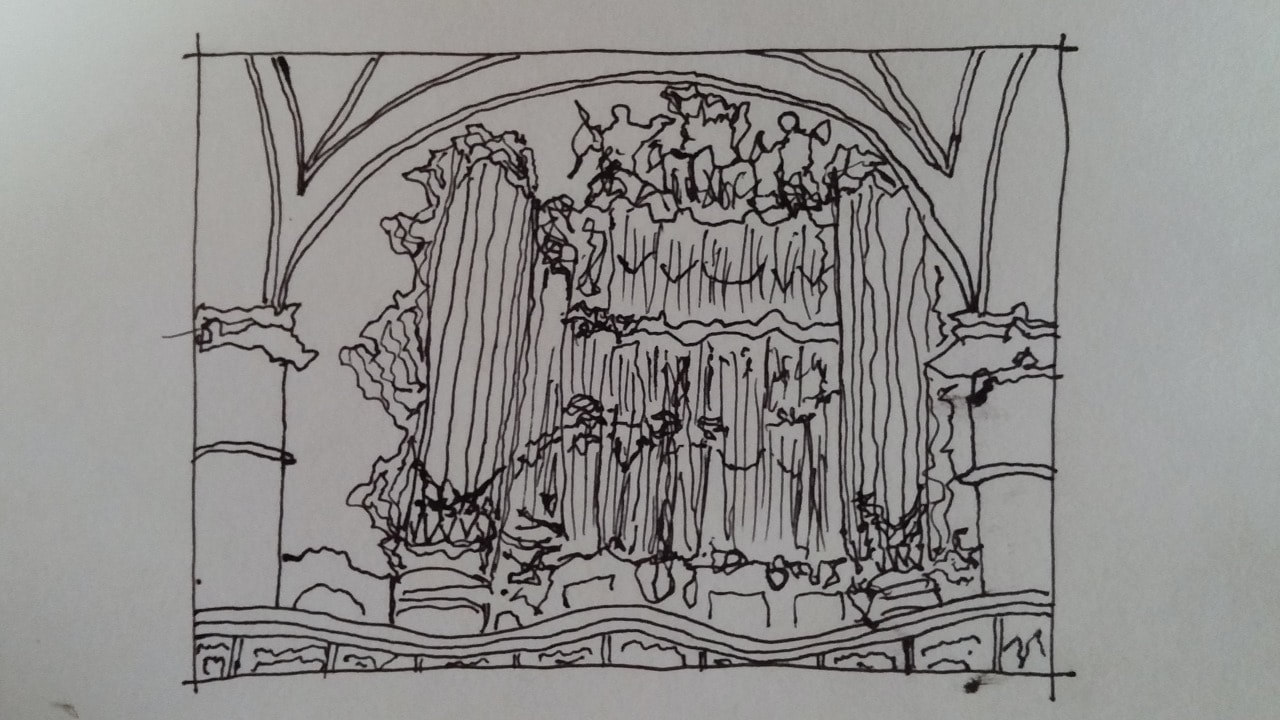 I couple of days ago I shared with you my rehearsal on the largest mechanical organ in the world before improvising for an hour "David and Goliath". I hope that today you will enjoy the actual recital recording.
When there were about 5 minutes before the end of the recital, the power of the blower disappeared. Make sure you listen the very end of the recording to see what happened... Luckily it wasn't the middle or the beginning, isn't it? This was truly the first time in my life when organ turned off during the recital... Difficult to describe in words that feeling when you're left alone on the organ bench, trying to turn on the blower multiple times and the listeners don't have a clue of what's happening, even though they see the video of you on the screen... Organizer later explained to me that the organ builder checked and it turned out that the electricity company forgot to make the connection for one of the phases. It was not enough power. Listen to the recording here and let me know what you thought. Maybe David killed Goliath after all...:)) |
 DON'T MISS A THING! FREE UPDATES BY EMAIL.
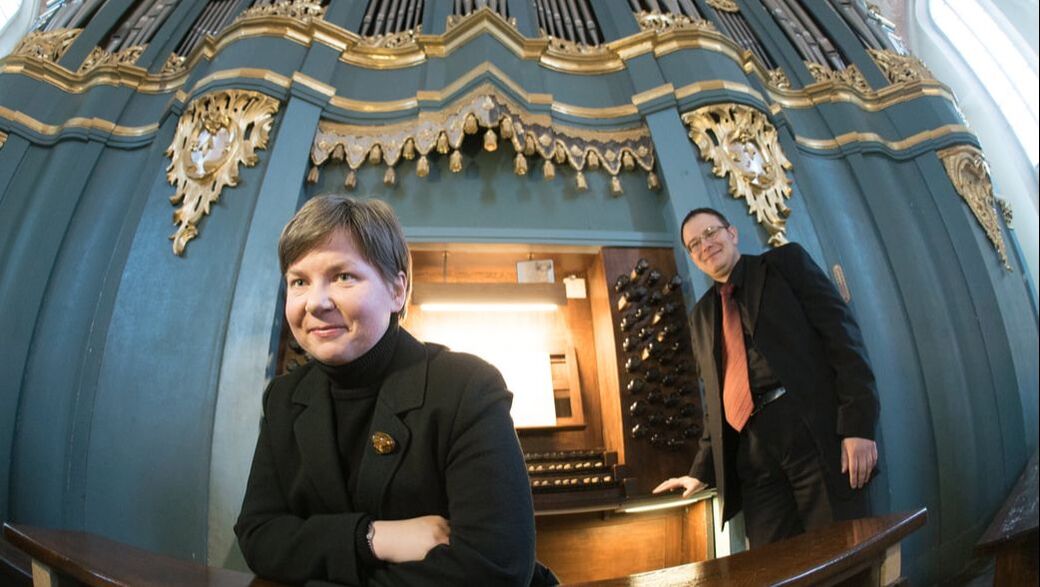 Photo by Edgaras Kurauskas Photo by Edgaras Kurauskas
Authors
Drs. Vidas Pinkevicius and Ausra Motuzaite-Pinkeviciene Organists of Vilnius University , creators of Secrets of Organ Playing. Our Hauptwerk Setup:

Categories
All
Archives
April 2024
|








 RSS Feed