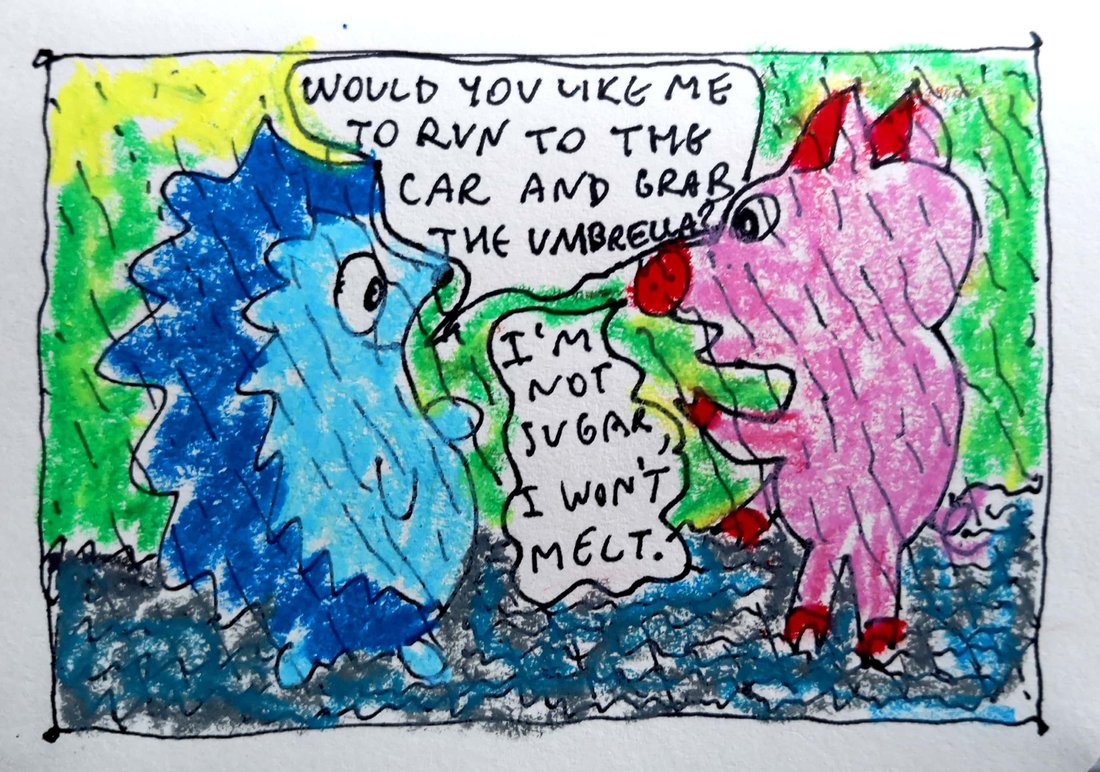
 The #2 reason people don’t pursue their dreams is that the suffering they feel while doing some activity is larger than the pleasure they feel doing it.
Pain bigger than gain. This never works. This is because starting something always implies change. Change is risky and scary. Maybe we are miserable right now but at least we know where we stand. If we start doing something new, the matters might become worse. Therefore many people don’t even start. One of the two ways for us to initiate change is when the pain of not doing it is larger when doing it. Let’s say you want to write a book. But writing books is a painful and tedious process, isn’t it? Or so we think. Majority of people don’t even start. From those who start only a small percentage finish. And from those who finish writing the book, even a smaller number dare to show it to the world. Maybe I haven’t written a book yet but at least I know that I won’t have to suffer the embarrassment of not finishing it. Or imagine you want to create a painting but you don’t know how to do it. You don’t know where to start or what materials to use. And of course deep inside you have this thought that it might not come out the way you wanted. Of course it won’t. Because your taste is better than the skill yet. You can imagine a better painting than to make it reality. So many people don’t bother even to try to build up this skill. What about creating a business venture? Maybe you wanted to start living your life on your own terms, stop going to this 9-5 job in which you do things that don’t matter to you. Maybe you want to be self-employed and pursue your dreams this way. But with your new life-style comes a whole set of new risks and pains. Again maybe your dreams won’t lead you anywhere. Maybe the market doesn’t want what you can offer to them. Maybe you don’t know what to offer to the market. Maybe the market conditions will change and you won’t be able to adapt. Maybe you don’t have the time to pull this off. Maybe, maybe, maybe… The list of excuses grows longer by the day. And they all are valid excuses. Because right now perhaps you at least have a roof above your head and something to eat every day. But when you are on your own, you may lose all of this. The pain is bigger than gain. With this attitude you can only initiate change when you hit rock bottom. Alcoholics can only decide to quit drinking when the pain of being drunk and miserable is more unbearable than the pain when they walk around sober every second thinking about the booze. Someone can only starting living a life on their own terms when the pain they feel in the current job outweighs the risks associated of being a freelancer or a solopreneur. If you have a book inside you, you will only start writing it when the pain you feel when not writing is bigger than when you write. The same can be said about painting, playing an instrument, creating music, anything. You create only when you can’t live without creating. But there is another way. You can start doing some creative activity, if the task is so tiny and manageable that the risk is really very small. And the pleasure will be larger than this risk and pain of doing it. For example, instead of committing to writing a book, you can write 100 words daily and post them on your blog. To write 100 words takes less than 15 minutes. But in less than one year, you will have a small book ready to publish on Amazon. That’s what I’m doing right now. Or instead of committing to start painting, draw one page a day in your pocket notebook. Again it takes 15 minutes a day and before you know it, you will have built up your skill of drawing and ready to publish your art as a collection in a book. Instead of composing a symphony, create only 4 measures of your musical piece for a solo instrument. Pretty soon you will have the confidence to expand the length into a longer composition for an ensemble. Instead of committing of learning to play difficult sonatas and fugues on an instrument, sit down and play for 15 minutes every day. It will be fun. Anybody can do it. Instead of building up your muscles in strenuous workout routine for an hour daily, do some push-ups first thing in the morning. Or run around the block. Or simply go for a walk. Instead of quitting your job and facing the uncertainty of building your own life-style business, do it on the side while you’re still working. Do it in the evenings and weekends. Spend only 15 minutes a day for starters. You see, then gain becomes bigger than pain. Then you are setting yourself up for success.
Comments
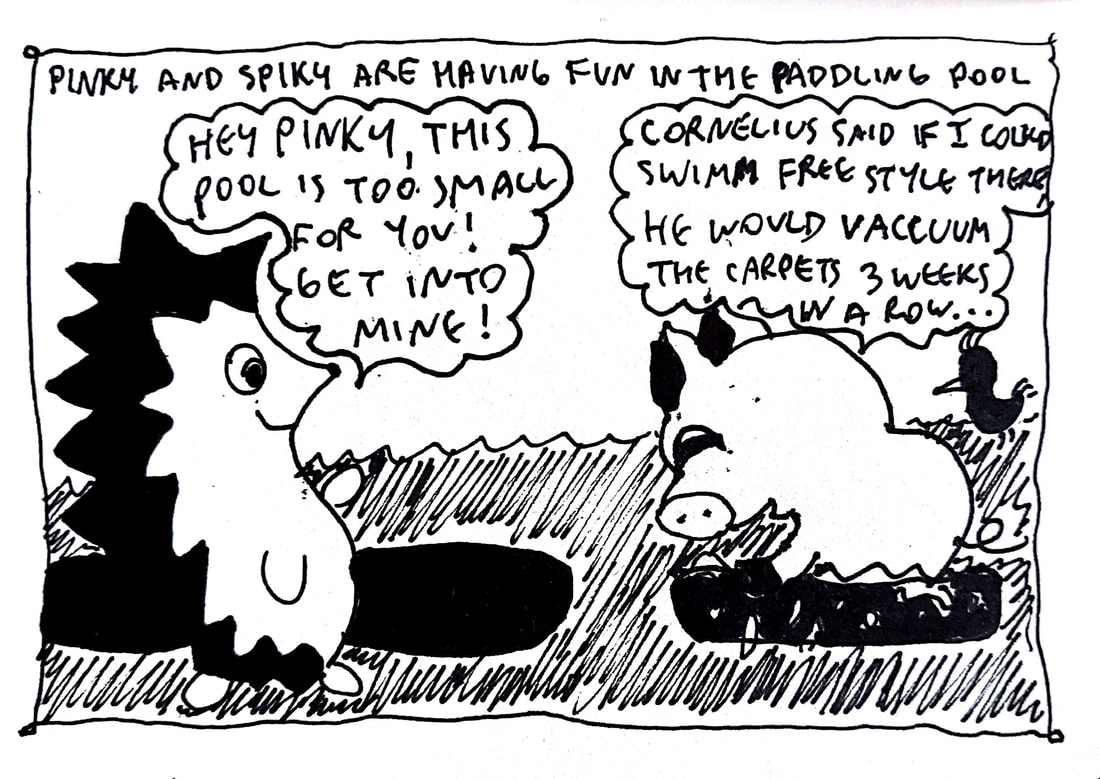 The #1 reason people don’t pursue their dreams is that they have not yet found the bravery within themselves to believe they can do it.
That’s why I haven’t named my recent challenge From 0 to 100 Pull-Ups. I didn’t have the bravery to believe it could be done. But I thought 10 Pull-Ups is something even I can attempt. Because I have done many challenges in the past (successfully and not) it was easy for me to recalibrate my goal so that I would find my bravery again. But can you teach someone to be brave in this respect? If I person hasn’t done enough creative activities yet, is it possible to change into a bravely creative person? Not if you always preach to them. If you tell them how they should behave or create. I don’t think it works. Talking from the mountain only alienates people. But I think I found what works. At least for me. Show, don’t tell. If I can document my creative experiments (even the way I’m doing it right now) and lead by example, some people around me would slowly start paying attention. This is how Ausra started drawing Pinky and Spiky comic strips. At first she saw me do it for a couple of months, then she felt intrigued enough start doing it herself. Now she does it every day, just like me. More recently Ausra’s nephew who is 18 asked me to teach him about entrepreneurship. He has now doubt seen my online activities for a long time. But only now he has found the bravery start experimenting with his growing passion for photography. So you see, people need time to find bravery. Not everybody jumps into the dark pool at night head down right away. Most people do a little wading first to make sure it’s safe. On the flip side of this we have to stay humble and not to look down on others. Yes, I’m doing some creative experiments right now. So what? Thousands of people are making even more life-changing things. Therefore we have to be patient and careful not to judge people. Not to say, “this person will never be creative”. Because you never know the amount of influence and inspiration you’re having on others. People will be inspired not necessarily by what we do but by independence we have over our work.
Vidas: Hi guys, this is Vidas.
Ausra: And Ausra. V: Let’s start Episode 269 of Secrets of Organ Playing podcast. This question was sent by Howard. He writes: One suggestion I have for your program is to diversify the focus to other kinds of instruments especially large British and American instruments that have pistons and toe studs. A program on the recommended piston settings for a ~30 min recital on an organ with say 6 General and 6 each of Divisional pistons would be great. Thanks. So obviously, this type of situation where you play modern instruments--not only British and American--is very common, Ausra, right? A: Yes, but what kind of problem is it? I don’t really comprehend the question, I think. V: Howard probably wants to know what kind of pieces you could play on an organ with general and divisional pistons. Anything! A: Anything; you could play anything, basically. V: If you have the opposite situation: a mechanical--purely mechanical--historical organ, let’s say from the 17th century or 18th century, then your choices are very limited. A: Sure; but on a modern instrument, with that combination system of pistons, you could play anything. V: Right. It doesn’t mean all the pieces will sound equally well or interesting... A: That’s right. V: But you surely could play anything. A: Because if you are playing a purely mechanical instrument, you are limited not to choose pieces that need a lot of registration changes. V: Sudden registration changes. A: Sudden, yes. Because it’s sometimes simply impossible to do all of them. But if you have a pistons system, that’s not a problem. V: Okay, so our friend Paulius is about to play a 30min recital in our cathedral in Vilnius. And we could discuss, a little bit, what he’s playing. And yes, he’s using that combination action. It’s not the same as pistons and toe studs as in British and American instruments, but it’s still modern type of combination action, where you can program in advance and push the button when you need it to change. Right? A: Yes. V: So it’s the same situation. I could imagine that Paulius could travel to another city with a modern organ with pistons and toe studs, and perform the same thing all over again. A: That’s right. I think sometimes it’s very nice when you can set up your registration in advance, and then to just press a button when you need to change it. V: Mhm. A: That’s what we did in London. V: Well, exactly, yes. So Paulius is playing a program with 5 or 6 pieces, maybe 5 pieces, and he’s using 5 combinations, one for each piece. And I’m helping to turn pages for him, so I know closely what he is doing. So basically, without giving too specific names of the pieces (because they’re less frequently performed and not well-known), we could give simple, general ideas, right? First of all, you need variety, contrast--right, Ausra? A: That’s right. V: Loud/soft, fast/slow, major/minor. What else? Those 3 are the main contrasts you should be aware of in your program. So it’s not good to play everything fast, right? Or everything slow, or everything loudly, or everything very softly, or everything just in a major key. Although it would be possible, of course, if it’s a festive occasion. Or just in a minor key--it would be perhaps too sad. You need variety. At least 1 or 2 pieces-- A; Well, what could you say if you have...let’s say, the general, as Howard told, six general pistons, what would you do? What would be your registration suggestion--what would you keep on those six general pistons, let’s say, if you would be a church organist? V: Probably for general...If I’m really scared to do the stop changes by myself, right, and I want to create a system where I could just sit on the bench and play whatever is in front of me, and I would push the button, and it will sound sort of okay--not, perhaps, perfect, but okay--so then, the six piston combinations would probably be pianissimo, piano, mezzopiano, mezzoforte, forte, and fortissimo. Sort of like Mendelssohn recommends, this kind of dynamic gradation. A: And what would you use for divisional pistons? Would you do some combinations for like solo voices, with you know, reeds or cornet stops? V: Obviously, yes, because you need to have solo registration sometimes in the RH or in the LH, and the other hand could play the accompaniment. I would check my instrument for nice solo stops: cornet, as you mentioned; krummhorn; oboe; trumpet. What else? Vox humana sometimes works well. Those few are the main ones. Oh, flute--flute combinations, like 8’-4⅕’, 8’-4⅓’, or just and 8’ flute and a third, 8’ flute and 2⅔...It’s possible to have variety in your colors. A: Okay, then you have an instrument with pistons. Do you use the sequencer, if you have one, or not? Do you think it’s a good idea to use a sequencer? Let’s say your organ has not 6 general, but many pistons, like we had at Pease Auditorium at Eastern Michigan University. Have you used the sequencer? V: Yes, I did--I have. And I would use it if I’m playing my pieces from the beginning until the end without stopping, for a performance like this, for a concert; and this is useful because you don’t have to worry about pressing the correct number of pistons. A: But yes, and what will happen if you would miss to push it once, or you would push twice instead of once? V: Then you would have a different registration. A: I know, but then you would be screwed! Don’t you think so? V: Obviously, yes. Obviously you have to be really careful; it has those disadvantages, too. But it’s a big help, you know, if you’re a traveling organist, used to one particular type setting with toe studs and pistons, then you don’t have to worry about where this piston is, under which key--number 2 or number 4 is. You just look where the sequencer is--sometimes to press it with your foot, sometimes with your hand. A: And I think the advantage of having piston and toe stud system is, you only need to program your registration for a particular registration once, and then you have it. Next time you come back to rehearse, you don’t have to set it up again, so it saves time. V: Exactly. Local organists will probably tell you what number to use... A: That’s right. V: What memory level. And you’re free to do whatever you want within that memory level. So, that’s the idea about using toe studs and pistons for registration changes, right? It saves a lot of time, but you have to also think about divisionals, right, so that your RH registration and LH registration would have variety. A: Yes, true. V: Mhm. One last thing, Ausra: On a big organ with, let’s say, 100 stops, would you ever play without a combination system--or just pulling the stops by hand? A: Well, I might do that, but probably not during a recital. V: I did that for trying out the organ at St. Paul’s Cathedral, when I improvised for maybe 5 or 6 minutes. I created those registration changes, and even dynamic changes, with my hands only. But you know, I was free to create whatever I wanted, because I was creating the music spontaneously. If you’re playing from a sheet of music, you’re restricted by what’s in front of you. A: Yes. V: And that’s why combinations and pistons are helpful. A: True. V: Thank you guys; this was an interesting discussion. We hope this was helpful to you. Please send us more of your questions; we love helping you grow. And remember, when you practice… A: Miracles happen.
This blog/podcast is supported by Total Organist - the most comprehensive organ training program online. It has hundreds of courses, coaching and practice materials for every area of organ playing, thousands of instructional videos and PDF's. You will NOT find more value anywhere else online...
Total Organist helps you to master any piece, perfect your technique, develop your sight-reading skills, and improvise or compose your own music and much much more... Sign up and begin your training today. And of course, you will get the 1st month free too. You can cancel anytime. Check it out here Here's what one of our students is saying: I really like the sharing. It's interesting to see what other organists are working on and how they go about learning new pieces. (Anne) Would you like to receive the same or even better results that Anne is getting? If so, join 80+ other Total Organist students here. 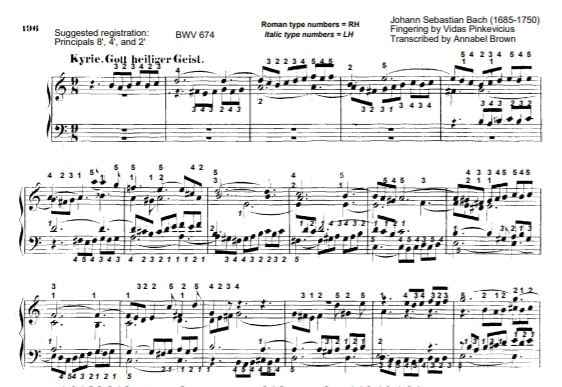 Would you like to master Kyrie, Gott Heiliger Geist, BWV 674 by J.S. Bach from the Clavierubung III? I have created this score with the hope that it will help my students who love early music to recreate articulate legato style automatically, almost without thinking. Thanks to Annabel Brown for her meticulous transcription of fingering from the slow motion video. Basic level. PDF score. 1 page. 50% discount is valid until August 25. Check it out here This score is free for Total Organist students.
V: Let’s start episode 268, of Secrets of Organ Playing Podcast. This question was sent by Lorelei. And she’s our Total Organ student. She writes:
Dear Vidas, I think it might not be a bad idea considering my case, to do a podcast or an article on how to keep the back and neck pain free and hopefully injury free while practicing piano and organ etc. I must say I have in the last 5 weeks a very keen interest in the subject. Thank you for your well wishes and again, thank you for your wonderful contribution to the music world. Lorelei V: So Ausra, have you ever had a back or neck pain? A: Of course. I think every body who plays [an] instrument has experienced this. V: Why do you think organ is so, organist sometimes get this kind of pain, or more often than on other instruments? A: Well I think that everybody who does the sitting, jobs, gets this pain. I think this pain is also often, in those people, who for example work with a computer all day long. Because I think in general, back doesn‘t like this sitting position, and especially when you play organ because you cannot place your feet on the ground. V: Mmm-hmm. A: You have to keep them on the pedalboard. V: And they‘re playing, and you have to find the balance and it‘s a very delicate thing. A: So, the spine suffers from it. V: Remember at musical academy, we had this friend Vitalijus, who had back problems many times. A: Yes, I remember that. V: So, one thing that was recommended to him was probably some kind of yoga stretches. Don‘t you think that‘s helpful? A: I think you need to be careful with yoga and stretching. You really need to know what you are doing because you may hurt yourself even more. I think in general, maybe not so much stretching is important, although it is important, as it’s important to strengthen your back muscles. V: Oh, so that‘s where Pilates might come in. A: Yes. V: Mmm-hmm. A: I think Pilates might help. V: Tell us more. A: Well, what? (Laughs). I‘m not a Pilates instructor, but i know I,,, V: Is there one particular exercise from that program that you attend which helps to support your back muscles? A: Yes, actually it‘s a very simple one. You just have to lay down,,, V: On the stomach? A: Yes, on the stomach, and then you have to take your hand and leg, opposite side. V: Mmm-hmmm. A: And to,,, V: Slowly raise them. A: Slowly raise them, and then to put them down, and then to do that with the other side of your body. V: So then when you raise your right hand, you at the same time raise the left leg. A: That’s right. V: And then you slowly lower them down, and you raise the left hand, while raising the right leg. A: Yes. So, it should be always on opposite hand and opposite leg. V: Mmm-hmm. A: Or I should say arm, because you have to raise entire arm. V: Mmm-hmm. A: So basically this is a classical exercise for stretching your back. V: They also have this, Superman, remember, pose,,, A: Yes. Where you,,, A: Yes. Although Superman is harder sort of exercise. If you are just beginner then you better start with the first one. V: Or a swimming exercise: You lie on the stomach, you probably raise a little bit your front, and with the hands extended, you do some kind of swimming motion, right? And the same with the legs too, at the same time. A: So there all kinds of exercises you need to know, to try some of them. And of course, another thing; if you are experience the pain, you need to break between your practicing. V: Mmm-hmmm. A: You could not sit and play for a few hours in a row, without exercising and taking breaks. V: Mmm-hmm. Taking breaks usually works for me every twenty-five minutes of the thirty minutes. I get also tired and I need to talk a walk, get a glass of water, stretch. I do this Salutation of the Sun, collection of exercise. It takes only a couple of minutes, but then my entire body is stretched and warmed up and ready to do some work in many positions. Not only in sitting but I could do some strenuous strength training afterwards. A: Another thing that would might help would be swimming. Swimming is also very good for back. V: Mmm-mmm. A: And in general for your muscles. So, you need to try some of these exercises, swimming. And never think you need to check if you are sitting right on the organ. Maybe your position is incorrect. V: Right. A: Maybe you are sitting to low, or too high. V: If you are sitting too high then I think it’s easier than too low, for your back. A: Well, it could be either way. Because also if you are sitting to high as you try to reach the pedalboard, you might injure your back too. V: Hmmm. Right. So the classical sitting position on the organ bench is when you place the bench in parallel to the pedalboard, yes? And when you sit, your feet have to touch the pedals, but only gently, without depressing them. And the bench should be positioned in relation to the manuals so that your toes should almost touch the sharp keys, right? A: That’s right. V: Naturally, while you relax your feet. Then you know you are sitting correctly and efficiently. Some people move the left side of the bench further from the keyboards. Is that healthy? A: I don’t think so. I don’t thinks so. Because in that case you need to twist your back a little bit and I don’t think it’s good. Also I found sometimes you have to practice your hands on a different manual. And for example, if you practice for a long time, and let’s say your left hand is always above the right hand; let’s say you have a three manual organ and you practice the right hand on the first manual and left hand on the third manual. I had experience like this. And if you practice for an hour or two in such a position, you back is sort of twisted. It also might hurt your muscles. V: Right. So change the position of your hands frequently. Right hand goes on the upper manual, and then left hand goes on the other manual, and vice versa. Switch them up, maybe with each repetition of the piece, right? One repetition could be this way and the second repetition could be that way. A: Yes, and this is especially useful when you practice for example, such piece as trio sonata. V: Mmm-hmmm. A: And it’s also, if you practice on one instrument and when you will go to perform on another one, it will be easier for you to get used to the new instrument. Because you never know for sure how you will register it when you will be finally arriving on the organ,,, V: Exactly. A: On which you will perform. V: I remember the time when I was a student and it was really difficult to adjust on the situation when my right hand was supposed to be on the top manual, and then I had to switch to the lower manual, because my professor suggested also this way. Now I understand I had to practice constantly, changing the manuals. A: Yes, if your back problems, or neck problems will increase or will not release you from the pain, I think it’s better if you will consult your physician. Because it might a serious condition, really serious. V: Mmm-hmm. Our advice is very basic and general. Of course, it is applicable for people who don’t have a back pain but want to prevent back and neck pains in the future, right? But if you have something really serious and specific for your situation, obviously you need to check with your physician. Thank you guys. This is interesting discussion. We hope this was helpful to you. Please send us more of your questions. We love helping you grow. And remember, when you practice,,, A: Miracles happen!
This blog/podcast is supported by Total Organist - the most comprehensive organ training program online. It has hundreds of courses, coaching and practice materials for every area of organ playing, thousands of instructional videos and PDF's. You will NOT find more value anywhere else online...
Total Organist helps you to master any piece, perfect your technique, develop your sight-reading skills, and improvise or compose your own music and much much more... Sign up and begin your training today. And of course, you will get the 1st month free too. You can cancel anytime. Check it out here Here's what one of our students is saying: I am learning greatly from the sharing of other organists on their experiences with composers, some of whom are new for me. I find inspiration from them, too. Total Organist is a community builder. (Ruth) Would you like to receive the same or even better results that Ruth is getting? If so, join 80+ other Total Organist students here.
Vidas: Hi guys, this is Vidas.
Ausra: And Ausra. V: Let’s start episode 267 of Secrets of Organ Playing Podcast. This question was sent by Heidi and she writes: May I ask you if you use a software program to create your musical compositions? If so, I would be interested in knowing what you use, and if it is somewhat intuitive or what I’d call, “user friendly". I own Sibelius but haven’t used it since taking Theory in 2009. Hope all is well with you both, Heidi V: Oh, this is a question about Sibelius that we have. A: Yes, because we use Sibelius. V: Did you try anything else before Sibelius, Ausra? A: Well I did try Finale because these two are the main musical programs. Of course nowadays there are many more created. V: Like MuseScore, NoteFlight, probably Composer, there is a software called Composer. What else did I try? Those few are somewhat known to me, but yes, Sibelius and Finale are the main ones and the most expensive ones. A: That’s true; the price just goes above the sky. V: But the features that Sibelius now has also makes composing really not only fun but relatively fast process I would say because when you connect MIDI keyboard to the computer you can directly input your notes onto the screen and either adjust the rhythms with your mouse, select on the keypad, or you can use what they call flexi-time input with the metronome and you can actually either improvise or play it from the music real notes and real rhythms and it would appear magically on the screen. A: Yes, true. And you know since we are using Sibelius for many years now I think it’s improved a lot in this particular field of making things easier. V: The reason it is so expensive of course is that it has so many other features that not everybody needs. It has complete library of Sibelius sounds. You could create orchestral pieces and they would sound like orchestra. You could create piano pieces that would sound like piano. And various samples, right? Not too many people need everything, right? Only the most professional composers which keep creating variety of pieces for a variety of instruments and samples need those features. You could even create cinema scores with this. That’s why it’s so expensive I guess. A: So really if you want to get Sibelius you need to look at what kind of computer you have because Sibelius also takes a lot of space. So if your computer is not a new one it may slow down the whole system a lot. That’s what we have at our school and our computers are not the newest ones so I had even to uninstall Sibelius in my classroom because computer worked too slow. V: Right. Would you switch to Finale now? A: I don’t know. Probably not, I’m used to Sibelius. But in terms of any musical program you use you need to use it on a regular basis. Because for me for example I don’t use it as often as Vidas does and every time when I have to go back to it I feel that I am starting everything from the beginning. V: But starting from the beginning, is it difficult Ausra? Intuitive? A: Well… V: If I wasn’t around could you figure it out on your own? A: Yes, of course I could figure it out on my own but it would take me probably a lot of time because each little version there is something completely new. For example the fourth Sibelius is so much different from Sibelius number 6. V: And we have Sibelius Ultimate which is basically just a small variation of Sibelius 8, but with Ultimate they increased the prices extremely and we don’t know why because the features are not that different from Sibelius 8. A: I know. V: And they want to incorporate this subscription model when you pay monthly or yearly subscription fee and use this program relatively inexpensively then but I didn’t want to pay subscription, I wanted to have entire software on my computer indefinitely so I bought it for a higher price. But for educational discount, they offer educational discount and since we both work at Vilnius University that’s what we got. So guys, please choose the tools wisely. If you’re not sure if you will need professional software like Sibelius or Finale for your compositions or transcriptions or whatever you will need do you think Ausra they need to invest right away. Like $400.00, $500.00, $600.00. A: Well I don’t think so if you don’t need it for your daily use maybe you could just try to borrow a program from your friend or to use it in a library somewhere because I think musical libraries might have it for use. V: The only reason actually I’m using Sibelius over free versions of MuseScore which is available freely on the internet is that I can really input notes in real time with a keyboard. There is one more software which I know can do this which is called Composer which only costs about $100.00 or euros so it’s less expensive but to my knowledge Sibelius does it more user-friendly way. That’s why I’m still sticking with Sibelius although other software is cheaper. A: So if you are professional then get Sibelius but if not then just experiment with other programs because I think in most cases you can experiment with them for free until you decide what you really need and what you really want. V: And of course some versions of Sibelius has this other feature called PhotoScore Ultimate which we haven’t discussed before is that you can scan music like a sheet of paper or PDF or even hand-written score from your sheet of paper that you have written before and it will produce rather clean looking musical notation on the screen which you could adjust and correct. But now it does a really good job in comparison of what it was capable to do a couple of years ago. A: I remember how much trouble I had when I had to put in the Sibelius harmony exercise book which was published in the mid-twentieth century and I could not scan it anyway. It was about ten years ago. V: And you could not even play it in real-time because we didn’t have keyboards with us. A: So I did it just manually. It was an all summer project. V: Umm-hmm. Luckily you had entire summer and you had me too. A: True, because at the end of that book I asked for your help because it was driving me crazy. V: Yeah. Ausra do you think that people could compose with a pencil and sheet of paper today? A: Of course, why not? V: You don’t really need computer. A: No, you don’t. V: But what happens if you want somebody to play your pieces? Would they agree to play from your handwriting? A: Somebody may agree, it depends on how nice you write. V: Umm-hmm. A: But of course it’s better for people to give a printed score. V: Right. It’s easier on the eyes. A: Yes. And in that case you show more respect for people. V: Yes. And if you show your autograph like handwritten score to a person and ask them to play your piece it’s just one more reason for them to say “No.” A: That’s true. V: And because people will generally play something old and not new, right? Pieces that were written by masters rather that living people, right? In general, but not always. Then of course you have to do everything you can to facilitate this process for them to make it easy. A: That’s right. V: OK guys, please keep sending us your lovely questions. We love helping you grow. And remember when you practice… A: Miracles happen.
This blog/podcast is supported by Total Organist - the most comprehensive organ training program online. It has hundreds of courses, coaching and practice materials for every area of organ playing, thousands of instructional videos and PDF's. You will NOT find more value anywhere else online...
Total Organist helps you to master any piece, perfect your technique, develop your sight-reading skills, and improvise or compose your own music and much much more... Sign up and begin your training today. And of course, you will get the 1st month free too. You can cancel anytime. Check it out here Here's what one of our students is saying: I am learning greatly from the sharing of other organists on their experiences with composers, some of whom are new for me. I find inspiration from them, too. Total Organist is a community builder. (Ruth) Would you like to receive the same or even better results that Ruth is getting? If so, join 80+ other Total Organist students here. 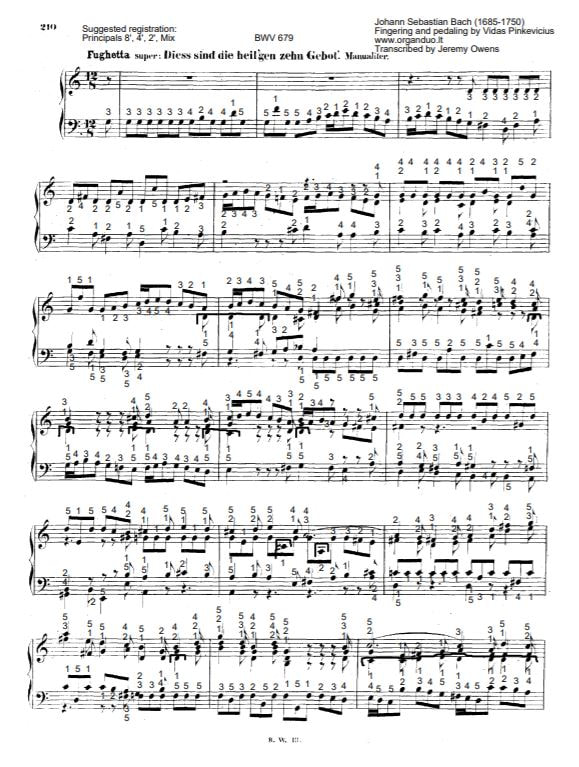 Would you like to master Dies sind die heiligen Zehn Gebot, BWV 679 by J.S. Bach from the Clavierubung III? I have created this score with the hope that it will help my students who love early music to recreate articulate legato style automatically, almost without thinking. Thanks to Jeremy Owens for his meticulous transcription of fingering from the slow motion video. Basic level. PDF score. 2 pages. 50% discount is valid until August 22. Check it out here This score is free for Total Organist students.
Vidas: Hi guys, this is Vidas.
Ausra: And Ausra. V: Let’s start episode 266 of Secrets of Organ Playing Podcast. This question was sent by Dan. He writes, in response to my question about how he became fascinated with the organ. So he continues: For me, I’d say even back then when I was really young, I had an interest, and fascination in the organ. And as I still do to this day, whenever I’d hear the organ played at the church i’d attended at the time, which had really nice, excellent acoustics, i’d listen to every little detail of the organist’s playing. Some friends of ours had one of those little spin it organs, made by a company who I don’t think was really known for making stuff like that - Electrohome. Whenever we’d go over there, I’d never want to get off of that instrument. It was one of those that had slightly shorter manuals than a conventional 61 key manual. They only went down to an f, so they were shorter on the bottom end, and only 13 little short, tiny pedals, which you could only play one note at a time on. But back to that organ in the church i’d attended, I one time, had attempted to talk to the organist, we’d went up to the console after a service, and I’d asked if I could take a look at the instrument, it was a two manual Allen organ, from the late 1980’s I think. She’d pretty much said no, that I couldn’t, but i managed to get a finger onto the bottom notes of one of the manuals. She’d either totally turned off the organ, or just didn’t have any stops on, I’m not sure which it was, as when I’d pressed the keys which I did manage to touch, I didn’t hear any sound at all. I was disappointed, after we’d left there. I think it’s important, for organists to show people, no matter how young or old they are, the instrument, if they’re interested. I later did get to try that organ, but that was a couple of years later, after that first experience. Dan V: So, Ausra, I think the main idea that Dan is trying to communicate is his disappointment in the situation that the local organists didn’t show him the organ. A: Yes, it’s very disappointing, you know, for a kid. V: Did you have something like that in your life when you were growing up? You said your first experience with the organ was in Nida, right? A: Well, when I heard the homeland organ recital, yes. V: Did you want to go upstairs and try out the instrument yourself? A: No, because I think I was just too shy for such a thing, but I remember that recital. It was really something! And then also afterward, I finished my first grade of elementary school. We had our choir concert at the Philharmonium building in Vilnius, which has this big Schucke instrument. And Bernardas Vasiliauskas, actually, he was the man who played that organ recital in Nida at the first organ recital that I have ever heard, he actually showed us that organ from inside, and I just remember that feeling—it was so fascinating. I just could not imagine that there could be so much space in the instrument, so… V: Ausra, now tell us a little bit… how did you become a professional organist? How did you decide to become a professional organist? Who suggested for you this idea? A: Well, it was actually by accident, I think, that I became an organist. V: Right, so…. A: Because simply, I graduated from National Čiurlionis Art School, where I teach now, and I didn’t want to go the Acadamy of Music, because my major at the time was choir conducting, and I didn’t want to lead a choir. And, I wanted to study history at the University of Vilnius. But, then I met one professor, a piano professor from our Academy of Music, and he listened to my piano playing, and he told me that I should study at the Academy of Music, and if I don’t want to study choir conducting, I could study the organ. V: That’s right. And you said yes, right? Did you spontaneously agree, or did you….? A: Well, yes, I almost spontaneously agreed, because I have never thought about that possibility, but since childhood, the organ fascinated me. And then, he told me about this possibility, I was sure right at that moment that it’s the right path for me. V: So you say that when you said “yes” to that piano professor, in your memory, this Philharmonium Schucke organ experience came out, right? A: Yes, and the Nidas recital, too. So, I think it’s very important, what you experience as a child. V: Imagine that Bernardas Vasiliauskas would have been busy or not there, and didn’t show you this organ from inside. Your curiosity about this instrument might have not been great at that moment. A: That’s true! That’s true, because I think that children are the most eager to accept things and to experience things, not an adult. I think so many adults with the years just lose the curiosity, and it’s just too bad. V: And when my teacher were at the academy of music because of the organ, too. A: That’s right. V: So, we probably wouldn’t be speaking today to you guys, if not for Ausra’s first grade experience, right? When someone really great introduced the organ to the entire class, group of children, and for me, probably, too! If my mom didn’t show me the instrument in our summer place where we stayed—small village church, anonymous builder organ without pedals, and she pumped the bellows for me by hand—I probably also would have chosen a different path, maybe choir conducting! A: Yes. V: Because, I had probably a stronger interest in choir conducting than you at that time. A: So, I think it’s a good lesson from Dan’s letter that we can learn, all of us, you know who are organists and have access to an instrument, that if somebody, especially children, show interest in the organ, we need to show them around. Let them play. Of course, not damaging the instrument, but you know, really, we need to guide them, and to show them the instrument, because one day, maybe they will decide to learn this profession! And I think it’s so important nowadays when organ art is slowly dying. V: And, for example, if you are doing organ demonstrations to a group of kids, it’s really a great idea to let them draw the organ. Not only play, but draw. So, maybe one or two are playing at the moment, sitting on the bench, or sometimes even three, but the rest of them could draw with pencils or with crayons, or pastel, something that you could all bring together, like a story about the organ, and that way they will internalize the instrument and experience much deeper. A: That’s right. V: Thank you guys, this is a lot to think about for us, and hopefully for you, too. And please keep sending us those wonderful questions, we love helping you grow. And remember, when you practice, A: Miracles happen.
This blog/podcast is supported by Total Organist - the most comprehensive organ training program online. It has hundreds of courses, coaching and practice materials for every area of organ playing, thousands of instructional videos and PDF's. You will NOT find more value anywhere else online...
Total Organist helps you to master any piece, perfect your technique, develop your sight-reading skills, and improvise or compose your own music and much much more... Sign up and begin your training today. And of course, you will get the 1st month free too. You can cancel anytime. Check it out here Here's what one of our students is saying: I really like the sharing. It's interesting to see what other organists are working on and how they go about learning new pieces. (Anne) Would you like to receive the same or even better results that Anne is getting? If so, join 80+ other Total Organist students here. SOPP265: What do you think about the tempo to be kept in the Alla Breve section of BWV 532?8/13/2018
Vidas: Hi guys, this is Vidas.
Ausra: And Ausra. V: Let’s start Episode 265 of Secrets of Organ Playing Podcast. This question was sent by Andrea. And Andrea writes: Hello Ausra and Vidas, Thanks for your hints and the talks you share with us! I would like to know your opinion about the prelude in D, BWV 532, from JSB, a piece I run into a few days ago, after years of oblivion past the days I studied it... As we know, the piece is divided into three parts, the second of which is marked Alla breve. What do you think about the tempo to be kept in this section? Shall we keep "Alla breve" as an indication of style, i.e. the Stylus Phantasticus, so to be played fast and virtuoso, or shall we think of it as a tempo indication, so to played crotchets in the region of 60-66? I would like to know your ideas about this... Right now I'll go playing, because "when we practice, miracles happen"!!! Have a nice summer! Andrea So Ausra, we’re looking at the score now, right? A: Yes. V: And what do you think, for starters? A: I don’t think it’s related to stilus fantasticus--this particular episode. I think that the previous one was more in the stilus fantasticus style, and I think that in this particular spot, alla breve means that...At the beginning of this prelude, we had the meter...common meter, yes? V: Yeah. A: It meant that we have 2 strong beats in a measure: on the first beat and the third beat. But starting from the alla breve section, we have only 1 strong beat per measure. It means that from that particular spot, you have to play everything...double as fast as it was before. V: Twice as fast. A: Twice as fast, yes, twice as fast. It means that if previously you had 16ths, so now your… V: 8th notes. A: Your 8th notes have to be played as the 16ths were. V: Mhm, that makes sense. And for people who want to be really virtuosic here and play really fast, they need to start really fast the Praeludium, the pedal scale in D Major. And then keep the same tempo in alla breve, but twice as...fast. A: That’s right. So you really need to think carefully before taking the opening tempo. V: Right. Umm...Those tempo relationships are very important in Baroque music, right Ausra, because in sectional pieces, if we play separate episodes in a variety of tempi, then what happens? A: Well, the piece might lose unity. V: Because it lacks unity anyway, and we need to keep at least something unified; so one of the elements is tempo. A: That’s right; and I think it’s a question that raises so many questions and so many discussions. And think even about the Fugue, like in E♭ Major, yes? from part of Clavierübung by J. S. Bach. I have heard so many discussions about that, how to put all those 3 fugues together in terms of the right tempo, what their relationship between fugues should be. But obviously, this is...you know, the style of Bach, it’s just still young Bach; so you have that Northern German feeling in it. V: Like Buxtehude, you mean? A: That’s right. Like Buxtehude. V: This is directly related to Buxtehude’s style, too. Probably he picked up this writing when he went to Lübeck. A: Yes, I guess so. V: On foot. A: Yes. V: How many miles? A: Well, many many miles! V: 250. Somewhere...like 450km, I think. On foot. A: No wonder his trip lasted longer than he expected! That he even lost his job! V: Yeah, his church officials weren’t particularly pleased that the main organist of Arnstadt Church had left--for the holidays, for Christmas--the church to the substitute. A: That’s right. V: Mhm. A: But anyway, this piece, this Praeludium and Fugue in D Major, is a very exciting piece. Especially Praeludium. V: Right. And not particularly easy to play, in general, this cycle, Praeludium and Fugue. What are some of the difficult spots here? A: Well, you know, I remember myself playing this piece, and I remember that I often messed up right at the beginning. V: The pedal scale, you mean? A: Yes. I don’t know, it gave me such nerves! V: Did you play with toes only, or with heels? A: No, I played with toes only. V: I see. A: Because I worked on this piece when I studied with Dr. Pamela Ruiter-Feenstra at Eastern Michigan University, and she would not allow me to use heels. Thanks for her! V: We have prepared this score with pedaling and fingering here, and looking at the choices of D Major scale ascending version from the beginning here, it looks strange for many people, right? To play toe-toe, for the left foot; and then right-left, right-left, right-right. It’s really strange for people who never touched a historical pedalboard. A: That’s right. V: What’s the strangest feeling about this passage? What is different than people would normally pedal it? A: Probably that you have to use the left foot right at the beginning, hit the D, and E. V: And in the same manner as at the end, C♯ and D are right-right. A: That’s right. V: Why is it so important to do this? What do you think? A: I think it’s important because it gives the right articulation. And in this case, you would be able to play it on the historical instruments, or replicas built in a historical style. V: What would happen if people started to play left-right, left-right, left-right, left-right? Why can’t we play it like this? A: Hahahahahaha! Well, I think you would just fall down on the pedal, if you would play like this! It’s possible, but-- V: It’s POSSIBLE… A: But, but--Yes, it’s possible, but I wouldn’t do it. V: But the grouping of notes is different, right? A: Yes, because if you think about playing that F♯ with the left foot, and then you know, crossing legs...I don’t know. V: Uh-huh. A: I think it would be too hard. V: Plus, in this grouping, you always play the stronger beat with the left foot, if goes upward. A: That’s true. V: So D should be stronger than E. But it’s the opposite, right? It’s E that is stronger than D. Therefore we reserved D and E for one foot. Right? Left-left. And from E we start to do alternate toe pedaling. A: That’s right. Well, at least that passagio, you know, which goes down from the broken arpeggio--that is easier, at least. You know what to do: it’s left-right, left-right, and so on and so forth. V: To me, alla breve seems kind of slippery to play, because it’s so rhythmically consistent, and there’s no way to slow down here and adjust the tempo. A: That’s true, and that’s often the case with the stilus fantasticus pieces, because if you would look at Buxtehude’s Praeludium, he often mixes these strictly rhythmic episodes with those free episodes. V: Fugal, plus free. A: Yeah. V: Fugal and improvisatory episodes. A: Yes. And even in Bach’s other earlier pieces, you can find that like, in A Major Toccata, for example. And Fugue. It also has something there, you know, Northern German-ish. Don’t you think so? V: Could be. So guys, approach this piece with caution; don’t play it too fast, because it’s risky! A: It is. I never went back to this piece, and it’s just too bad, maybe. I need to repeat it at some point. V: Maybe for the next Bach’s Birthday. A: Hahaha! Could be. It would be fun. V: Right. What would you recommend for me to play, then? A: Well, I don’t know. Maybe 6 trio sonatas! V: Too much! A: Hahaha! I’m just joking. G Major, of course. V: G Major! Let’s start from the last one! Not the last one. The last is--The last is G Major! A: Yes! It’s G Major, yes. V: Oh! So.. A: Well, my first was C Major, which is the fifth sonata, so… V: Mhmm...We need to do pedaling and fingering for those remaining sonatas, because up till now we have E♭ Major prepared for people. A: That’s right. V: I guess that would be helpful. Thank you guys, you gave us a lot of ideas for the future. Please keep sending us those questions; we love helping you grow. And remember, when you practice… A: Miracles happen.
This blog/podcast is supported by Total Organist - the most comprehensive organ training program online. It has hundreds of courses, coaching and practice materials for every area of organ playing, thousands of instructional videos and PDF's. You will NOT find more value anywhere else online...
Total Organist helps you to master any piece, perfect your technique, develop your sight-reading skills, and improvise or compose your own music and much much more... Sign up and begin your training today. And of course, you will get the 1st month free too. You can cancel anytime. Check it out here Here's what one of our students is saying: I am learning greatly from the sharing of other organists on their experiences with composers, some of whom are new for me. I find inspiration from them, too. Total Organist is a community builder. (Ruth) Would you like to receive the same or even better results that Ruth is getting? If so, join 80+ other Total Organist students here. 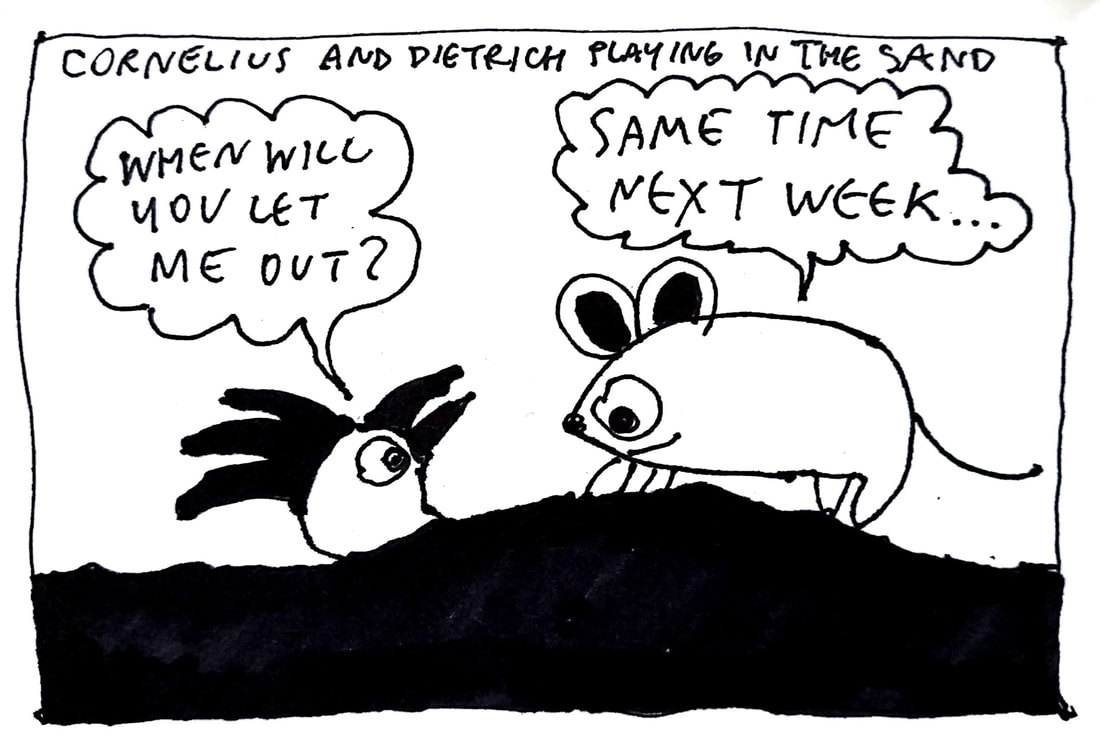 Have you ever observed kids play? You surely have noticed the amount of focus and immersion required in these fun activities. And the same amount of focus for them goes into drawing, reading a comic book, or building something. What would happen if we didn’t allow kids to play? That’s right, no more running, hiding, fighting, building, exploring, having adventures until they are 18! That would be insane… In fact, cartoonist Lynda Barry argues that without play, children would go crazy. Maybe that’s one of the reasons why there are dysfunctional families, psychopaths, entire generations and countries where people live in war zones who have seemingly lost their humanity. Play is a basic human act, primary to our psychological and physical survival. Creativity is primary to our survival too because brain activity when someone writes or draws or plays an instrument is similar to when kids play with each other. Play inevitably produces laughter which has all kinds of healing benefits. Kids laugh 300 times on average and adults - only 5 times on average. Who is happier on average? We as adults don’t play that much anymore. If we had to give an answer, the most obvious would be - we don’t have the time. We have to make a living. I haven’t played for fun a few months now. The last time I remember was with Ausra’s brother’s dog. We ran around our garden like crazy. It was so much fun. Exhausting but really fun. The kind of fun you wish it could continue indefinitely. Instead of playing, I had to find other ways to have fun and laugh. We watch movies a lot. Especially comedies. After a couple of hours of a good stand up or a comedy, I feel whole again. I feel the same when I draw Pinky and Spiky comic strips. I like to laugh at those silly characters and their actions. When I start drawing them, at first I don’t know what they will say. But as soon as they appear on the paper, they start interact with each other. Actually, I have to make them stop because they won’t shut up. I also try to live my days while looking for those moments around me which could go into Pinky and Spiky comic strips. Doing this, also helps me resolve conflicts and dramas with kind of self-irony and don’t overreact, sometimes even don’t engage with toxic people (although I still have plenty to learn in this area). When I see myself or others do or say something annoying, I make a mental note, sometimes a real note in my notebook and wait for the moment to turn it into a comic strip. It is fun. I’ll tell what else is fun for me - improvising on the organ. While I do this, I can be myself, completely relaxed, detached from the outside world and forget everything. Nowadays drawing and improvisation are my favorite forms of play. What is yours? This blog/podcast is supported by Total Organist - the most comprehensive organ training program online. It has hundreds of courses, coaching and practice materials for every area of organ playing, thousands of instructional videos and PDF's. You will NOT find more value anywhere else online...
Total Organist helps you to master any piece, perfect your technique, develop your sight-reading skills, and improvise or compose your own music and much much more... Sign up and begin your training today. And of course, you will get the 1st month free too. You can cancel anytime. Check it out here Here's what one of our students is saying: Very happy. It's helping to keep the organ in front of me every day. I have a tendency to procrastinate, and when I procrastinate enough, I forget. This helps a lot. I like the course I'm taking right now on transposition, and look forward to others in the future. Thank you, Vidas and Ausra! (Laurie) Would you like to receive the same or even better results that Laurie is getting? If so, join 80+ other Total Organist students here. |
 DON'T MISS A THING! FREE UPDATES BY EMAIL.
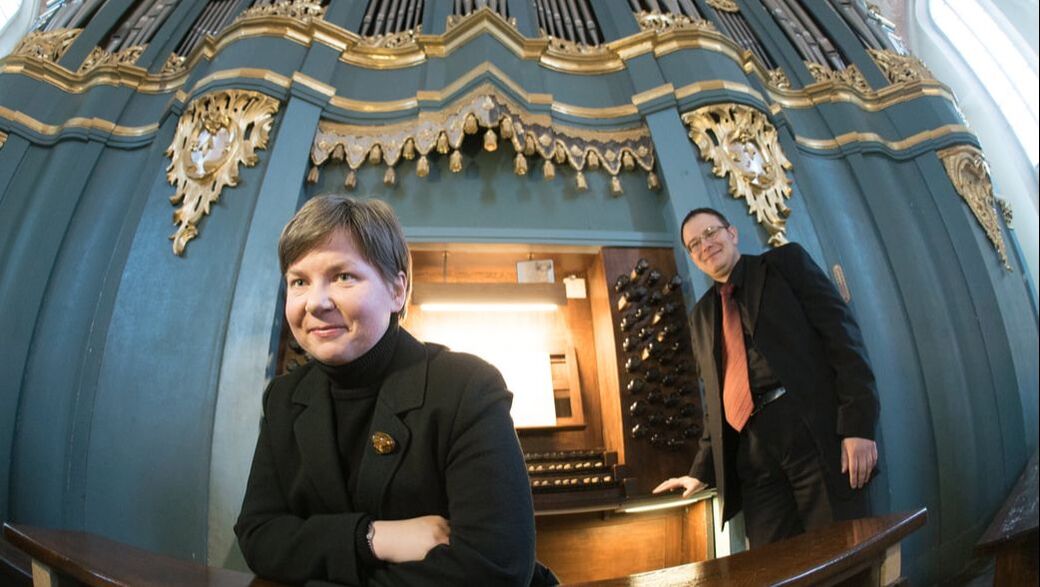 Photo by Edgaras Kurauskas Photo by Edgaras Kurauskas
Authors
Drs. Vidas Pinkevicius and Ausra Motuzaite-Pinkeviciene Organists of Vilnius University , creators of Secrets of Organ Playing. Our Hauptwerk Setup:

Categories
All
Archives
April 2024
|

 RSS Feed