|
Vidas: Hi guys, this is Vidas!
Ausra: And Ausra! V: Let’s start episode 250 of Secrets of Organ Playing Podcast This question was sent by Reggie, and he writes: Hello Sir, Thank you for your question. In answer to #1, I want to play the pipe organ at my church. In answer to number 2, I bought my first keyboard a month ago so I am still learning my first piece: Bach Preludio 1. I practice everyday but I am still internalizing the note and finger positioning. I had some musical training as a child and currently sing in the church choir. Thanks for asking! Reggie V: So, it seems, Ausra, that Reggie is playing the C Major Prelude, BWV 846 from the Well Tempered Clavier, Part Iago . Could be? A: Could be, yes. V: This is a wonderful piece, of course, it has a lot of arpeggio figuration, and even 5-part texture. A: True, but it’s not that hard. V: Much easier than the fugue that comes afterward. A: That’s true. That fugue is one of the hardest, in my opinion. V: Do you know why Bach chose to write the opening prelude as such an easy piece, and then right away the following fugue very very hard? What’s your hypothesis? A: Well, do you want to scare people for his new collection? I don’t know. That’s just a joke, but actually if you look at the Well Tempered Clavier, you can find, actually, various preludes. This one is not as hard, but for example, C minor, which is the second one, has a very fast tempo and a toccata like motion, so… V: But also, that C minor has one figuration extended throughout the prelude, like C major, too. A: Well, that’s usually the case with most of the preludes. V: And the fugue here in C major has four parts, and is very complex, because it’s a scholastic fugue. A: It is! It has that stretto at the end of it, which makes things even harder. V: Basically, in every measure, you will find the subject of the fugue. A: True. That’s, true. V: Maybe Bach wrote such a difficult fugue at the beginning because he was proud of it and he wanted it to be as a model for an entire cycle. A: Could be, and if you will think about the role of the prelude, prelude was sort of an introduction to the fugue. He had to warm up to set up the key. V: And, it wouldn’t make sense if the prelude would be even harder than the fugue. A: True. This usually doesn’t use the polyphonic texture. V: With some exceptions, of course. A: Yes, true. There are always exceptions to everything. V: So, Reggie is struggling with internalizing the note and finger positioning. Which means, that basically, he wants to play without mistakes. A: True. And I thought about if picking up a repertoire as a beginner is a good way to learn. And, I realized that, of course, you have to play some repertoire, but definitely, you have to work on the technical exercises. V: Such as? A: For example, Hannon. V: Hannon? A: Hannon, yes. And scales, arpeggios, chords… V: Maybe two-part inventions by Bach... A: True. V: ...if Reggie likes Bach’s music. A: True. I think that the two-part inventions are probably the best way to get acquainted with Bach. Well Tempered Clavier is too hard. V: Sometimes, I like to sight read music, and whenever I don’t have much time, I open two-part inventions and play a piece or two. It just takes a couple of minutes. What’s a favorite way of sight reading, Ausra? A: I never thought about it. What do you mean, a particular collection, or a particular composer, or what? V: Maybe, let’s start with collection. A: Well, I like to sightread Bach, of course, inventions, but also his suites, French, English, his Partitas. V: I bet they would sound wonderful on our piano at home. A: True. V: A half step lowered. A: True. V: I see. Do you have some suggestion for Reggie, how to increase finger positioning, which is probably the way of playing an entire passage in one position? Can he transpose a passage and go up and down as an exercise? A: Yes, well, it could be an exercise, but for this particular prelude, I would suggest for him to play it in chords, first. Don’t do that arpeggiated motion, but to play the full chords to find out what the harmony is about it. V: And how many parts there are! A: True, and later on this will help him to play in the right fingering and to play everything smoothly. V: Recently, I asked my kids at school to find out how many voices there are in this prelude, and nobody could guess that it’s a 5-part texture. Somebody said 4, somebody said 3, because there are 2 voices clearly in the left hand part, and a passage arpeggiated passage in the right hand part, right? But they didn’t think that those three notes in the right hand part are like three separate voices. A: True. V: So 3 + 2 would be a 5-part texture. Excellent. And Reggie wrote that he had some musical training as a child, and also sings now in the church choir. Do you think that helps? A: Yes, of course. Any kind of musicianship helps. Singing in the choir, too, it develops your pitch! V: And you get to know what the music director is doing, and sometimes you can observe how they conduct, and even if he becomes better at playing from sheet music and sight reading he can sometimes accompany the choir and play in the church service. A: Yes, and it’s too bad Reggie didn’t tell how old he is now, because we don’t know how many years he hasn’t practiced since his childhood. So, it’s very hard to say what to do next. V: True. A: What would you suggest if he would be a senior person? V: Like over 65? A: Yes. V: That’s a nice age to take up some hobby like organ playing and start practicing more seriously, because when people have more time after the working years, sometimes they have less motivation to do that, right? Because it seems like they are old and everything is behind them, and they cannot improve—which is, of course a total myth, and we have so many senior people to prove otherwise—that they are constantly improving every day. So, if he is over 65, I recommend, of course, to schedule some regular organ practices, or at home on piano, or keyboard, or go to church, if he sings in the choir, ask the musical director to let him do this once in a while… In exchange, he can volunteer sometimes to pay for church services….a hymn or two once in a while, if he feels comfortable. Right? Of course, don’t forget improvising, maybe. It’s a good way to warm up, to get to know your keyboard….things like that I do all the time. It works for me, and I hope it will work for other senior people. A: Those are very good suggestions. V: What about if he is just…. You know, he is obviously not a teenager, but let’s say if he is like our age, what would you suggest for him? A: Well, he could still apply to a music school, maybe. V: Right. A: To take a couple of courses. V: Or, he could prepare for the AGO Service Playing Certificate Test. That would be a great motivation to improve over the course of six months or one year. A: That’s true. That’s a very good suggestion. V: Ok, thank you guys. This was Vidas, A: And Ausra, V: Please send us more of your questions. We love helping you grow. And remember, when you practice, A: miracles happen!
Before we go, we'd like to remind you that this week we're running Total Organist Summer Special with 50% discount. And of course, you will get the 1st month free too. You can cancel anytime. This offer is valid until July 25.
Check it out here Here's what one of our students is saying: I really appreciate your attention to detail, especially the thoroughness in approach to practice. My original organ teacher of 40 years ago emphasized the need to work in short sections, with much repetition - your approach is the same. Fingering is excellent and incredibly helpful. You explain things very well. I am reviving my long-dormant organ playing skills, and your method is exactly what I need. Many thanks, Andrew Would you like to receive the same or even better results that Andrew is getting? If so, join 55 other Total Organist students here.
Comments
Before we go to the organ score for today, I'd like to remind you that this week we're running Total Organist Summer Special with 50% discount. And of course, you will get the 1st month free too. This offer is valid until July 25. Check it out here Here's what one of our students is saying: Hi Vidas, Thank you so much for the e-mails you send every day. I have learned so much by listening to you and Ausra -- especially when you talk about playing a beat at a time or a measure at a time to increase speed. Also, working on one hand at a time has proved very beneficial when learning a new piece. My teacher just suggested I learn BWV 536 -- lo and behold, this is one of the pieces for which you have done the fingering. So I am going to try your fingering. I can finally try your fingering for a piece that I have never played, rather than trying to correct a piece for which I've used fingering which was probably not the best. Thanks again for all that you and Ausra do. Rob Would you like to receive the same or better results that Robert is getting? If so, check out Total Organist here. 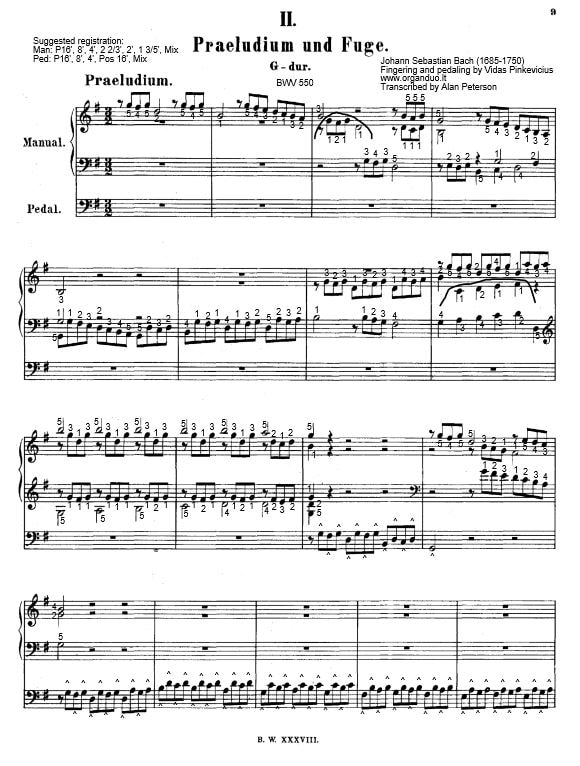 Would you like to master Prelude and Fugue in G Major, BWV 550 by J.S. Bach? I have created this score with the hope that it will help my students who love early music to recreate articulate legato style automatically, almost without thinking. Thanks to Alan Peterson for his meticulous transcription of fingering and pedaling from the slow motion videos. Advanced level. PDF score. 8 pages. 50% discount is valid until July 27. Check it out here This score is free for Total Organist students. 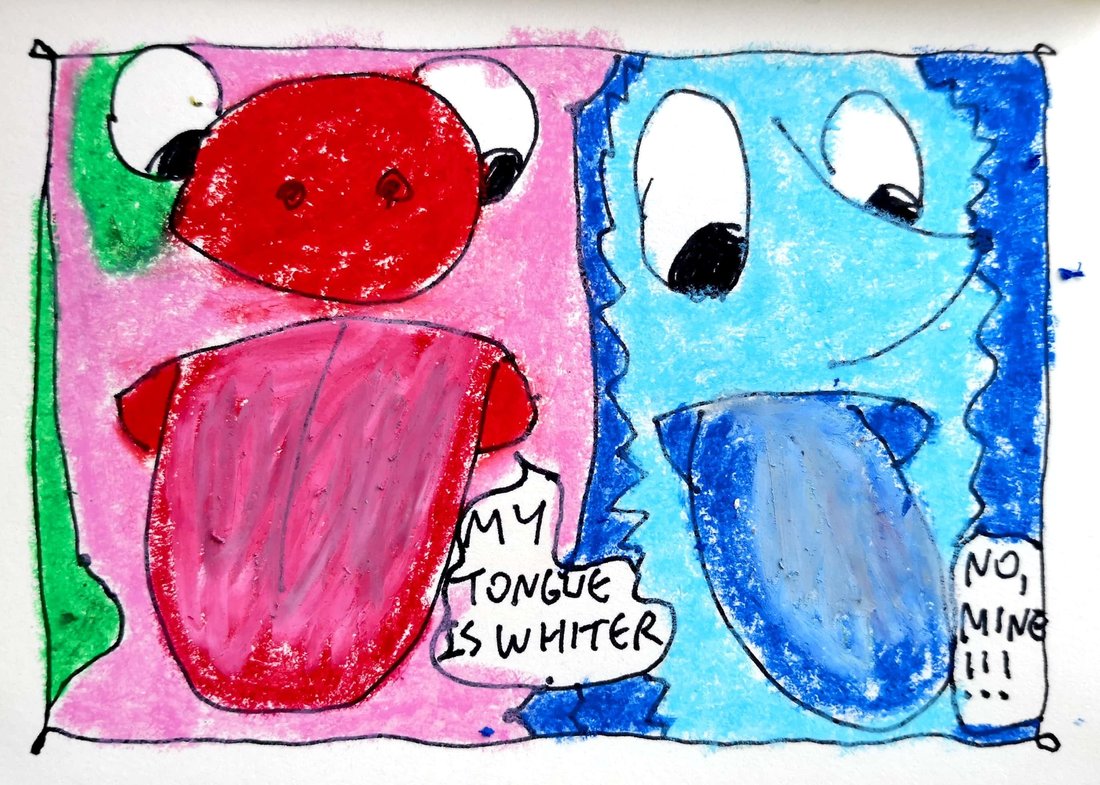 I’m going to talk today about the concept of a “bucket of ink.” My mom is a graphic artist, and she once told me a story that in her youth, when she was a student at the art institute, and one of the professors told her that they have to use up a bucket of ink in order to draw well—in order to learn to draw well. So imagine, a bucket of ink. So ten liters of ink. That’s a huge amount of ink! And you have to draw constantly, or write something beautifully, like calligraphy. So that’s what professor Vladas Drema actually said to her, a very famous art historian of Vilnius. And, she told me this story recently, and I thought about our creative efforts. Whatever we do in life, maybe we create music, maybe we draw, maybe we write poetry, or some other kind of activity, even, let’s say, we practice playing organ, right? Imagine that. A bucket of ink symbolizes maybe 10,000 hours of practice. You know, 10,000 hours is like 10 years of regular consistent and intentional practice, maybe two hours per day. And after that amount of diligent work, you become good at this, right? So, I kind of hope that we all get this kind of training every day. Just a little bit, not necessarily two hours of doing something, but maybe 15 minutes a day of creating something which hasn’t been created before, either in text, pictures, audio, or video, and then sharing it with the world, and doing it so persistently that with the concept of a bucket of ink we don’t see the end result of that. It’s like swimming across the ocean. We don’t see the shore, but we know that the shore is there, so it’s a marathon, not a race. You have to pace yourself, you have to be patient, and never rush. Stick to the step by step approach, one step at a time everyday. And I hope you can do that today. My plan is also to create a Pinky and Spiky comic strip about animal rights today, how they are probably creating something very funny in that theme, animals rights. And hopefully, I will finish my big organ piece based on the Lithuanian folk song, "Vilkas grikius sėjo," which I’m working on this week. So, this is my plan, and hopefully, in the evening, I will get a chance to sight read and improvise as well. So that’s for me. What about you? You have to think about your optimal output and plan for that to happen. Even the bare minimum of creative work today would be worth doing, right? If you know that you will repeat this same activity tomorrow and the day after tomorrow, so that in maybe 10 years, you will complete your bucket of ink. This blog and podcast is supported by Total Organist - the most comprehensive organ training program online where you will find courses for every area of organ playing, including technique, practice, sight-reading, repertoire playing, hymn playing, improvisation, composition, music theory and harmony with hundreds of scores and thousands of exercises.
This week we're running Total Organist Summer Special with 50% discount. And of course, you will get the 1st month free too. This offer is valid until July 25. Check it out here Also, if you haven't yet subscribed to receive free updates of this blog, make sure you do that at http://www.organduo.lt. By subscribing you will also receive free video "How To Master Any Organ Composition" and 10 Day Organ Playing Mini Course. Ausra and I hope the summer is treating you well wherever you are. Not too hot or humid. Until about a couple of weeks ago in Lithuania we had a big drought without any rain for more than 2 months. Farmers will lose most of their crops because of this. Now, of course, the situation is very different - it rains heavily every day and humidity is 80%.
We understand that during the summer months a lot of people are on vacation and don't play the organ very regularly. But some do. If you're still practicing the organ and would like to reach your goals faster, we want to help you. This week we're running Total Organist Summer Special with 50% discount. And of course, you will get the 1st month free too. This is the most comprehensive organ training program online where you will find courses for every area of organ playing, including technique, practice, sight-reading, repertoire playing, hymn playing, improvisation, composition, music theory and harmony with hundreds of scores and thousands of exercises. This offer is valid until July 25. Check it out here 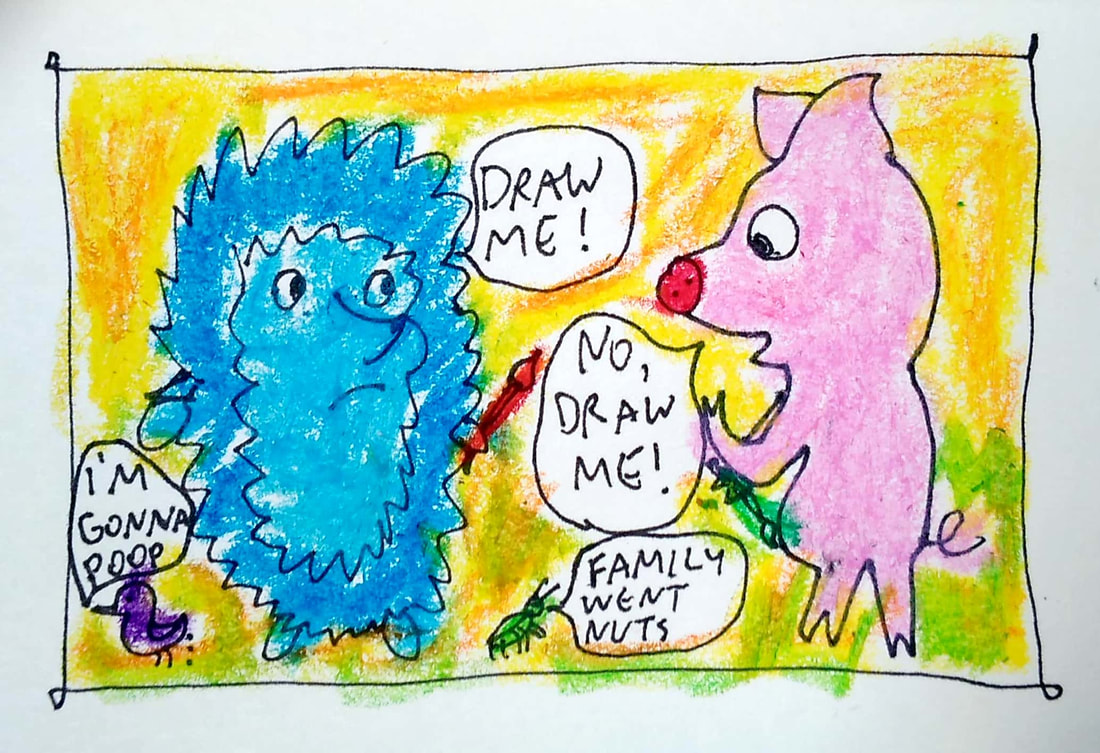 Today I’d like to ask you, “How do you start your mornings? The reason I’m interested in knowing this, is because morning routine is going to be a deciding factor how productive and creative you are with your day. Because, if things are equal for most of the people, one person who can start his or her own day in a productive and creative way will have a better day in general. So, it’s really a matter of thinking about it really thoroughly and having a routine everyday you wake up. For example, for me, the first thing I do in the morning is I fire up my computer, and I create something, work on a musical composition. Today, this morning, I was working on an organ solo piece called “Vilkas grikius sėjo”. This is based on a Lithuanian folk song about the wolf who was sowing the buckwheat. And this piece is going to be dedicated to Kae Hannah Matsuda, and I’m very delighted to be able to work on it in fragments every morning. So, this morning, I worked on the second section—it will have four sections—so the second section is pretty much done, now. And, it took me about an hour to do this. So, every morning recently, I’ve been creating something. Sometimes, I create on the spot, like an improvisation, and in that hour, I can actually complete a piece. With my Sibelius Ultimate software and a MIDI keyboard attached, I can improvise an organ piece and then later edit it, and it will be published on the same day. But sometimes, when the piece is longer, like the piece I’m working on right now, I need to spend more days on it—maybe an entire week. That’s okay! But I found that having a morning time for that works best for me, because I’ve read someplace that we, as people, are the most creative and productive two hours after waking up. So, if we think about it, a lot of people check email, scroll social media, check the news first thing in the morning, and that can actually add up instead of five minutes, you can do 20 minutes, instead of 20 minutes, you can spend an hour just scrolling your phone, easily. And then, it’s time to go to work for most days. And there is nothing else creative to do before that; you are in a hurry. So I’ve found that waking up earlier than normal is a good thing for me. Basically, I have plenty of time to be with my thoughts and to spend my morning as creatively as I can. Then, whatever happens in the day, I know at least that one thing was done creatively. For example, if I have an emergency today, I know that at least I created this middle section of this organ piece today. If not, I can go back and work on other things later in the afternoon. That’s okay, too. I can create Pinky and Spiky comics later in the afternoon, and in fact, today, I will do that. It’s important to realize that you have some options in the morning. You don’t have to rush. But for that to happen, you have to go to bed earlier than normal, because if you want to get up earlier, you have to get a good night’s sleep—at least 8 hours. Right? And for me, this means going to bed about 10 o’clock in the evening. And that allows me to wake up around 6 AM or before 6 AM. In the Summer, when it’s sunlight very early, then I have no trouble getting up even earlier. So, I don’t need my alarm clock for getting up. I usually wake up very naturally. But the very first thing I do is to create, because then, my day will be lived in the way that matters to me. And then, in the afternoon, there is another thing that we can sometimes do. If you take a nap for 15 or 20 minutes, then in the afternoon, you will have a burst of energy, too, for a couple hours. So it’s good to split your day into two halves, and if you want to create and be productive in the afternoon, that’s an ideal scenario, too. So guys, I hope you can also start thinking about your morning routines. And how you live your morning is how you live your day. And how we live our days is how we live our lives, basically. So the question is this: How do you want to live your life, then? And if you answer this question, the morning routine basically takes care of itself. How do you want to be remembered? Or, what things do you want to be remembered for? ...After you’re gone, of course. So, if you think about it, then the morning productivity and creativity always comes first, because you want to do things that matter and are most important. Not urgent, though, but most important first. So that means also going to bed earlier, getting up earlier, preparing, perhaps, your workplace in advance in the evening. For example, if I know that I am going to create a musical composition in the morning, I need to sometimes come up with musical material to work on in the evening, so that I won’t waste my morning precious hours looking for material online. I always have this Gregorian Chant Gradual book, very thick book, with me, and I know that the next piece will be taken from that collection. The only thing that I sometimes have to worry about, is the dedication—to whom this piece will be dedicated. So, I have a list of friends, of organists and composers to whom I would like to dedicate my next pieces, so I just basically write down the person’s name who is next on the list, and then, I am ready to create first thing in the morning. And I hope you can do it, too, whatever medium you are creating in, either in sounds, or pictures, or text or photos or drawing or videos, or combinations of the above, it doesn’t matter. And if you do, make sure you share it with the world, because when you create, miracles happen. This blog and podcast is supported by Total Organist - the most comprehensive organ training program online where you will find courses for every area of organ playing, including technique, practice, sight-reading, repertoire playing, hymn playing, improvisation, composition, music theory and harmony with hundreds of scores and thousands of exercises.
To become a member of Total Organist and start supporting this blog, go to http://www.organduo.lt/total-organist. Also, if you haven't yet subscribed to receive free updates of this blog, make sure you do that at http://www.organduo.lt. By subscribing you will also receive free video "How To Master Any Organ Composition" and 10 Day Organ Playing Mini Course. 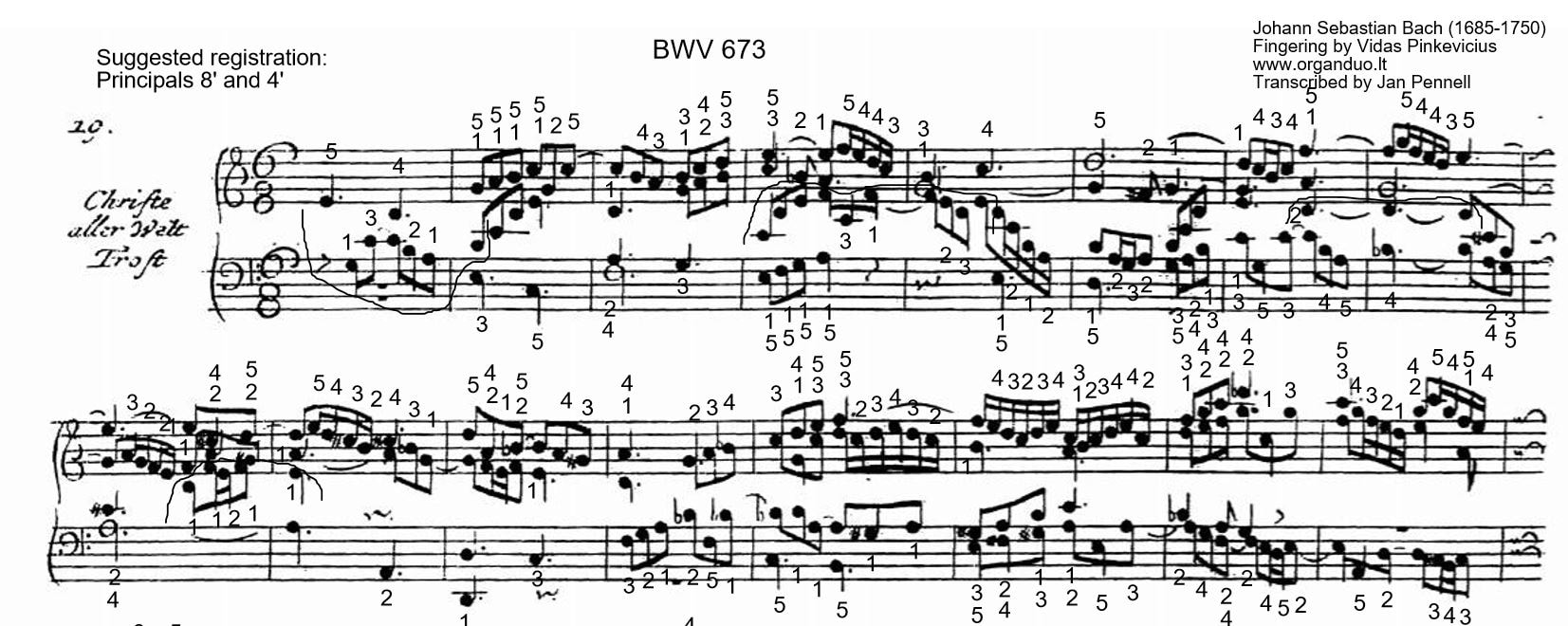 Would you like to learn Christe, aller Welt Trost, BWV 673 by J.S. Bach from Clavierubung Part III? I've created this score with the hope that it will help our students who love early music to practice efficiently and recreate articulate legato style automatically, almost without thinking. Thanks to Jan Pennell for meticulous transcription of fingering from the slow motion video. Basic level. Manuals only. PDF score. 1 page. 50% discount is valid until July 23. Check it out here This score is free for Total Organist students. Bellow is my practice video in slow motion: This blog is supported by Total Organist - the most comprehensive organ training program online where you will find courses for every area of organ playing, including technique, practice, sight-reading, repertoire playing, hymn playing, improvisation, composition with hundreds of scores and thousands of exercises.
Here's what some of the students are saying: "The sight-reading course has helped me tremendously. Thank you very much for your essays, courses and all your help." (Hugh) "I found the fingerings, registration ideas, and general comments to be excellent" (Robert) "I have found your download very helpful! It was really excellent! I have watched some of your teaching videos, and when I read your instructions, I try to imagine you are there teaching me! You may feel disappointed that I am ~2-3 days behind, but I am a slow learner, and I have committed to taking the time to get it right as you say. But the other night my wife commented that she had never heard me play such a detailed melody in the left hand so well! (my left hand is generally poor!)" (John) "Dear Vidas. I just got through learning your practice score of Benedicamus from Tabulatura Nova, by Scheidt. I used your practice schedule and it is an excellent approch to learning any composition. I like all the performance practice information you include in this score. Best wishes." (Frank) "It has been a great pleasure in my life of having discovered your courses and material as well as the YouTube work of recordings. You have a calm and pleasant way of teaching." (Robert) "I have just learned that I passed the CAGO exam, and am now a Colleague of the American Guild of Organists! I have had excellent coaches, lessons, and mentoring here in the United States and an outstanding teacher, but I also want to thank you for your assistance in answering my questions and in providing some excellent practice exercises and video explanations which reinforced my U.S. training! I want to continue to improve my skills and will be participating in your courses and exercises and following your video demonstrations." (Judith) To become a member of Total Organist and start supporting this blog, go to organduo.lt/total-organist. Also, if you haven't yet subscribed to receive free updates of this blog, make sure you do that at organduo.lt. By doing that you will also receive free video "How To Master Any Organ Composition" and 10 Day Organ Playing Mini Course. 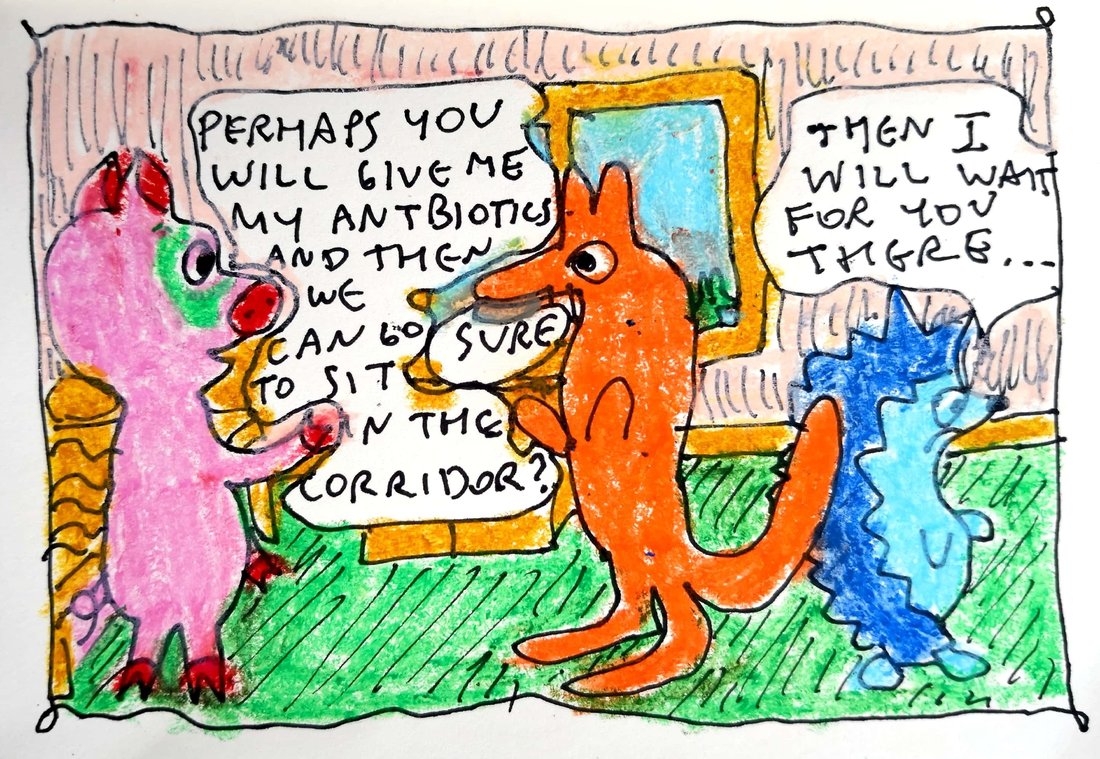 Today I’m going to talk about what is your one thing. Let me explain. A few days ago I woke up quite early with the intent of creating an organ piece like usual and I was working on the composition "Vilkas grikius sėjo" dedicated to Kae Hannah Matsuda based on Lithuanian folk song. I had one section left and I planned to do it that morning and it appears that my plans were changed because my wife had to go to the hospital so we suddenly had to change plans and I took her to the hospital and that’s life right? Life gets in the way and your plans get thrown out of the window. So what do you do then? Do you still manage to create in your day or do you skip one day.
I had big plans as usual, right? Create organ piece, draw Pinky and Spiky comic, then I had a plan to sightread and improvise and teach you guys here and it appears that my plans are no longer the same today. But, I’m still talking to you right now because I found a quick way for you to find out what’s going on. And the reason I’m talking about one thing that is important in your day is when I was at the hospital I simply drew a drawing of Pinky and Spiky. It was not finished, I didn’t have my pastels to color, but it was a work in progress and I shared incomplete work in progress which is still interesting way to share your creativity, right? So does it mean that my day is going to be creative? I think so, yes. Because just one thing. If anything happens to your life and you can create just one thing out of your three or five things you were planning to do. What would that be. OK, you have to think about that too. So it could be different for everybody and it could be different from day to day activities, right? Sometimes it’s different for me, sometimes the one thing for me is composition, sometimes the one thing for me is writing a blog post, sometimes the one thing for me is drawing, sometimes playing and improvising and sightreading and teaching those things creatively. So today for me one thing was to draw a quick sketch of Pinky being sick at the hospital. Some of you might have seen this drawing, I shared it a moment ago. So think about your day. Did you have many plans today? Maybe life is unpredictable for you too. But maybe you can still squeeze in five or ten minutes of creative time, right? Whatever that is for you, find out and start sharing it with the world. It doesn’t have to be complete, it doesn’t have to be perfect, it doesn’t have to be big, right? It just has to be yours and your approach to life. And that’s what matters because maybe tomorrow it will be different day, maybe you will have more time to create and you don’t know yet. Maybe even today you will have more time to create in the evening. You don’t know how life will turn out for you because life is quite unpredictable and planning is sometimes unnecessary, right? But you have to seize the moment and do your one thing that keeps you going. Your one passion, number one and maybe later number two, number three and so on... Is it organ playing for you? For some people it's different and that's OK. I hope you can practice your one thing today and remember when you create, miracles happen. 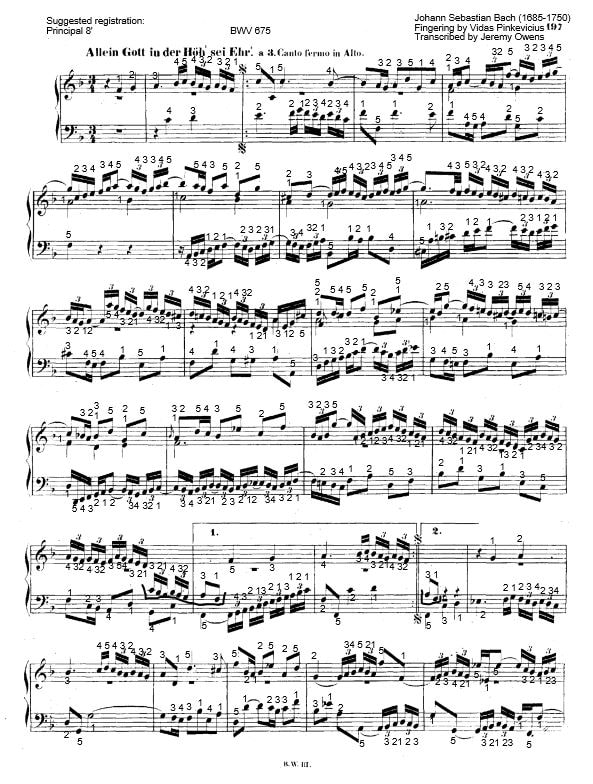 Would you like to learn Allein Gott in der Hoh sei Ehr, BWV 675 by J.S. Bach from Clavierubung Part III? I've created this score with the hope that it will help our students who love early music to practice efficiently and recreate articulate legato style automatically, almost without thinking. Thanks to Jeremy Owens for meticulous transcription of fingering from the slow motion video. Basic level. Manuals only. PDF score. 2 pages. 50% discount is valid until July 21. This score is free for Total Organist students. Bellow is my practice video in slow motion: 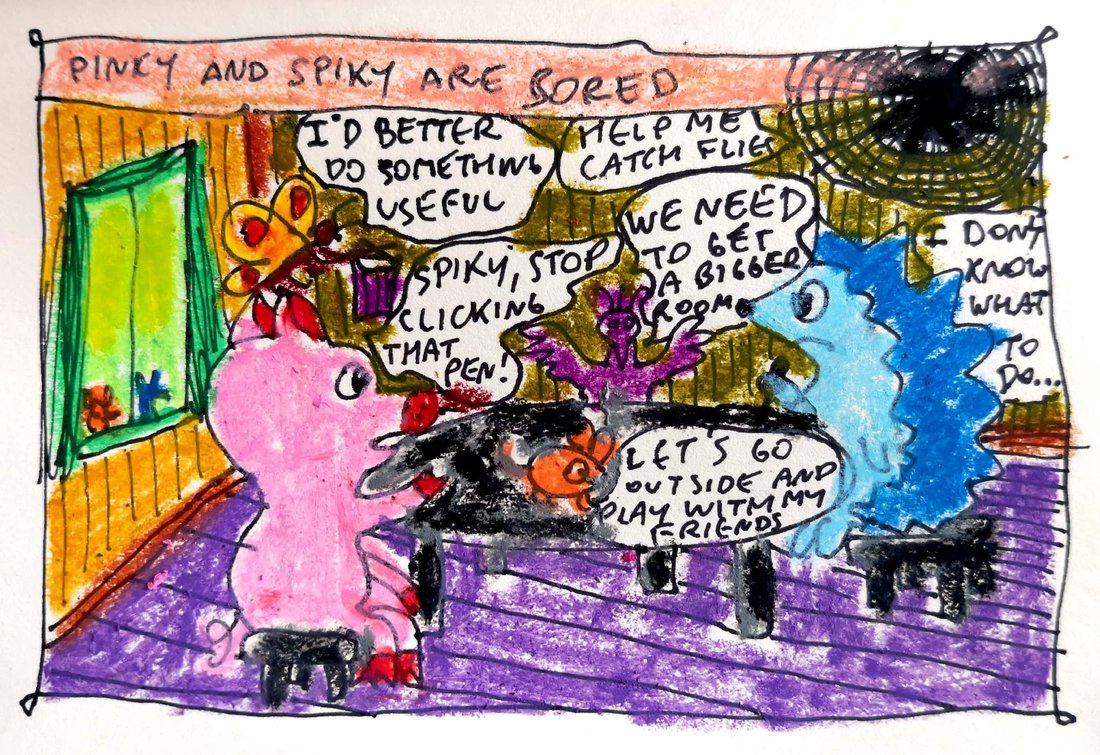 Today I am going to talk about things that we loved doing back when we were kids like six years old and why it is important for us today as adults. You see when a child like six years old was very fond let’s say of drawing right? I for example loved drawing and right up until maybe seventh or eighth grade I participated with my parents in summer camps where the students also drew and I was required to also draw together with them because my both parents at that time were both teachers of art. So I also was surrounded by art at home and I was basically creating, drawing all the time.
My favorite drawing theme was probably horses and airplanes I think too. So I remember that up until maybe thirteen years old. And then I stopped drawing somehow maybe because I had to choose music more, maybe because nobody else from my class drew at that time so basically I wanted to belong, I didn’t want to stand out and I forgot about drawing for a long time. But only three years ago approximately I started to feel the urge of drawing. And even before that I was very envious of artists, of visual artists who expressed their creativity in a visual way. Either in photography or creating pictures, paintings, drawings, sculptures. Anything that is visual was still very appealing to me although I didn’t practice this for many years, let’s say from thirteen years old right up until mayben thirty-eight or thirty-nine years old. You see how many years have passed. Many, many decades and I still didn’t forget about that. And I remember starting drawing little by little after reading Linda Berris book called “Syllabus.” And this book inspired me to start drawing comics. My very first public drawing was created on the occasion of international Churlonis organ and piano competition. I was sitting in the church I remember back in 2015 in September and I started to draw monsters and they were asking many things, saying many things I was hearing in people's music when they played the organ upstairs in the balcony. And it was sort of my commentary in terms of comics. I didn’t know how to draw organ or people at the time and still don’t know very well. But it seemed to me like monsters was something like what I could draw easily. And I started drawing those monsters and sharing them on Facebook. I was so scared at that time and actually was thrilled when organist Hans-Ola Ericsson liked one of my drawings of monsters with the commentary. And I thought maybe it’s not a mortal sin I’m doing right now and maybe I can continue if such a great organist clicked “like” on that drawing. So I continued drawing up until this day. Illustrations, comics, and right now Pinky and Spiky comics. It’s really fascinating to me. But why am I talking about this, right? Because the love of drawing followed me from the time I was six years old and I came back to this love just quite recently. Three years ago. Which means that for you if you look at your childhood back when you were six, seven, eight years old maybe up until eleven, twelve, or even thirteen years old. You will no doubt discover something very curious about yourself. What you loved to do. Maybe you not only drew, maybe you danced, maybe you created music, maybe you wrote poetry. Those activities generally are very applicable for majority of children, right? And most of the children laugh much more than that. So adults laugh five times a day on average, and children laugh three hundred times a day on average and on average we can safely say that children are happier and we can safely say that laughing more would lead us to happiness. But not only laughing probably and I think a big part of being a child is immersing yourself in these activities that we love, right? In my case it was drawing and not only drawing, I loved to conduct and pretend I am a conductor and I took my Mom’s brush and I was conducting Mozart’s 40th Symphony in G Minor and Eine Kleine Nachtmusik. That was my favorite too. So music was also part of my childhood too. And definitely I am a musician right now so I never stopped doing this. But drawing I did stop and it was like some part of me was missing and when recently I came back to this activity I felt much more united in myself. I cannot say that everything is whole right now in my being but much more united that before, before I took up drawing. So if you look at your activities when you were a child and see if you could discover some missing part of you that you are longing to do this right now. Maybe you don’t have the skill, maybe you don’t have the time, maybe you don’t have the tools, right?. It doesn’t matter, right? You can come back to this activity today. However childish it appears to you or others, it doesn’t matter how others react. I think this having hobby today is very beneficial to your well-being as a person, as a whole. And your spiritual well-being too. So I challenge everyone who is listening and who will be listening to this in the future to think about the childhood memories you did and took up those activities. Maybe you could experiment with those activities today. Little by little come back to that feeling of happiness you had as a child. I hope you will create something and share it with the world because when you create miracles happen. 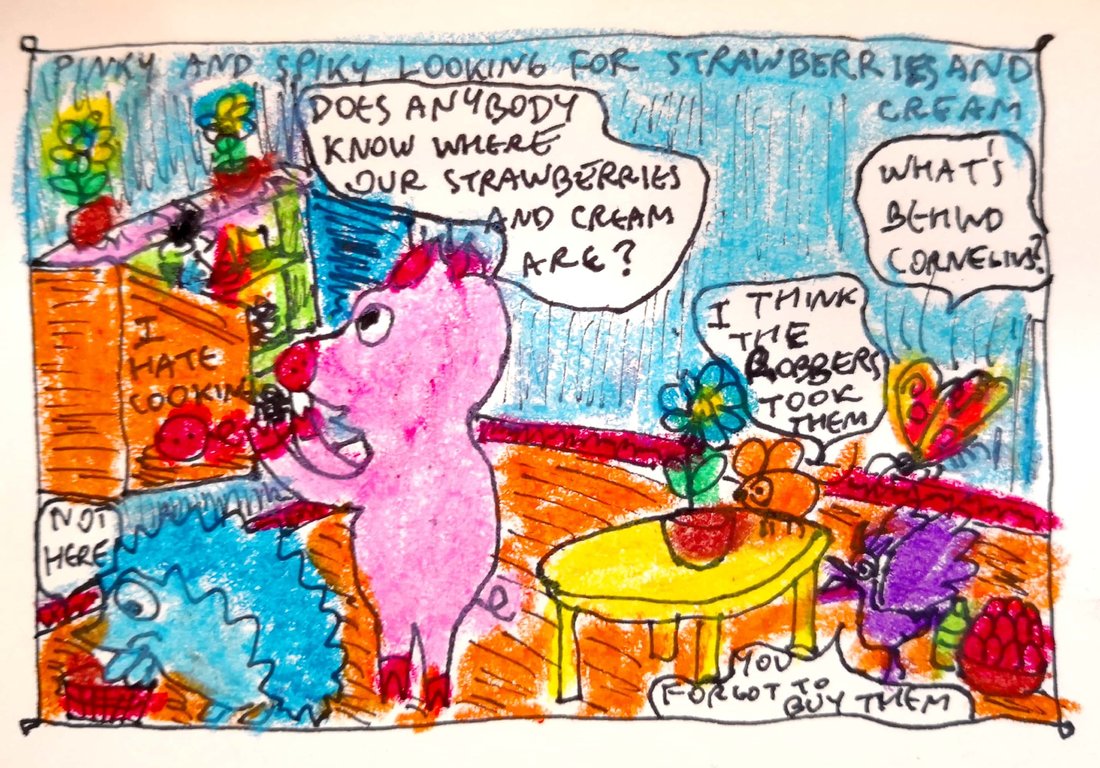 I’m so delighted to be able to talk to you about something that is very interesting: creation of new art forms, of new compositions. I hope you had the chance to create too.
First thing in the morning today, I edited my newest piece, I dedicated for Göran Grahn, organist and friend from Sweden. It’s called Kyrie Orbis Factor, based on a Gregorian chant tune. And then, of course, I posted it online, shared it with the world, and then I created a drawing, a comic about Pinky and Spiky. I think that they were looking for strawberries and cream. But, their pets were hiding strawberries and cream from them, so, they were rather angry. So, I again shared it with you earlier in the day, and I live streamed my improvisation from the graduation ceremony today, which is also a form of creation, right? So, the day for me was quite creative, and I hope that you can create, too, in either text, pictures, audio, or video, and share it with the world. And don’t stop there, because tomorrow, you will have a chance to create, share, and repeat again. Thanks, guys, I hope this was useful to you. And let’s create something. And remember, when you create, miracles happen. |
 DON'T MISS A THING! FREE UPDATES BY EMAIL.
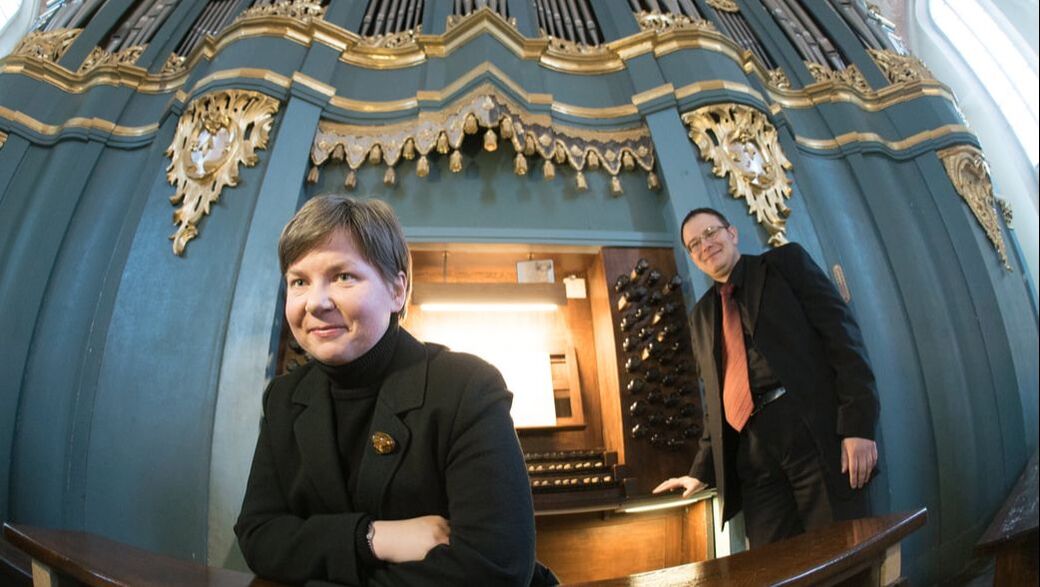 Photo by Edgaras Kurauskas Photo by Edgaras Kurauskas
Authors
Drs. Vidas Pinkevicius and Ausra Motuzaite-Pinkeviciene Organists of Vilnius University , creators of Secrets of Organ Playing. Our Hauptwerk Setup:

Categories
All
Archives
April 2024
|

 RSS Feed