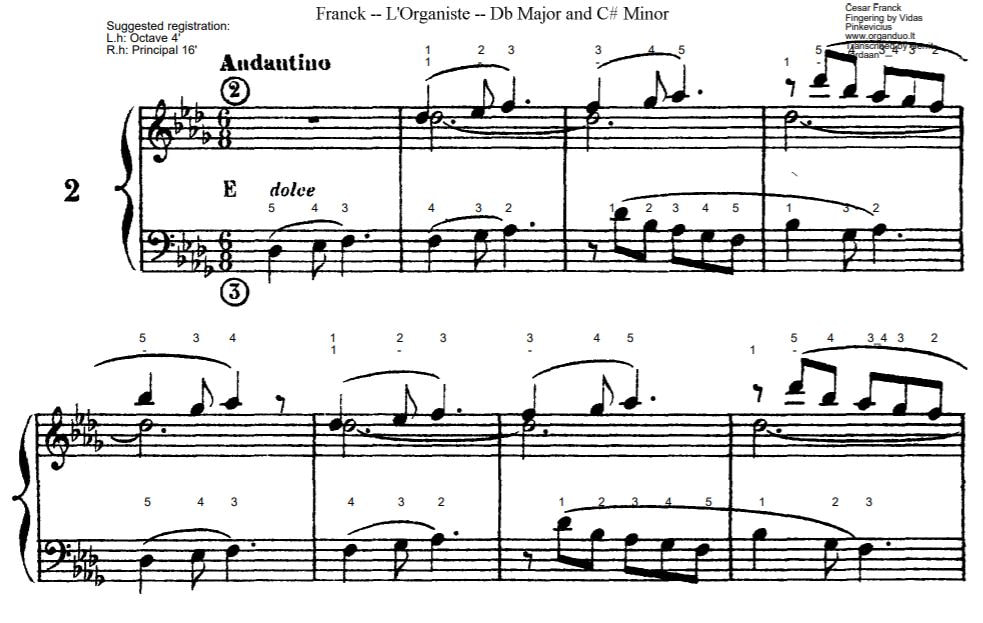
 Would you like to learn Andantino in Db Major from L'Organiste by Cesar Franck? I hope you'll enjoy playing this piece yourself from my PDF score. Thanks to Gerrit Jordaan for his meticulous transcription from the slow motion video. What will you get? PDF score. Basic Level. 1 page. Let me know how your practice goes. This score is free for Total Organist students. Check it out here
Comments
Vidas: Hi, guys, this is Vidas.
Ausra: And Ausra. V: Let’s start episode 449, of Secrets of Organ Playing Podcast. This question was sent by Patricia, and she writes: Dear Vidas and Ausra, Thank you for contacting me regarding your program of Organ tuition and assistance. I studied organ at Trinity College in London and also at the same time I studied the French music from Jean Dattas at Notre Dame in Leicester Square. I was working in London at the time teaching English to students at Morden Girls Secondary in Surrey. When I returned to Kingston, Ontario in Canada, I worked as an organist in a Lutheran Church called St. Marks for 5 years. My mother got an illness which the doctor's said was incurable. They said it would be better to take my mother to Australia to help her but that was not a good idea as she died soon after arriving. I live in Melbourne and have a Johannes organ in my house. I am very bad at practicing and need some help to get started again. I need to master some on my favorites such as the Bach toccatas and other organ preludes and fugues which I played before. I am trying to teach myself the Widor Toccata. V: Can we help Patricia with those goals, Ausra? A: Well, I hope so, but as I talked in a previous podcast, inner motivation is the most important thing. So if Patricia has it, I think everything will be just fine. V: Mmm-mmm. A: Since she was quite advanced organist, because she now is not learning to play the organ from scratch, but she just has to refresh her skills, and to renew her ability to play the organ. What would you suggest for her to do? What would be the best choice and the first step? V: Well sometimes when you repeat previously mastered material from the past with the gap of many years in between, sometimes your old habits come back and those old habits might not be the best habits, you see. And that’s something to keep in mind. Sometimes it’s better to learn the same piece but in a new way. Like completely from scratch, with a new articulation, with a new fingering and pedaling, from a new score, let’s say. I think that would be more productive. What do you say? A: Yes. I couldn’t agree more. Because when I’m trying to refresh some of the old pieces that I played, let’s say many years ago, and I remember the spots that were hard for me in that time, they are still hard for me, today. It means that I wasn’t working in a right way... V: Mmm-hmm. A: At such time. V: But is it true from your early days, you got a decent foundation, and even if you refresh those pieces, those old habits are not the worst habits, I mean, for you. A: Yes, they are not the worst habits. V: At least some of them you can keep. A: But still nowadays when I’m starting to repeat an old piece, at least I won’t be playing it from the beginning to the end. I start to work on the harder spots right away. V: Mmm-hmm. A: Because I’m already sort of respecting myself and my time. I don’t know that I don’t have much of it, so I want to use it as productively as I can. V: And Patricia writes that she’s very bad at practicing. Can you interpret that in some way for us Ausra? What to you suppose she means? A: Well, it’s hard to tell what exactly she means but I could say what in general I consider is a bad practice. Probably the worst practice is not practicing at all, or not practicing enough. V: Mmm-hmm. A: Or practicing unproductively. Because sometimes you can sit on your organ bench and play for four hours straight, and it will be still bad practicing. V: I suppose that’s true Ausra. I always said that the hardest part of practicing the organ is sitting down on the organ bench. Which means, if you practice enough you will get better. But, sometimes, I can observe my Unda Maris students practicing and practicing and over and over again and not getting… A: Any better. V: Any better, sooner than they wanted. They are getting better, but really slowly. And I know why. I know how I would practice differently. And I tell them to slow down. And I tell them, let’s say to practice separate parts multiple times, and they don’t do that, you see. And that’s how they get the same result every time. Maybe a little bit better, because with time, even stone can be furnished with drops of water, enough drops of water. But it really, it takes ages and we don’t have that time. A: But I would think that Patricia has organ in her house. It means that she can easier find time to practice because she doesn’t need to go anywhere to the organ loft. V: Mmm-hmm. True. So those are general ideas to get started. I suggest she would take a look at my organ practice course. And we are talking about also in some courses about organ practice. Maybe she could just take a look at the category of courses in the Organ Practice category in our Secrets Of Organ Playing store. And she will find useful materials there. A: Do you think it’s wise to work on several old pieces at the same time, or not? How would you do it? V: Several pieces, yes, but not too many, maybe three, for starters. A: But do you think it’s important only to repeat the old repertoire or to learn something new as well? V: Definitely something new to keep her going forward. And definitely something from different stylistic periods. Let’s say she likes Bach’s Preludes and Fugues, and also she tries to learn Widor Toccata. That would be different choices. But maybe something slower than Widor Toccata would be nice too, like a chorale prelude, or a romantic piece in Adagio tempo, or slow movement from the same Widor symphony. A: Well actually, I always thought that all French people just love French composers. V: Mmm-hmm. A: But as we performed at Alpe d'Huez in French Alps last March, actually the man who actually is one of the main organizers of that organ festival, he told that ‘very good’ that we are not playing Widor and we are not doing the famous Toccata. Because actually what happens when organist playing Widor on the program, people start leaving. V: Uh-huh. A: And it was actually a big surprise. I was slightly shocked when I heard it—that French don’t like Widor, especially this toccata. V: Maybe the listeners have heard it enough times. A: Could be, that it’s already, it’s up to... V: Uh-huh. A: Up to your throat. So but it was a surprise because the audience is like 99% French in that church. V: Mmm-hmm. And older age, I would say. A: Well, yes, I would say. So maybe you could do not only like Widor Toccata but practice some pieces by Louis Vierne. V: Yes, and softer pieces, not necessarily loud. A: Yes, not only fast and, because I think this toccata is one of the most mechanical organ pieces… V: Mmm-mmm. A: that are written. But it’s good for wedding. Usually people quite like it, and order to play it during wedding time quite a lot. V: She says she likes toccatas and organ preludes and fugues by Bach. What is your favorite toccata, Ausra, by Bach, today? A: Probably C Major Toccata, Adagio and Fugue. V: Uh-huh. A: I think it always was my favorite, and it still is. What about you? V: I like very much E Major Toccata… A: I like it too. V: but transposed to C Major. A: It’s sort of Buxtehude style. V: Uh-huh. A: Reminds, it would be my second choice. V: Good! And what about organ prelude and fugue, by Bach? What would you take with you to the island without any people around? A: I think you know which one. It would be E Flat Major from the first part of Clavier-Übung. (????) V: E Flat Major? A: Yes. V: BWV 552. A: That’s right. But I also like C minor Prelude and Fugue. V: I like A Major. A: I like C Major. V: Which one? There are a few. A: The one you played in America. V: 547. A: Yes. I’m no good with numbers. I really need to learn to memorize Bach’s catalogue that I could tell these numbers as well as you. V: You know what’s the best way to memorize the catalogue? Is to sight-read each piece and then you will know the numbers by heart. A: Yes. But also what I would suggest for Patricia to do, to play some of Bach’s chorale works because I think they are great too. V: Yes. That was our first suggestion. A: And with age I even start preferring Bach chorale based works. V: So guys, we hope this was useful to you. Please send us more of your questions. We love helping you grow. And remember, when you practice… V: Miracles happen!
By the way, today is the best time to join our Total Organist community because of Total Organist Midsummer discount which is valid until the end of June. The 1st month is free and you will get 50 % discount for as long as you choose to subscribe.
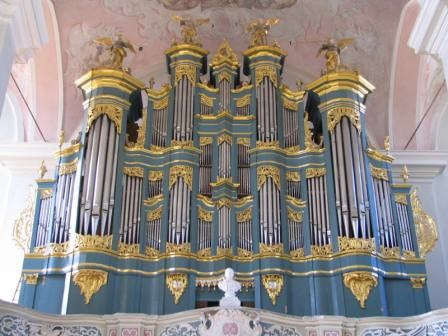 Ausra and I hope everyone will have a great Midsummer's Eve with plenty of food, music and celebration.
This day is not far away and it can become your new start in organ playing. That's why we are offering Total Organist Midsummer Discount until June 30. Monthly or yearly membership is 50 % off. Check it out here Here's what some of our Total Organist students are saying: Jeremy: I have been a member for about a year now, and have used several of the courses to my sight reading, transposition, Bach articulate legato, hymn playing, and improvisation. Also, I have really enjoyed learning historically informed fingerings. Ruth: I like it very much. It is inspiring, informative, and encouraging, I believe, not only to me but also to organists of all levels. I have been learning about composers and periods of music in a variety of countries. Merci pour tout! Thank you for everything. Anne: I love Total Organist. The work that Vidas and Ausra have put into it is amazing. I like having access to all the classical music that they have edited and videos they post. The fingerings and pedal markings are very helpful when I start a new organ piece. I especially like being able to read how other organists from all over the world are solving problems in playing the organ. It's very helpful to me in my journey to learn to play this magnificent instrument! If you have been thinking about starting your Total Organist journey, until June 30 is the best time because besides 50 % discount you will also get the 1st month free. Check it out here Oh and by the way, any score, training or program in our Secrets of Organ Playing Store has 50% discount too.
Vidas: Hi guys! This is Vidas.
Ausra: And Ausra. V: Let’s start episode 450 of Secrets of Organ Playing Podcast. This question was sent by Mark, and he writes: Vidas and Ausra, 1. What is my dream for my organ playing? Answer: to be able to play all the hymns of my church (The Church of Jesus Christ of Latter-Day Saints) and Sunday organ solos as needed using the foot pedals. I'm a "recovering pianist" who started playing the organ at age 62. I haven't yet been able to master the skill of playing the foot pedals along with both hands. I can play the bass part of most hymns using the foot pedals alone. As soon as I try to play the pedals and manuals together, everything falls apart. Instead, I use an electronic bass coupler on my church's digital organ to automatically play the bass voice while I play the manuals with my hands. 2. What are 3 most important things that are holding me back from realizing my dream? Answer: 1) lack of time. I also work a full-time job, exercise at a gym, and I'm preparing 3 to 4 hymns every week for presentation each Sunday at church. I'm the only organist in our congregation so it falls on me to have all of these hymns ready to go each week. 2) having to be at the church building in order to practice playing the hymns on an organ. I do have a full-size digital keyboard in my office that I use to practice playing hymns with my hands only, but it's not the same as the organ manuals and, of course, it doesn't have a pedal board. 3) lack of knowledge of an effective and time-efficient method for a pianist to learn how to play the organ manuals and pedal board together. Thank you for making the Total Organist program available and for asking the above 2 questions. I look forward to your answer. Sincerely, Mark V: So, basically, let’s start from the beginning, Ausra, right? A: Yes. V: Remember, Mark wants to be able to play all the hymns for his church, and organ solos on Sundays, with pedals as well. And the foot pedals are holding him back, right? So, let’s start with the lack of time, first of all. He has a lot to do, but he has to also prepare three or four hymns every week. How to manage this if he’s only a pianist? A: Well, in a way, we definitely are not magicians, and we cannot make Mark have more time, since he’s working a full-time job and exercising at the gym. I would not suggest for him to quit his job or stop exercising. I guess he just has to plan his free time more efficiently. V: Mm hm. And I would add that, with time, he will get better in preparation for the church with his hymns, and that will require less and less time. A: Well yes, I think the main problem, you know, is he doesn’t have an instrument with a pedal board, other than when he’s at the church. And since you are not practicing with the pedal all the time, you will not improve very fast. So what I could suggest him probably to use the artificial pedal board made out of paper, like some of your students from Unda Maris studio does. V: Yeah. Let’s see how people can download it. It’s very easy. If you go to our homepage, organduo.lt, on the sidebar, you can see our picture, right? And above the picture there is this email subscription form. But below that, there are some entrances and some information about us, and just before the end, just before the button for RSS feed, there is this question: Don’t have an organ at home? Download manuals, paper manuals and pedals. Print them out, cut the white spaces, tape the sheets together, and you’ll be ready to practice anywhere there is a desk and a floor. Make sure you have a high rise chair, of course. So this is really simple. Let’s see if it works. I’m trying to download it. Yes, the manuals are clearly visible, and the pedals work as well. So this is a good starting point for people, Ausra, who don’t have a, let’s say real pedal board, right? A: Yes, because if you won’t practice with the pedal, you won’t improve. And in Mark’s case, I think he lacks coordination, which is very common for people who play piano but haven’t played organ. For beginning organists. V: Mm hm. A: So, he really needs to work in combinations. Not try to play everything together, but to play right and pedal, left and pedal – probably pedal alone first of all, and then to try to put all things together. V: Well, exactly. It’s no wonder he struggles with pedals if the only thing he does is practice the hands and then adds the pedals, or practices the pedals alone and adds the manuals together. I think it’s the last step, but we need to have fifteen steps for four-part hymns. A: True, and if he will practice at least with the artificial paper pedal board, he will be able to coordinate much better, because you will know when you have to do something with your feet all the time. V: Yes, so to answer the third challenge that he’s having about the lack of knowledge an efficient method, right, how to play organ manuals and pedals together, he could take advantage of our courses. A: True. Although, you know, about time efficient methods, everybody wants to get fast results, good results, but that’s absolutely impossible in the field of making music, you know, playing nicely. Because there are some steps that you cannot skip, and some things that you cannot do as fast as maybe you wish to. V: Absolutely. You have to gradually proceed to the next level without skipping anything in between. A: Of course, you can make your practice more efficient, you know, and use right methods that will make your practice more efficient, and you will achieve results faster. But still, you have to take each step. V: I could compare something that other people could really understand – like working out, for example. I’ve been doing this pull-up routine on my hymns, not hymns, but rings in our garden, on the apple tree. And before I went to Poland to play my recital in Torun at "Pro Baltica" Music Festival, I could do 18 or 17, I forget, maybe 18 pull-ups, I think. A: 18, I think. V: 18, yeah, it was my record. Barely, of course, it was really difficult, but 18 is a good number. But then, a second trip came up to Malta, and I didn’t do anything during that time, and afterwards I was kind of tired and besides lazy, and only this weekend I’m starting to pick up my pull-up routine again. And I cannot do 18 of course, but I can do 13. So, I’m starting where I am right now, and gradually, the pull-up number will increase. I’m not worrying about that. A: But when you began it, tell everybody that you could do barely one. V: No, I couldn’t do one. A: So… V: I couldn’t do one last August when I started. I could only hang on the pull-up bar, for, I believe, 10 seconds. Yeah, 10 seconds was my first try. Then gradually, a week later, it was 20 seconds, one week later 30 seconds, and then I started doing one pull-up afterward. A: So I guess the same is with organ practice, no? You cannot play entire hymnal book right away. You need to more gradually learn each of them. V: Good example – thank you, Ausra. Also Laurie, who has transcribed this podcast conversation has this idea for Mark: "I might suggest to Mark to use his cheat-button for 2 of the hymns each week, and concentrate on learning ONE hymn each week with pedals so it is not overwhelming. This is similar to what you told him - small goals are more achievable." V. So, I hope this was useful to you guys. Apply this in your practice and you will reap good results. We hope to receive more of your questions very soon. And remember, when you practice… A: Miracles happen.  Thank you everyone for participating! You all made us very happy with your entries. We thank @contrabourdon who selected the following winners. You can congratulate them here:
https://www.palnet.io/secretsoforganplaying/@organduo/winners-of-secrets-of-organ-playing-contest-week-24 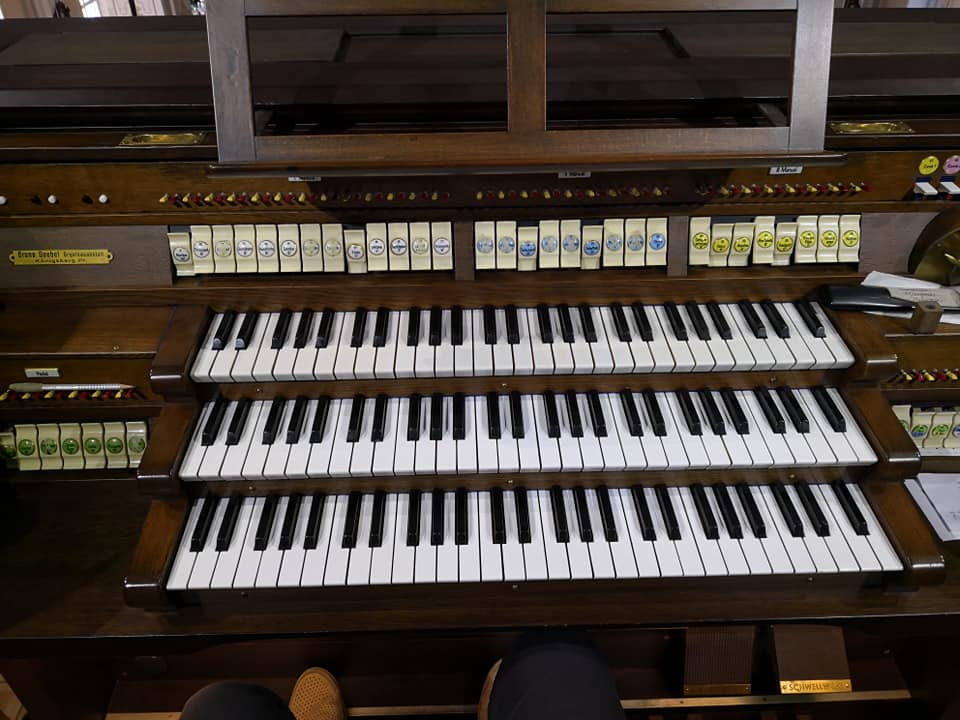 Have you ever wanted to start to practice on the organ but found yourself sidetracked after a few days? Apparently your inner motivation wasn't enough.
I know how you feel. I also was stuck many times. What helped me was to find some external motivation as well. In order for you to advance your organ playing skills and help you motivate to practice, my wife Ausra - @laputis and I invite you to join in a contest to submit your organ music and win some Steem. Are you an experienced organist? You can participate easily. Are you a beginner? No problem. This contest is open to every organ music loving Steemian. Here are the rules 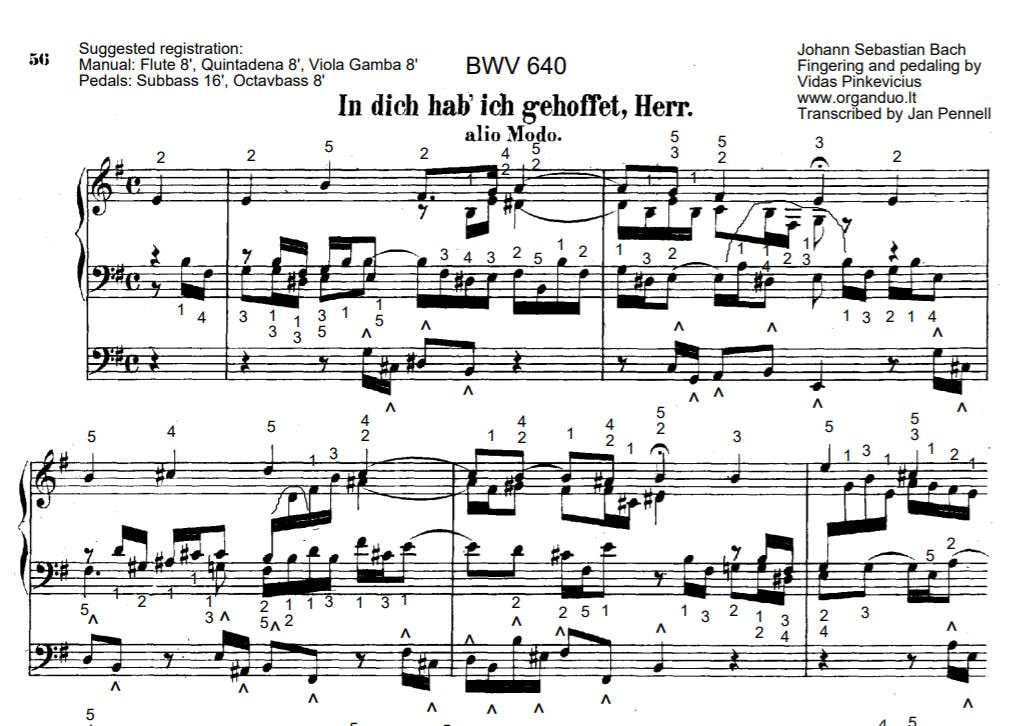 Would you like to master In dich hab' ich gehoffet, Herr, BWV 640 by J.S. Bach? I've created this practice score with complete fingering and pedaling so that our students could master this chorale prelude from the Orgelbuchlein efficiently, saving many hours of frustration and achieving ideal articulation - articulate legato. Thanks to Jan Pennell for her meticulous transcription from slow motion video. Basic level. PDF score. 1 page. This score is free for Total Organist students. Check it out here SOPP447: I bought shoes from Organmaster but I didn’t quite like it. Do you have any recommendation?6/15/2019
Vidas: Hi guys! This is Vidas.
Ausra: And Ausra. V: Let’s start episode 447 of Secrets of Organ Playing Podcast. This question was sent by David, And he writes: Hi Vidas, I bought shoes from Organmaster but I didn’t quite like it. Do you have any recommendation? Regards, David Well, what would you say to David, Ausra? Because I have my own recommendations. A: Well, if I would be, you know, Mr. Bennett, from The Pride and Prejudice by Jane Austin, I would say it seems like a hopeless business, but since I’m not… Well, I don’t like the Organmaster shoes myself so well, and why I don’t because they are not made from genuine leather, except of the… V: Soles? A: Soles, yes. V: Really? A: Yes. And that’s why I don’t find them of really high quality. At least, that’s my opinion. But, after using them for many years, they sort of softened, and it’s becoming more comfortable. V: Do you remember, Ausra, when we first bought Organmaster shoes? How long did it take for you to get used to your shoes? How many weeks? A: It took quite a while. A month, maybe. V: A month. So if David, and this is the start of my recommendation, if David doesn’t like the shoes at first, maybe it doesn’t mean the shoes are bad at first. Maybe he just needs to play for a few weeks to a month, and see if they soften up a little bit, and your feet get used to your shoes this way. Do you think, sometimes, that might be the case? A: Yes. It’s like with any new shoes. They often give a struggle at the beginning, so. V: But not all shoes. A: No, not all shoes, but some of them, yes. I’m not talking about sneakers. V: Mm-hmm. Sneakers are very comfortable. What I would suggest, also, to take a look, for David, into TicTacToes. This is another company, which specializes in shoes. Let’s see their website. TicTacToe. TicTacToe Shoes,” I think. There is a game called Tic-Tac-Toe. These are shoes for ballroom dancing, and organ shoes and square dancing. You know, all kinds of shoes they have, and in addition to that, they have a collection for organ shoes, and if I click to enter their collection, they have men’s organ shoes, they have women’s organ shoes, and they also have special organ shoes, which look… (laughs) strange, Ausra, right? A: Well, they’re shoes that look really soft and you can bend it, you know? V: Yes, it’s bent, like, at a ninety-degree angle, downward. A: I don’t think anybody could… do their foot like this. They would break it. V: So that’s my also recommendation; to look at TicTacToes.com A: But, anyway, you know, I wonder how David is doing with other shoes. Are other shoes comfortable for him? Because it might not be a problem with these complete shoes, but it might be, you know, a problem with, I don’t know… feet? (inaudible) Or what he wears on a daily basis? It’s really hard to tell, because, actually, he didn’t explain why he doesn’t like these shoes. We don’t know what the problem is. V: Exactly. I think when I wrote to him and answered in an email about TicTacToes, he was quite happy with it. Maybe that solved his problem. So anyway, organist shoes, sometimes, it’s a great challenge to find for us, right, and not every person has the, you know, the ability to buy something online and get shipped from overseas to their country. They need to buy something locally. For example, in Venus, we have, also, a store for dancers. And I found that our Unda Maris students also need organ shoes, so I recommended them to take a look at their collection for dancing shoes, ballroom dancing, specifically. A: Ballroom? Do you think those shoes are fitted? For men, maybe, but for women, I highly doubt it. V: No? Why not? A: Because, well, look at women’s shoes. You know, ballroom dancing shoes. V: They’re very similar. I mean, some of them. A: Well, this company, yes, but in general, they’re not, because the heel is much higher than short in these. V: But, remember, if you play with-- A: You have professional dancers on the TV. We never wear shoes like these. V: Ah, I see. So maybe, full dancing, then… A: Yes, I would say it’s more like full dancing shoes. But also, if it’s to play the organ. V: Uh-huh. Could be, could be. Interesting. So basically, you could accommodate your own feet this way with various kinds of shoes, and sometimes, you might even don’t need to buy something. You could look at your own shoe collection at home, if you have one, and see what you can use for the organ. Sometimes, you can find one. Not always, though. Right? A: It depends. V: It depends, as everything in life. Thank you guys. This was Vidas… A: And Ausra. V: We hope this was useful to you, and please keep sending us your wonderful questions. We love helping you grow. And remember, when you practice… A: Miracles happen. 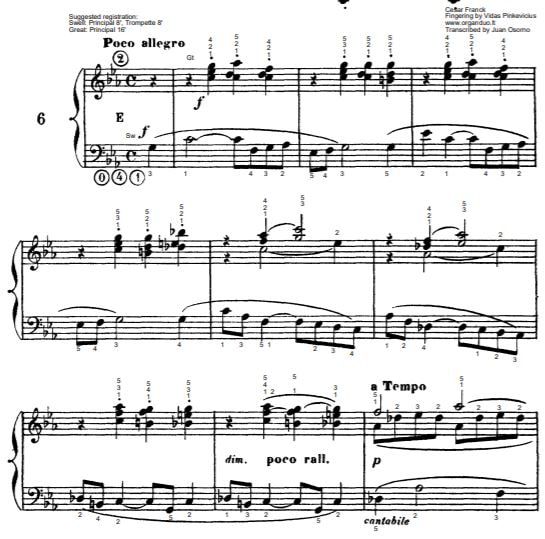 Would you like to learn Poco Allegro in C Minor from L'Organiste by Cesar Franck? I hope you'll enjoy playing this piece yourself from my PDF score. Thanks to Juan Osorno for his meticulous transcription from the slow motion video. What will you get? PDF score. Basic Level. 2 pages. Let me know how your practice goes. This score is free for Total Organist students. Check it out here
This is the continuation of SOPP446.
Vidas: So anyway, let’s take a look at the remaining of the question—when to play pedals—right? Ausra: Is it necessary to add pedals? V: No. A: What do you think about it? V: No. Especially on English organs—they don’t have much pedal stops I think. A: Because I don’t think that Noel’s were intended for to be played with pedals too. V: Well maybe… A: Maybe sometimes at the end of cadences. V: When you play the Grand Jeux right? It’s actually in parenthesis. The Guilmant edition has in parenthesis, pedal sign. So whenever you have large chords, you could add, but it’s… A: It’s optional. V: It’s optional, completely optional, because sometimes the chords are not in four voices but in three voices. And if you play the pedals instead of the left hand, then what do you do with the left hand? A: Well, would you double it? V: Yeah probably double. And sometimes even one octave lower, I would think, if you need more gravity. That’s how I would do it. Fast arpeggios is a problem in this Noel, right Ausra? A: Well… V: It doesn’t start fast, because it starts with chords, but it gradually speeds up. At first in quarter notes, then in eighth notes, then in triplets, and then in sixteenth notes. A: That’s what happens in most of the these variations, especially in the baroque variations, that you start with slower note values then everything becomes quite fast. V: Mmm-hmm. A: Because of smaller note values. We can see this since the time of Sweelinck. V: Mmm-hmm. A: So basically what you actually have to do with playing piece like this [is] you have to choose your tempo wisely. So you need basically to see what can you, how fast can you play in the hardest spot of the piece and accordingly that spot you need to pick up the opening tempo. V: Mmm-hmm. I think the left hand makes big trouble with those arpeggios, and, well, you have to improve you left hand technique then. A: True. V: Maybe try our left hand training course. A: And it’s very useful to play piece like Noel on the piano. I think it might help a lot. Because obviously, it’s well suited for piano, for developing organ technique, especially in the spots like this. V: Trying to speed up the tempo is a good idea to start in very small fragments. Basically stopping every two notes, then every four notes, every eight notes—talking about the left hand. A: Yes, and the trouble with the spot like this is that some of the people would simply play it very mechanically like an etude. And I don’t think that’s right attitude. Because some of those notes in the left hand are more important than others, and you really need to find what the melody is telling you to do. Because not each of those notes is equally important. V: Mmm-hmm. A: And you need to shape it like that. V: Right. So in this Noel, John is also wondering about the registration on English organs. And the main idea is sometimes those big chords to be played with the Grand Orgue registration, and variations in two parts to be played sometimes in Cornier registration and also in Krummhorn registration. English organs don’t necessarily have those stops… A: But do they have some reeds? V: Some reeds and some Cornet sounds would be possible to find. For example, obviously if you need Cornet, you could collect flutes of 8, 4, 2, 2 2/3 and 1 3/5. That would be a Cornet. If you need a Krummhorn, but English sound would not maybe have, but maybe have Clarinet, right? A: That might work, yes. V: It depends on what you have. If you don’t have Clarinet at all, if you don’t have reeds at all, it might be the case too. Well, what to do then. What would you do? A: Well, now I’m wondering if it’s worth playing piece that if you could not reproduce registration that can warrant it. But I think that even registration of flute and principles would work nicely for this kind of music. V: Yes. Imagine playing this variation on our piano at home. Wouldn’t it be nice! It would sound nice. Even though our piano is out of tune. A: Well it would sound obviously different, but… V: Yeah, it would be a different piece. So if you are transferring to a different type of organ, it would sound differently. That’s okay I believe. A: True. Except that I’m thinking what about voicing, when you have such a fast running notes in the left hand. Because some organs are just scaled in such a way that left hand is not audible so clearly. V: True! True, true, true! They’re not suited for fast passages. So maybe use higher pitched principles—maybe 4’ principle. A: That’s what I thought about a spot like this. And again, if we are talking that fast arpeggios, you really need to lean down on the strong beats of the places like this because otherwise you might lose the control. And leaning on the strong beat might help to control yourself better. V: Excellent! So we hope this conversation was useful, not only to John but to anyone who wants to try something French for Christmas next year. And this is, this piece has some tricky passages. It’s a wise idea to start earlier. A: True. And to start learning from those hard spots. V: Exactly. Not from the beginning but from the fast running passages. Alright guys, we hope this is, this conversation will spark a new set of questions from you. We always love helping you grow, so keep sending us your feedback. And also John finishes his question by saying, ‘I hope you have a great day!’ So what are we doing today, Ausra? A: We are going to Ikea. V: Ikea, right. And we are buying there? A: A bed, but I don’t think you are going to care because of the bed. You are going because of the Swedish meatballs. V: Yes! Whenever we go to Ikea, I always imagine I would be eating Swedish meatballs. (Laughs.) I hope they will have it today. Alright, guys, this was Vidas. A: And Ausra. V: I think today we also, later, after we get back, we will practice organ duets for our upcoming organ recital in Denmark this summer. So, I also hope that you can practice some organ music today. Because when you practice… V: Miracles happen! |
 DON'T MISS A THING! FREE UPDATES BY EMAIL.
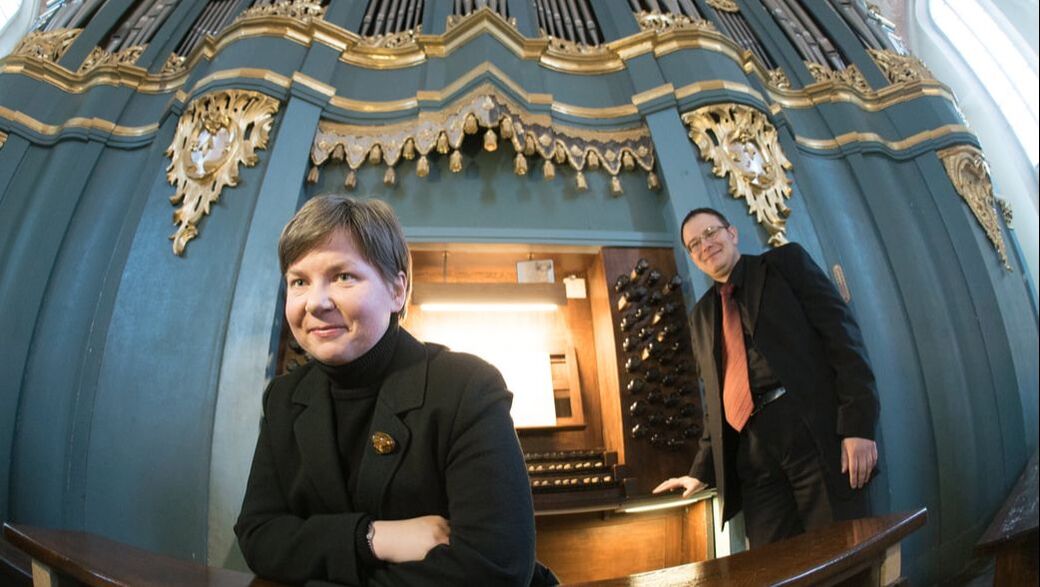 Photo by Edgaras Kurauskas Photo by Edgaras Kurauskas
Authors
Drs. Vidas Pinkevicius and Ausra Motuzaite-Pinkeviciene Organists of Vilnius University , creators of Secrets of Organ Playing. Our Hauptwerk Setup:

Categories
All
Archives
April 2024
|

 RSS Feed