|
Vidas: Hi guys! This is Vidas.
Ausra: And Ausra. V: Let’s start episode 568 of Secrets of Organ Playing Podcast. This question was sent by Paulius. And he writes, Hello! Vidas, do you have the pedaling of D major scale in the Baroque style? Paulius Vidas: L L R L R L R R D E F# G A B C# D R R L R L R L L D C# B A G F# E D V: Do you know what he’s talking about, Ausra? A: Who doesn’t know the famous prelude by J.S. Bach? V: Do you think that he… A: With passage of D Major scale in the pedal. V: Do you think that Paulius is playing this piece himself? A: I don’t think, I think he is asking how to pedalize the scale for his colleague and friend. V: Uh huh. Could be. A: It’s sort of very interesting sounding when you are asking people for other people. V: Yes. I would suspect that, too. You know, Lithuanians sometimes, they never ask us questions directly, or never truly engage with our content online. Have you noticed that? A: Yes. V: I’m sure they can read English, or understand English, or hear our voices. We don’t talk complicated English, they could understand most of it, right? Plus, it’s organ-related stuff, so it’s not that difficult. But for some reason, Lithuanians, I would say, ignore us, right? A: Well…. V: Or not? A: That’s, you know, envy. V: Envy? A: That’s always, that’s the main feature of Lithuanian folks, we are just very envious. V: Mm hm. For people who are more successful than them? A: Well, yes, I guess maybe even for people who are different. V: Mm hm. A: Who think outside of the box. And see outside of the box. V: Sure. And we are not talking about Paulius now. A: Yes. Definitely not. V: Paulius is our friend. So, playing D Major scale. I suspect it’s for D Major Prelude and Fugue, BWV 532, and the principle that I usually apply here, I hold this principle for every baroque piece, every baroque, up to, let’s say, 19th century. So, I don’t play everything with one foot, or with another foot, or with heels. The system is that you use alternate toes whenever possible, left-right, left-right, left-right, or right-left, right-left if in descending motion. But there are exceptions. Sometimes you play with the same foot. And the system was described in very easy terms by Harald Vogel in his preface, I think, to Tabulatura Nova by Samuel Scheidt. And I read it, and it made sense. Then later, of course, Richard Stauffer Organ Method book applied this extensively, and that’s where we had learned our early technique from. A: So basically, it’s common knowledge for people who are thinking about historical performance, or accuracy of historical performance. V: Mm hm. So, you play with the alternate toes, right-left, right-left, most of the time. But play with the same toe, same foot twice, let’s say, when there is change of direction, if the melody moves upward and then downward, you play with the same foot. Or, when there are longer note values, you can play with the same foot if there are half notes, let’s say. It’s nothing to worry about, you don’t have to play in alternate toes unless you want. And you play with the same toe when there is an upbeat before the stronger beat. It doesn’t have to be beat 1 of the measure; it can be beat 3 in 4/4 meter. Or in faster notes, like sixteenth note passages, like in D Major scale, it could mean every, it could be, the first note could be played with the same toe. D, E, those 2 notes of the scale, I would play them with left-left. And then alternate toes. It would be left-left-right-left-right-left-right-right. Because the last note is the strongest beat. Does this make sense, Ausra? A: Yes, and because the last 2 notes are already very high up… V: Mm hm. A: On the pedalboard. V: Of course, in this piece, there is no descending scale, but I wrote to Paulius anyway, I would start the same way, but from the right toe. Right-right-left-right-left-right-left-left. A: It makes sense. V: So, ascending will be D E F# G A B C# D, Or left-left-right-left-right-left-right-right. And descending will be D C# B A G F# E D, or right-right-left-right-left-right-left-left. Would you do this the same way, or a little bit different? A: Yes, I would do it the same way. I think it’s very adequate. V: This is not the same if you want to play D Major scale legato, in a modern style. A: Of course. It would be completely different. You will use heels as well. V: I would play, I would start with the heel, D, then the toe of the same foot, left foot, E, then F# would be right toe, then G would be left heel, A would be right heel, and then B would be left toe, C# would be right toe, and then heel on D. It’s like a heel, toe, toe, heel, heel technique mostly. You keep your heels together. That’s very easy then. Does it, is it something you would apply yourself, Ausra? I see your hidden smile. A: Well, you know, if you would have such short legs as I do, I don’t think you would be able to keep all time your knees together. So that’s, you know, we have different physiology. And for example, if I would have to play in romantic style, the D Major scale, the three upper notes I would play with my right foot. I would do the heel on the B, then the toe on the C#, and then finish with the heel. V: I see. You need longer legs. A: Yes. Could you buy them for me? V: Um (laughs) good question! I’m just looking at YouTube videos that I did, and it looks like my video on how to play the C Major scale with pedals on the organ has 75,000 views. It’s my most viewed video. But, D Major scale, D Major pedal scale has, guess how many views? A: Less than C Major of course. V: How much less? A: A lot. V: Only 4,737 views. A: Very few people care for D Major scale. V: Yes. It pays to play with zero accidentals. So, you can look it up, by the way, if you are interested in looking at my feet and seeing how I play D Major scale. But this is in legato style. A: Yes, definitely. So you would not apply it for playing… V: Mm hm. A: Bach’s D Major Prelude and Fugue. V: And by the way, if you need guidance and you need to perfect your organ playing pedal technique, I really recommend Pedal Virtuoso Master Course. We have exercises in playing arpeggios and scales over one and two octaves, and what it gives is, provides you, helps you create, develop your ankle flexibility. And this is the secret sauce of having perfect pedal technique in any style, of course. It’s based on legato style, so it doesn’t work for toes only technique. But just think, just something to keep in mind if you want to perfect your pedal technique. It’s really worth it. Okay, guys. This was Vidas. A: And Ausra. V: Please send us more of your questions. We love helping you grow. And remember, when you practice, A: Miracles happen.
Comments
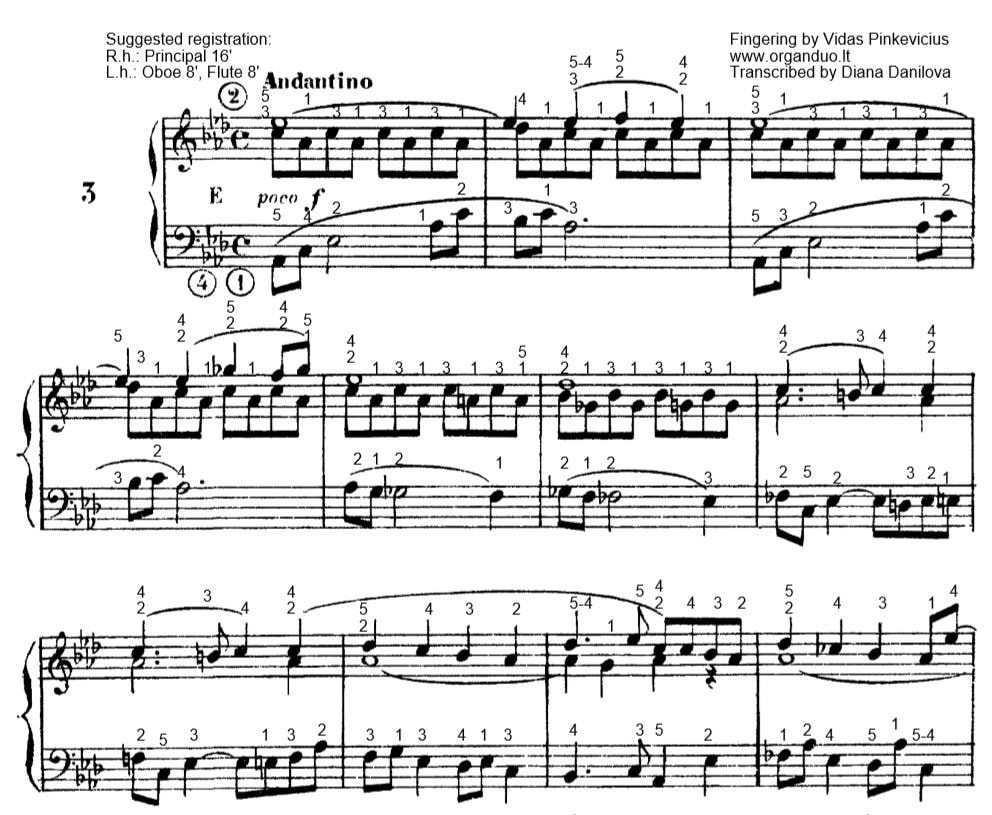 Would you like to learn Andantino in Ab Major from L'Organiste by Cesar Franck? I hope you'll enjoy playing this piece yourself from my PDF score which will save you many hours of work and help you practice efficiently. Thanks to Diana Danilova for her meticulous transcription from the slow motion video. What will you get? PDF score with complete fingering written in. Basic Level. 1.5 pages. Let me know how your practice goes. This score is free for Total Organist students. Check it out here 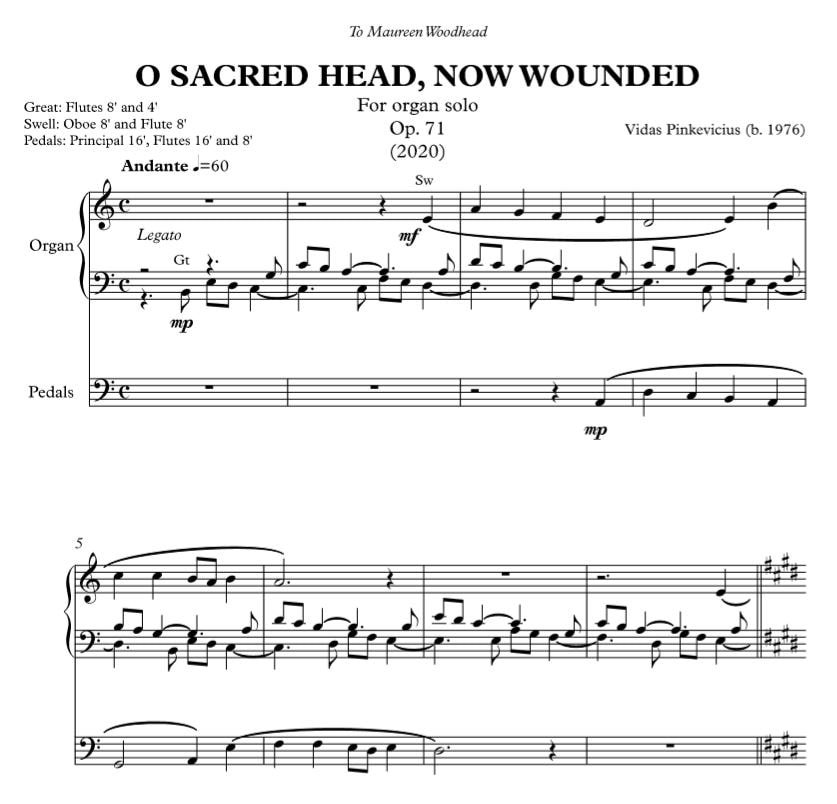 This piece is dedicated to Maureen Woodhead. It is based on the famous Passion chorale and could be performed at Lent. Maureen was looking for some organ music suitable to be performed for Holy Week which would be based on this tune so I hope she and other people will find this chorale prelude useful. Here I wanted to create a canon between the soprano and the bass. Middle parts imitate each other and are based on melodic fragments of chorale tune. To spice things up I present each chorale line with a different number of accidentals: 0 accidentals, 4 sharps, 4 flats and 0 accidentals. PDF score. 2 pages. For organ solo. 2 minutes. Basic level. When you create, miracles happen! This piece is free for Total Organist students. Check it out here 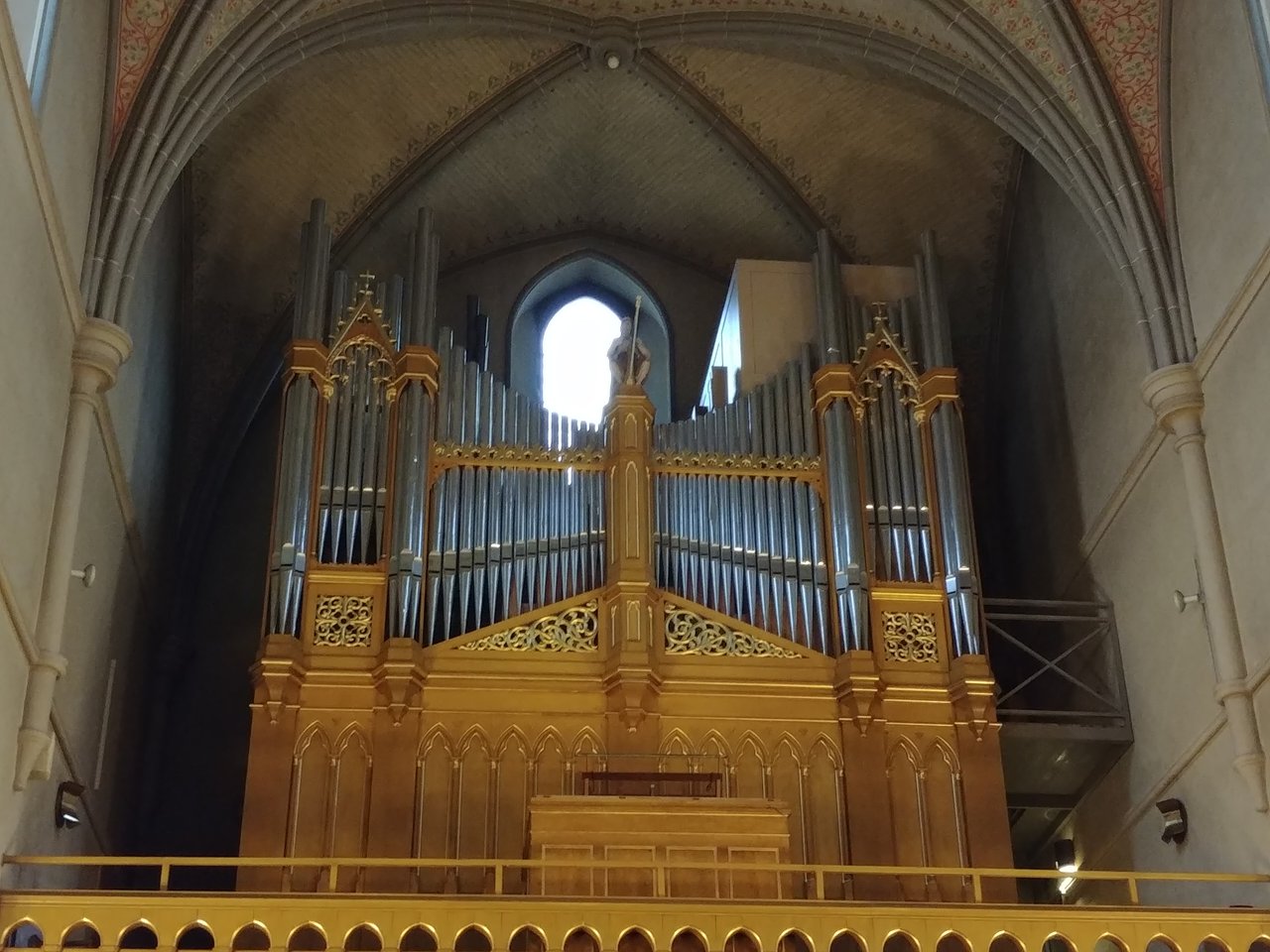
Have you ever wanted to start to practice on the organ but found yourself sidetracked after a few days? Apparently your inner motivation wasn't enough.
I know how you feel. I also was stuck many times. What helped me was to find some external motivation as well. In order for you to advance your organ playing skills and help you motivate to practice, my wife Ausra - @laputis and I invite you to join in a contest to submit your organ music and win some Steem. Are you an experienced organist? You can participate easily. Are you a beginner? No problem. This contest is open to every organ music loving Steemian. Here are the rules And here are the winners for Week 59. 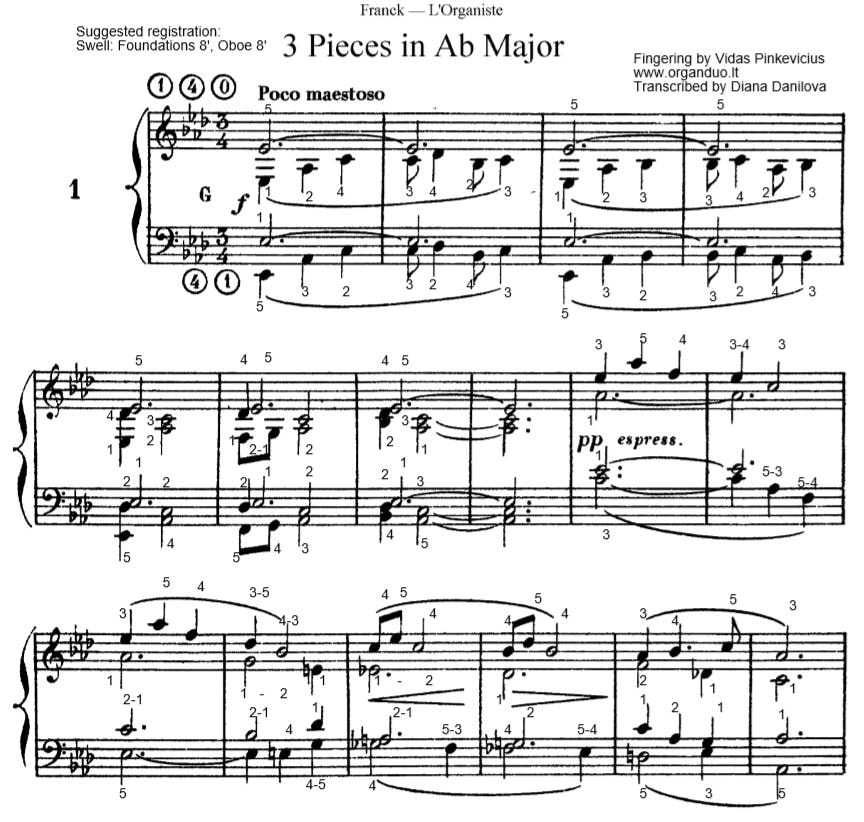
Would you like to learn Poco Maestoso in Ab Major from L'Organiste by Cesar Franck?
I hope you'll enjoy playing this piece yourself from my PDF score which will save you many hours of work and help you practice efficiently. Thanks to Diana Danilova for her meticulous transcription from the slow motion video. What will you get? PDF score with complete fingering written in. Basic Level. 1 page. Let me know how your practice goes. This score is free for Total Organist students. Check it out here SOPP564: Important to me is to take songs which are outside of the Church or Classic repertoire2/15/2020
Vidas: Hi, guys, this is Vidas.
Ausra: And Ausra V: Let’s start episode 564, of Secrets of Organ Playing Podcast. This question was sent by Jason. And he writes: Hello Vidas, Thank you for your email. My dreams are to be truly expressive in whatever I play. I want to do my own arrangements and improvisations to pieces. Important to me is to take songs which are outside of the Church or Classic repertoire. With these songs I would create interesting organ pieces with real musical depth, I’m talking about arranging music like Jimi Hendrix—Voodoo Child, David Bowie—life on Mars there are so many. Sticking with more standard pieces then new stuff like Hans Zimmer—Interstellar pieces would be great. But above all the knowledge and ability to arrange and play modern pieces. What is holding me back is my brain over complicating music theory. Thank you Jason V: Music theory is always a drag, right? A: Yes. V: Can you create arrangements and improvisations without knowing music theory? A: I don’t know, unless you are a genius, probably. V: Yeah, you can do intuitive things without knowing what you are doing, but then you cannot explain to others. A: That’s right. So I guess that knowing music theory is a crucial thing. V: Mmm-hmm. Of course, if you always can explain what you’re doing, it’s not always that interesting, right? A: True. V: It has to be some mystery. A: I know, but I think in nowadays there are no problems in creating sort of transcriptions. Because basically what he is talking about, Jason, it’s basically transcription. And I think that many of music software nowadays can do that for him. Or at least help to do it. V: Well, yes. For example, let’s take a song by David Bowie or Jimi Hendrix, right? Or Hans Zimmer. If he can get a hold of the score, like original score imitation, and then put it into Sibelius or Finale, any other software that does arrangements automatically, and with the press of a button he can specify how many voices does he want to have in each hand, how many stave mutations, if its suitable with pedals or without pedals, things like that, and he can specify the style, actually, and that would be produced automatically. I’m not sure if that’s the best result, but for starters it’s no-brainer. A: And I’m not really sure that’s a legal thing, because all these authors that Jason mentions in his letter, I guess they are still alive, still living, and I don’t know what about copyrights, and do you have a right to do arrangements with their music. V: Yeah. Jimi Hendrix and David Bowie, they are not with us anymore, but obviously copyright holds, uh… A: Yes, because I think it was hold like seventy-five years after death. V: In some countries seventy-five, in some fifty, after death. A: But still, you know… V: But of course copyrights can be renewed after that, so you have to be really careful. And license your arrangement. You can purchase licensing actually, and then do this legally. A: Sure. V: Can you do this for your own enjoyment, if you don’t share the music anywhere, just for your private use, legally? A: I think so. V: Do you think so? A: If it’s for yourself, yes. V: I am not so sure. I’m not a copyright lawyer, so don’t site me on this. Better to consult copyright lawyer on this, even for private use, if you’re creating like a cover song as they call it, if you create your own arrangement of the original copyrighted popular music song. That’s really complicated and guarded very, very fiercely by copyright holders. A: Yeah. And you know while talking about all this kind of music that Jason mentions, I’m not sure that organ is the best instrument for this music to be played on. V: Yes, for us. A: Some if it might work but some of it might just sound ridiculous. V: You know this is our taste and people have other tastes, you know, and what works for us not necessarily works for Jason and vice-versa. People enjoy for, example, listening to Queen’s Rhapsody in Blue. Not in blue... A: (Laughs). Bohemian Rhapsody. V: (Laughs). Yes. Who created Rhapsody in Blue? Gershwin. A: That’s right. V: Yes. Bohemian Rhapsody on the organ. Some people enjoy that. That’s not what my taste prefers though, but I don’t judge other people, not at this point in my life at least. What about you, Ausra? A: Me too! V: Freedom of expression should be available to all on earth, whatever they want to do. A: But let’s say that if Jason wants to do everything from the scratch by himself and he definitely needs to know music theory. There is no way to escape that. V: Well, that’s a good point, yeah. Something to think about if you’re serious arrangement and improvising based on those arrangements, you have to know what you’re doing and music theory helps to see the ideas behind music that composer or songwriter, in this case, have put into the piece. A: And you know, I guess because we are talking about popular music now, I think we have a little of their version of music theory too. So basically what applies to the common period may not be applied to the popular music. V: That’s right. A: So this is all another world. V: Yeah. Yeah, you have to do many experiments and do trial and error before you find what works and what doesn’t. That’s the best teacher, I think. A: Yes. V: Thank you guys. This was Vidas. A: And Ausra. V: Please send us more of your questions. We love helping you grow. And remember, when you practice… A: Miracles happen!
Vidas: Hi guys, this is Vidas!
Ausra: And Ausra! V: Let’s start episode 563 of Secrets of Organ Playing Podcast. This question was sent by Daniel, and he writes: “Hello Vidas and Ausra! I have a question about fingering and practising in a very slow tempo. If I do the fingering early I often have to choose another solution when I know the difficult parts better and can play them in a ”final” tempo. So the question is: When is the optimal moment to decide the fingering? Thanks for all good inspiration!” V: Hmm… that’s a good question, Ausra, right? A: Yes, it is a good question. V: What I do, I can say first and then you later share your version. A: Okay. V: Nowadays, I sit down on the organ bench, and I sight read a piece of music. At the same time, I record or even live stream the video with the camera pointed from above to the keyboards, so that hands, fingers, and even pedals would be visible. And once that’s done, I submit this video to my team to transcribe the fingering and pedaling for me. So basically, what I’m doing is using complete fingering right from the start. What about you? A: So it means that you have a very good notion of fingering and feel very self confident, yes? V: Not always, though. Of course, there are some elements which need editing, and I edit them later. But for most of the time, especially early music, it’s no problem. A: Yes, it’s the same for me with early music. I have a pretty good sense of how to finger it automatically, but I remember when I was a student in my early years of organ studies, I realized that it’s probably not a good thing to sit down and to write fingering right away after picking up a new piece, because I realized after you’ve spent hours and hours fingering it and then you practice, and after some time you see that some of those fingerings simply don’t work for you, and you have to rewrite it. So what I have done since that time, I would play a piece a few times, and only after that, I would write down my fingering. V: Makes sense. Recently, I’ve been going to church and practicing well known pieces, and also at the same time recording them later, but not as a sight-reading, but as a finished composition—finished performance, basically, ready to upload on YouTube and any other streaming platform. But it takes, for me, maybe ten times to play it slowly and faster to get ready, and especially if the piece is a little bit harder and faster and longer, and it might take a few more days to do it. But then, I suspect my fingering would be maybe a little bit different if I record it the last take—the tenth try, or the twentieth try, or the fortieth or fiftieth try, and then try to notate my fingering based on that video. Make sense? A: Yes, it makes sense. I think that the worst thing you can do is to play the same keys each time with a different fingering. That would slow down your progress of improvement. So I guess at some point, and quite early in learning the piece, you have to decide finally on what your fingering will be. V: Yeah, maybe you can choose... If Daniel, for example, wants to choose something in between what we are doing... we are having two opinions. Ausra suggests first to practice a few times and then notate fingering, and I… not recommending to do it like myself—write down fingering right from the start—but I’m just sharing what I’m doing, because I have that much experience. So maybe you could do something in between, right? Maybe play a few times and see if you’re comfortable with sitting down and writing down fingering then. Would that be helpful, Ausra? A: Yes, I guess everybody has to choose for themselves. What works for one might not work well for another one. V: Exactly. And it comes with the experience. After five, ten, twenty years, it will take less and less and less time to figure out the right fingering for you. Maybe you can do it right away when you sight read the first time. A: Right now, for example, I’m working on “Pièce D’Orgue” that Vidas fingered, and this is probably one of the pieces that I took a score with fingers in it... V: Vidas fingers! A: ...after a very long time, and I noticed that everything is just fine for my right, but not everything is just fine for my left hand. So basically, most of the places I ignored what is written in the left hand and created my own fingering. V: Why is that? A: I don’t know? V: Think. A: Well okay, let’s not go there. V: Maybe you have one extra finger. A: I don’t think so. V: There are people who have six fingers, actually. A: But I have only five on each hand. V: Hannibal Lecter had six fingers, you know? A: Vidas is in a mood, as you can hear. V: Good. So guys, choose what works for you. Right? We’re sharing what works for us, and probably the right answer will be somewhere in between for each of you. Thanks guys for sending these thoughtful questions, we love helping you grow. And remember, when you practice, A: Miracles happen.
Vidas: Hi guys! This is Vidas.
Ausra: And Ausra. V: Let’s start episode 565 of Secrets of Organ Playing Podcast. This question was sent by Allen. And he writes, Hi Vidas and Ausra, It is great to read other people's problems and challenges and I would love to hear your responses to mine. I took up the organ seriously in 2015 after retiring and I am now 71. I practise every day for at least two hours and my latest piece (which I have just mastered) is the Bach Toccata BWV 538 (Dorian). Unfortunately, I do have the occasional BAD day when everything goes wrong, even bars that never went wrong before. I soldier on but it often gets worse. Do you ever experience this? If so, what do you do? Hoping to hear from you, Allen V: So, it’s very common piece and wonderful, Dorian toccata that Bach wrote, but I’m not sure if he is playing the Fugue or not. A: Well, anyway, I think this kind of problem, I have experienced it quite a lot actually. Many times. Because when we are talking about toccatas, we have this repeated patterns, motivic rhythm, at fast tempo, and while playing a lot of it, it might be overplayed, so to say. So the best thing for me is just to take a break and maybe to drop that piece for one or two days. Or even for a few days. And then to start to play it again, but at a slow tempo. V: Why is that, why do you have to take a break? A: Well, because you know, if I will force it, I might ruin it, and I might not want to play it anymore. V: And another answer might be probably that you have to let the unconscious do the work for you, while you are sleeping, while you are doing some other things, your mind still works subconsciously on that piece. A: I think that’s a very good point. V: Mm hm. And sometimes, subconscious practice is more beneficial than conscious practice, right? If we always force it and do it over and over again repeatedly, 100 times, 1000 times and with no results, maybe yes, we can take a break for a few days and then come back, and then the piece will start to sound like from scratch, like a fresh piece. And we will find many interesting new things in it, after we haven’t been, having been away from it for awhile. A: Because, you know, I get this feeling all the time when we are getting ready for our recitals. That you cannot practice every day in a concert tempo, because you ruin the piece. \ V: That’s very obvious, yeah. A: And the closer your recital comes, the better you are with your pieces, the more careful you need to be with it. And you need to take breaks, and you need to practice in a slow tempo. V: Yes, because it’s very tempting to play fast and… A: Yes, because everything is ready, you know, you know everything. V: It’s tempting to pretend that the recital is today. For example, we are recording it on Saturday, and our next recital is a week from tomorrow, on Sunday, A: Yes. V: In Sweden. And therefore, we have to try to peak on that day. Not today, not tomorrow, not in the middle of the week, but on the right day, and even on the right time. It will be like at 6:00 PM, and we have to get ready so that people in Sweden, in a city called Örebro would be listening there and enjoying it the most. A: True, so I guess the best timing is very important, and when you are learning and improving your skills, you need to find a pattern that works for you. V: And sometimes, it’s the opposite true, yes? Sometimes you can play slow and the easy way, and the calm way for too long, and then when the recital comes, or public appearance comes, you don’t know how you can handle the stress of the real tempo, because you never tried it. A: So I guess, you need to play in the concert tempo, that’s for sure, but after you reach that concert tempo, and you feel really comfortable in it, then you need to go back to a slower tempo. V: Well, for cases like that, they always recommend recording themselves, for people. And listening to those recordings. And when you press the record button, you always feel a little bit of stress, like, you can’t repeat a mistake, you can’t stop. You have to keep going. And that’s like a little bit similar to a real situation when people are listening to you live. And that’s very very helpful, if you really know the level that you are in right now. If you really mastered the Dorian toccata or not. Maybe it’s just in your mind that you have mastered it, but if you record it, maybe it’s another story. You have to check it. A: And recording yourself, I think, helps also to overcome performance anxiety. V: True. Exactly, because you are getting through these multiple levels of stress many times, and it’s not that stressful anymore, right? A: True, and the more you do it, the easier it gets. V: Although, this week when I recorded, I think the Spring from The Four Seasons by Vivaldi in the church, it was on Monday, I think, I was really nervous. Because I haven’t recorded anything from the score in a long while. You know, I usually livestream my improvisations, but that’s not the same, right? Because you can make up notes. Or if I perform modern-sounding music, people don’t know what kind of notes there are. But if it’s really popular classical piece like the Spring from Vivaldi’s The Four Seasons, everybody knows this piece inside out, and I was having a really stressful time calming myself down and focusing. Because I was actually livestreaming this piece when I was recording it. But, I had a fail-safe button on - I pressed the privacy level to “Private.” Nobody could hear it at that time. And only when I was happy with the performance, I set it on “Public.” A: So you were cheating a little bit, yes? V: I was cheating, yes. But the next time I recorded live, it was later on, the different piece, let’s say Bridal March from Lohengrin by Richard Wagner, I did it live. And actually played it three times. Nobody noticed, actually, on Facebook. All three times were good. But I chose the best version, the last version, for YouTube, for example. I edited it later. A: I guess you perform so much, so many times, and you livestream on Facebook, that nobody pays attention to you anymore. V: No, people usually listen to the beginning, and send “likes” and hearts, etc., and comment, for example, but not too many people listen to the end. A: Yeah. V: It’s the same on YouTube, too. Ok, guys. The best advice we could give, probably, is to practice slowly, and record yourself in this case. And then you will know your right, your exact level, and probably the bars that you occasionally play with mistakes can be fixed. A: And I really advise you to take a break. V: Oh, that’s good advice. I forgot about it. That’s like going on a trip, and missing your family, for example, if you go alone. And you come back, you miss your family, you start to appreciate it even more. A: Yes. So that might happen for Bach’s Toccata, Dorian. V: And play the Fugue, also. Fugue is worth the trouble, too. Our friend Jeremy Owens, practiced this piece, Toccata and Fugue, and Toccata, I think, was easier than Fugue for him. A: I think that’s always the case with Toccatas and Fugues. V: But he finally mastered this piece, so I have no doubt that Allen can do this too. Thank you. This was Vidas. A: And Ausra. V: Please send us more of your questions. We love helping you grow. And remember, when you practice, A: Miracles happen.  Wouldn't it be nice to help us spread the word about Secrets of Organ Playing and share the revenue raised in return?
Now you can. Introducing our very generous Secrets of Organ Playing Affiliate Program. Here's how it works. It takes only 3 simple steps: 1. Join It's free and easy to join. Get up and running today. 2. Promote Choose from hundreds of our compositions, practice scores and training programs to advertise to your organist friends and followers. 3. Earn Get up to 50% in commissions on successful referrals. Earn commissions from all qualifying purchases, not just the products you advertised. It pays to have friends. Share your affiliate link with your friends and get 50% commission when they buy. Our friend James Flores has already made some sales. You can do it too. Here's what he did: 1. Learned to play my Meditation in D, Op. 35. 2. Recorded the video of himself playing this piece. 3. Extracted the audio from the recording. 4. Uploaded the video to Youtube. 5. Uploaded the audio to contrebombarde.com. 6. Wrote a short post about this piece on steempeak.com with the link from YouTube. 7. Uploaded the video and the audio to creary.net. 8. Signed up for our affiliate program. 9. Found Meditation in D, Op. 35 in the dashboard. 10. Shared his affiliate link to this score in all the previous places (Youtube, Contrebombarde, Steempeak and Creary). 11. 8 hours later sold 2 copies of this piece from his post on Contrebombarde. 12. The piece costs 5 USD. Total revenue was 10 USD for 2 copies. 13. His share of 50% was 5 USD. You see what he did? After liking this piece performed by Carson Cooman on Contrebombarde, he decided to learn it himself. This was BEFORE we even had an affiliate program. And after linking and sharing his affiliate link to the video and audio of the piece that he would have learned to play anyway, he earned 5 USD after 8 hours. Of course, Paypal and Shopify will take some fees for transactions but not too much. The good part is that this link shared in all those places will become an asset generating views and potential revenue for him in the future too. You can do it too. Oh, and by the way, you can share not only pieces that I have composed but also anything else you find in our store, including hundreds of practice scores and training programs and yes, Total Organist as well. And as with @contrabourdon's example, the best way to start promoting is not to spam strangers all over the internet with stuff they don't want but to share your personal experience with people who actually want to hear from you. Sign up here and start earning today: https://secrets-of-organ-playing.goaffpro.com 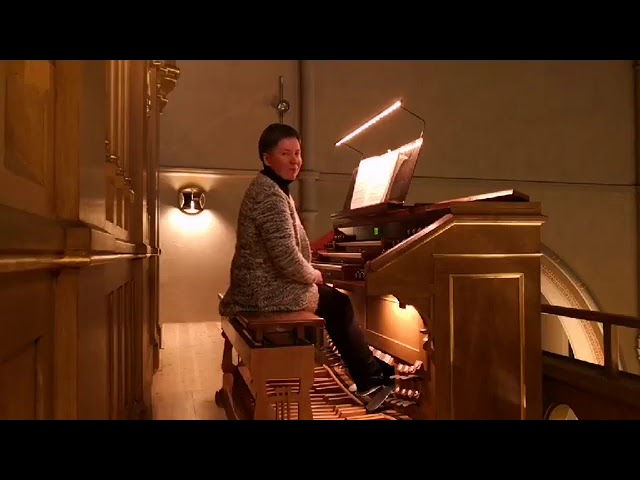 Last Sunday (February 9, 2020) Ausra and I played an organ duet recital at Olaus Petri church in Örebro, Sweden. I hope you will enjoy the recital video. PROGRAM
|
 DON'T MISS A THING! FREE UPDATES BY EMAIL.
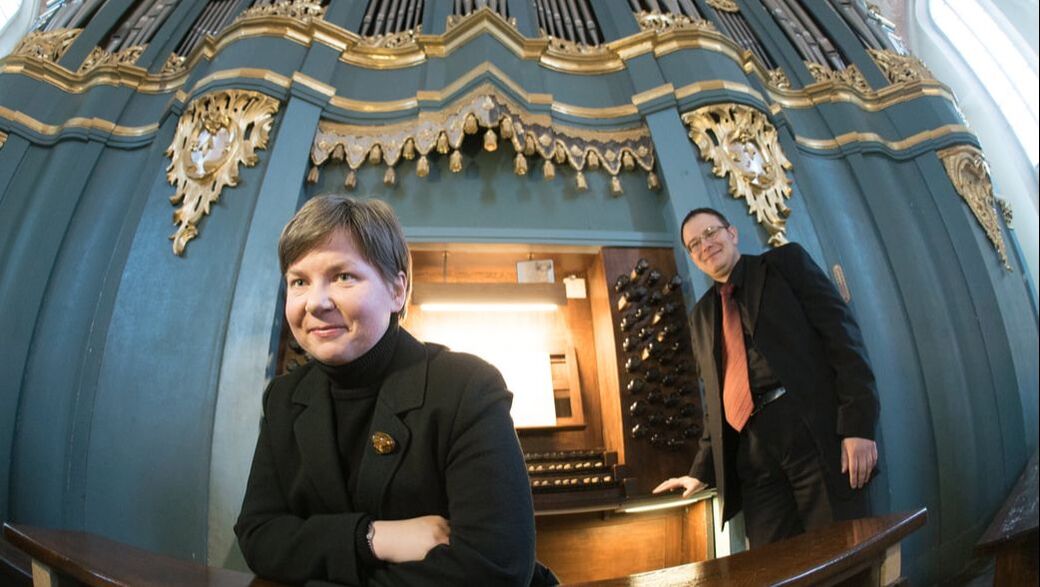 Photo by Edgaras Kurauskas Photo by Edgaras Kurauskas
Authors
Drs. Vidas Pinkevicius and Ausra Motuzaite-Pinkeviciene Organists of Vilnius University , creators of Secrets of Organ Playing. Our Hauptwerk Setup:

Categories
All
Archives
April 2024
|

 RSS Feed