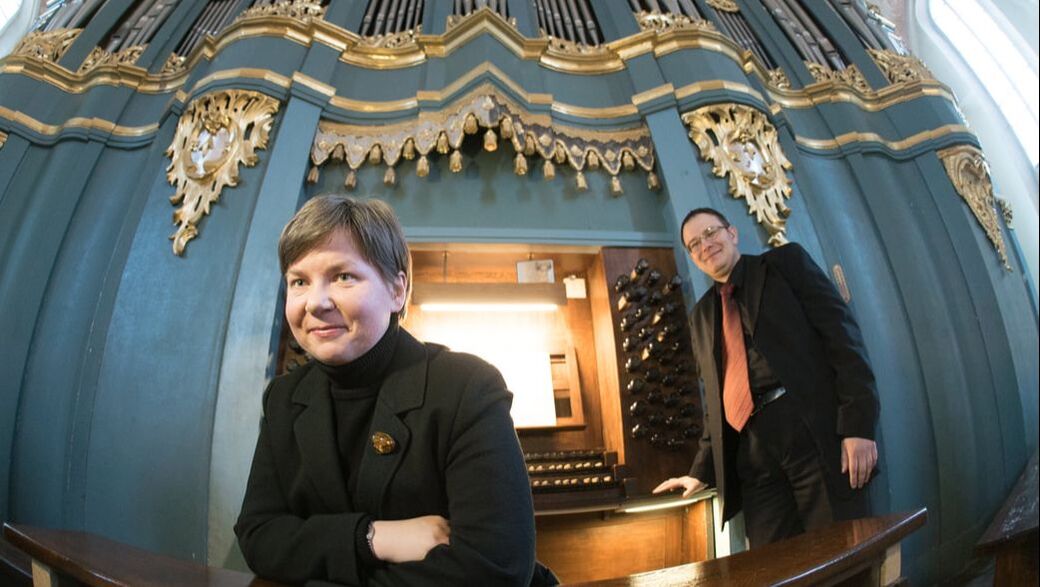
 Vidas: Hello and welcome to Secrets of Organ Playing Podcast! Ausra: This is a show dedicated to helping you become a better organist. V: We’re your hosts Vidas Pinkevicius... A: ...and Ausra Motuzaite-Pinkeviciene. V: We have over 25 years of experience of playing the organ A: ...and we’ve been teaching thousands of organists online from 89 countries since 2011. V: So now let’s jump in and get started with the podcast for today. A: We hope you’ll enjoy it! V: Hi guys! This is Vidas. A: And Ausra. Vidas: Let’s start episode 708 of Secrets of Organ Playing Podcast. This question was sent by Dawn, and she writes: “Hi Vidas, I’m finding your advice very helpful. I’ve started to approach my pieces like my scales, ‘from memory’ and I’m definitely making progress. I’m recognising finger patterns are better too, which I normally don’t. So thank you for your advice on memorisation. In answer to your questions: My dream is to play competently and confidently. Perhaps in the future to reach Grade 8 standard if I’m ever good enough. The 3 things holding me back: 1. Poor fingering. 2. Poor rhythm. 3. Slow speed. Thanks again for your advice and support. It’s much appreciated. Dawn” Vidas: Say, “hello,” Ausra, to a person who has your own name, only in English! Ausra: I know! I know! Dawn means Ausra in Lithuanian, so we carry the same name! Vidas: Greetings! What can you advise, for starters, to Dawn? Ausra: Well, poor fingering, yes, first of all, if you think that you have poor fingering, probably I could suggest that you write down fingering, because that might help for you to improve your poor fingering, because it’s a good thing for beginners to do it, because otherwise every time, you might play the same piece with different fingering, and it might confuse you, and you might make mistakes! Vidas: If Dawn was reading my newsletter, at the beginning of signing up, we have a 10 day mini-course, and one of the emails was about fingering—how to write fingering and pedaling, as well, for the piece—for a Baroque piece and a Romantic piece, for legato playing and articulated legato playing, so I think it would be good for Dawn to review those emails and, as Ausra says, write down fingering in her pieces. A good example, of course, would be to look at our site, Secrets of Organ Playing, where we have some fingering and pedaling written in the scores available for our students so that you could study how we do it, and that’s helpful. You could even play from those scores as well, if you choose the right piece from our collections and archives and catalog. Ausra: Yes, that’s a good suggestion, Vidas! Vidas: Yes, so… you will find the link, of course, in our Website, https://www.organduo.lt. Ausra: And next, poor rhythm. I think my suggestion would be to count, and to count loud at the beginning at least! This might help to solve the rhythm problems. Actually, many people, many musicians, struggle with that. That’s a common problem, and actually, the most useful tool that I learned was to subdivide while playing. What I mean by subdividing is that if the smallest note value is, let’s say, 1/16th in the piece that you are working on, then you need to subdivide everything into the 1/16ths. I mean, for example, you are holding a quarter note, yes, and you are counting 1 – 2 – 3 – 4, because the quarter note with have 4 16th notes, and you would do that throughout the entire piece, that would keep you in a good rhythm, you would play the right rhythm, and you could keep in the right tempo, too. Because no, very often people don’t like to count. They don’t like to subdivide. Some actually use the metronome to help them, but I don’t think it’s such a good idea. You might check up your tempo with a metronome, but you cannot play with it, because it’s not helpful. It’s not musical. So subdivision and counting is the best thing, and many people say, “Oh, I’m counting!” but they still cannot play it right, you know, that’s because they are just imagining that they are counting. You really need to do it physically with your tongue! Vidas: Out loud! Ausra: Out loud, yes. Vidas: And even, you can record yourself doing that and listen to your recording, and you will find out if you are counting out loud correctly in the correct rhythm. Right? And pulse! Ausra: Yes. Vidas: And number 3. Slow speed. Basically, what she means, probably, is that she cannot play fast. Right? Which is nice! What is wrong with playing slowly? Right? Slow music could be played slowly! Ausra: Yes, but too bad that not all music is written in a slow tempo, so you need to be able to play faster and in different tempos. But, I think that tempo will come up, you will speed up with more practice. I think it’s very important to not get frustrated with your slow speed, because it’s good for the beginners or the beginning of learning a new piece, because then you will deal with all the technicalities of your piece. The tempo will come up naturally. You will speed up naturally. Vidas: I know that now Ausra will laugh at me, what I’m about to say. You need to apply my 10-step method. Shall I review this from the start? Ausra: Yes, but I think I will start yawning very soon. Vidas: Yes. You go to sleep and I will finish the episode! Step number 1: Start and stop at the beginning of each beat. If in the 4/4 meter there are four beats, you start with the first beat, play fast all the notes in between note 1 and 2. And it’s easy, because it’s a very small fragment. Everybody could do those 4 notes in 16ths. You stop, and then prepare for the next fragment of four notes—one beat, right? And then do the same thing until you reach the end of the piece, with both hands, with both feet together, right? But very very short fragments, and do this a few times until you can do three times in a row with no mistakes. That’s step number one…. And Ausra is actually yawning!!! What!!! Ausra: ...and it’s only step number one! Vidas: So it’s a good bedtime story? Ausra: Yes, it is, but now it’s morning, so… Vidas: Basically, step number two, you double the fragment and start and stop at the beginning of every half note. Basically twice per measure until the end of the piece. Several times, also three times in a row without mistakes. And number three, you double the fragment again and stop at the beginning of each measure. And then two measures, four measures, entire line, two lines, one page, two pages, four pages, eight pages, well, and maybe that’s the end of the piece, or the end of the piece would be the next step. So basically, that’s 10 or 11 steps for a very long piece… could be. But that’s a very very effective way to get to this fast tempo, fast speed. What do you think, Ausra? Ausra: Yes, it’s a very good way, but in my case, since I’m always working on so much music that I don’t have time! Vidas: But you are not a beginner, you see! It’s… Ausra: I know! I know! Vidas: Maybe it’s not for you! You don’t have these problems. You can solve the tempo issue naturally, organically. But for people like Dawn and others who actually write down this problem for us, this advice is one of the best I could give. Ausra: I think it’s a very good advice you just need to be patient with it. Vidas: We don’t have this problem, so we actually practice, maybe, organically, playing the piece and studying the difficult spots alone, isolating difficult spots, not an entire piece, but maybe when we master the difficult spots, then we can practice the entire piece organically without the need of those short fragments. Ausra: But I know that you have done this method with some pieces, very difficult pieces that you had to learn in a very short time. Vidas: Yes. It actually speeds up the learning process quite a bit. Ausra: And it’s interesting because it seems so time consuming, you know, working on all these combinations, but it actually saves time in the long run. Vidas: Yes, and it actually frees up my mind. I know that if I’m applying step one, step two, step three, and so on, I’m on the right path. I’m not wandering around and wasting time with difficult music. And difficult music is a very subjective thing to everyone. Right? For us, difficult music might mean inaccessible music to some organists or vice versa. Or easy music to us might mean inaccessible to other organists. Right? So it’s all about your own skills right now! And if Dawn is hoping to reach grade 8 skills… Ausra: ...which is a very good goal, because she has a goal and usually when people have goals, set up a goal like this, for example, to reach grade 8, I think it’s very good because usually they reach their goal. Vidas: Yes, and you have to, of course, reach grade 7 before that, and grade 6, and 5, and probably that’s the UK’s system. Right? And they have examinations, you have to take courses and even tests to pass those grades, and obviously, that’s a very good system to have from the beginning until you reach grade 8, or even… I don’t know if they have grade 10 for example. Maybe not, maybe grade 8 is the highest. I haven’t checked lately. But that’s a good goal, actually. Ausra: Yes, very good. Vidas: So hopefully, this was helpful to Dawn and others, and please send us more of your very specific questions—this was specific enough, right? Ausra: Yes, yes, this was very specific. Vidas: And we could give you specific answers. And remember, when you practice, Ausra: Miracles happen! V: This podcast is supported by Total Organist - the most comprehensive organ training program online. A: It has hundreds of courses, coaching and practice materials for every area of organ playing, thousands of instructional videos and PDF's. You will NOT find more value anywhere else online... V: Total Organist helps you to master any piece, perfect your technique, develop your sight-reading skills, and improvise or compose your own music and much much more… A: Sign up and begin your training today at organduo.lt and click on Total Organist. And of course, you will get the 1st month free too. You can cancel anytime. V: : If you need one-on-one coaching, you can check out our page on Buy Me a Coffee platform: A: Find out more at https://buymeacoffee.com/organduo
Comments
Vidas: Hello and welcome to Secrets of Organ Playing Podcast!
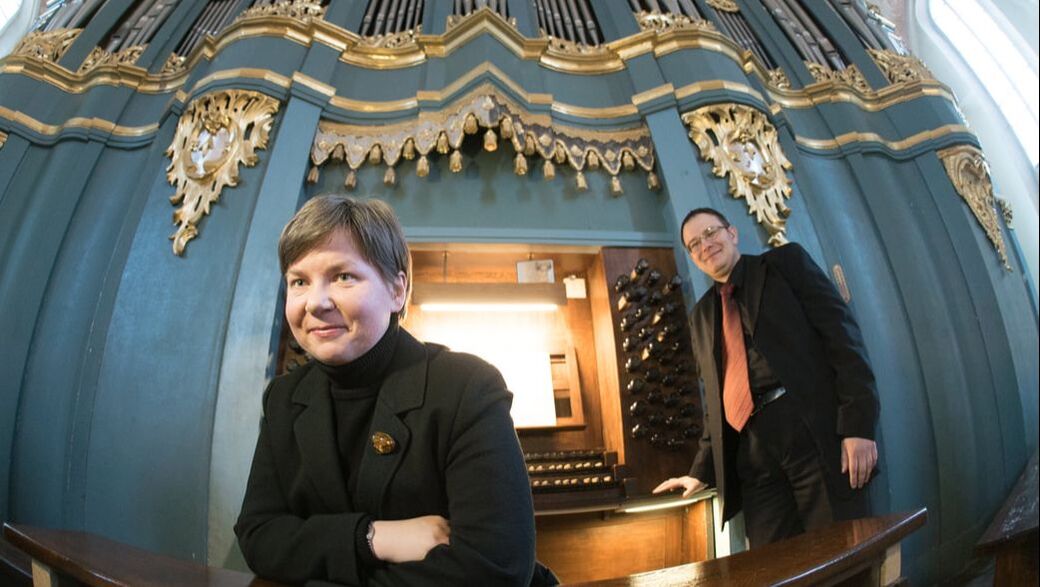
Ausra: This is a show dedicated to helping you become a better organist. V: We’re your hosts Vidas Pinkevicius... A: ...and Ausra Motuzaite-Pinkeviciene. V: We have over 25 years of experience of playing the organ A: ...and we’ve been teaching thousands of organists online from 89 countries since 2011. V: So now let’s jump in and get started with the podcast for today. A: We hope you’ll enjoy it! V: Hi guys! This is Vidas. A: And Ausra. Vidas: Let’s start episode 703 of Secrets of Organ Playing Podcast. This question was sent by Pamela, and she has a dream to be the best organist that she can be. And holding her back is playing anxiety, physical stamina, and lack of concentration. Vidas: So, it’s of course very general, Ausra, not very specific. Right? Ausra: Well, yes. Vidas: “The best organist that she can be. What does it mean? Ausra: Well, I think that’s a nice goal, because especially young people often say, “I want to be the best organist in the world,” “I want to be the best organist in the universe,” and I think that she wants to be the best of herself. So, I think she, in putting her goal as this, formulating her goal as this, she knows that she has some sort of limitations, which I think is important, because I think it’s very important to be realistic about ourselves. Vidas: You’re right, but what I meant was, we don’t know what she’s playing. Right? What type of music she’s playing, what type of organ she is playing, so that is why our advice cannot be very specific, and might not work for her. Right? But we will try. Ausra: Yes, and she mentions a few problems, and we can discuss those. For example, anxiety. Yes? Vidas: Mhmm Ausra: So I think in order to beat the anxiety, what you have to do is actually to perform more often for like a real audience. The more often you go public with your playing, the easier it will get, the less anxiety you will get. Vidas: Is it like similar to driving a car, Ausra? Ausra: Yes, I think it’s the same with anything that requires high quality skills, and it’s happening in time. Vidas: In real time! Ausra: In real time, yes. Vidas: The risk of making mistakes is big. Right? The stakes are high. Of course, driving a car, the stakes are higher than making mistakes on the organ. Ausra: Oh yes! Your mistakes will not kill anybody, so… Vidas: Yes, so… but you still can pretend you’re playing it live for an audience, while recording yourself, while giving yourself, let’s say, an opportunity to perform in front of your family or friends, regular opportunities like that. Ausra: And another thing that Pamela mentions is concentration! And I think I will give her one advice that I hope will help for both, for concentration and for performance anxiety, and this is actually breathing, because breathing is crucial while playing. It helps you stay concentrated and will calm you down so you won’t feel such a big anxiety. You won’t be so anxious. So just before starting your public performance, take a few deep breaths, maybe do some relaxation exercises before that and then take a few deep breaths before starting performing, and remember during your actual performance to keep breathing. It’s very important, because just pay attention to it, because usually people say, “I’m breathing, it’s okay, everything is fine.” But from my experience, I can see that usually people while performing, they don’t breathe as deep and as natural as they should have, because the body gets tense, the muscles get tense, and the people forget to breathe. Vidas: Yeah, it’s a stressful situation, so you tense your shoulders, you raise your shoulders, keep your breathing shallow, and try to rush through that piece as best as you can. Ausra: And you know, the less you breath, the worse your performance will become, because you will get anxious, you probably might make mistakes, most mistakes make you even more anxious, and you, of course, with lack of oxygen, your brain will lose your concentration! You won’t be able to stay focused and relaxed and to do what you have to do. Vidas: She also mentions physical stamina as the challenge holding her back. Stamina means working for longer hours. Right? Playing for longer periods of time. Ausra: Well, you know, we all are sort of not perfect with our physical conditions, so… we all have our own mountains to reach and to climb, so, some people have short legs, short arms, some have too long legs and arms, some have spine problems, back problems, some people have had strokes, cannot move one of the hands or legs equally, so we all have to do the best we can. But actually physical exercises might help, too! Like do some yoga, some Pilates, and do some breaks during your practice hours, because if you’re thinking you will just sit down on the organ bench and do like four hours of practice without stopping, then no, you cannot do that. Even if you don’t have any disabilities, you still have to do breaks and to rest and relax your muscles and relax your mind, do some exercises and do some breathing exercises and to find what works out for you. Vidas: I think the Pomodoro technique works very well in order to figure out when to take a rest. The Pomodoro technique basically can be applied to any type of activity and it lets you practice for 25 minutes at a time, and then you take a 5 minute break, and then again practice for 25 minutes, and then again a 5 minute break. So then those practice activities can be done 4 times for 25 minutes plus a 5 minute break. But then after that, if you still want to practice, you have to take your break longer than 5 minutes. It’s a half and hour break. And then you can start your practice session all over again for 25 minutes with a 5 minute break. So that’s how it works. After 2 hours, you have to have a longer break, basically. 30 minutes. And there are timers to really time your activities and rests for that. You can find your own version of a timer. Ausra: That’s a very good advice! Vidas: Yeah. I, of course, forget that, but on a good day, I apply that and try to take frequent rests. You know, if you take a rest when you are still not tired, you will never get tired! Right, Ausra? Ausra: Oh yes, that would be nice. Vidas: That’s the main idea of the Pomodoro technique, because after 25 minutes, you are not still very tired. A lesson is 45 minutes long, sometimes even an hour. What is a 25 minute interval? After a long piece practice session, you can have 2 or 3 runs of the same piece, and 25 minutes would be over. Right? And then you can take a break without actually feeling too tired. So that’s my advice to Pamela about physical stamina. Take frequent breaks and maybe take advantage of the Pomodoro technique. Okay, was it useful for you guys? Please let us know! And if so, please send us more of your questions; we love helping you grow. And remember, when you practice, Ausra: Miracles happen! V: This podcast is supported by Total Organist - the most comprehensive organ training program online. A: It has hundreds of courses, coaching and practice materials for every area of organ playing, thousands of instructional videos and PDF's. You will NOT find more value anywhere else online... V: Total Organist helps you to master any piece, perfect your technique, develop your sight-reading skills, and improvise or compose your own music and much much more… A: Sign up and begin your training today at organduo.lt and click on Total Organist. And of course, you will get the 1st month free too. You can cancel anytime. V: : If you need one-on-one coaching, you can check out our page on Buy Me a Coffee platform: A: Find out more at https://buymeacoffee.com/organduo 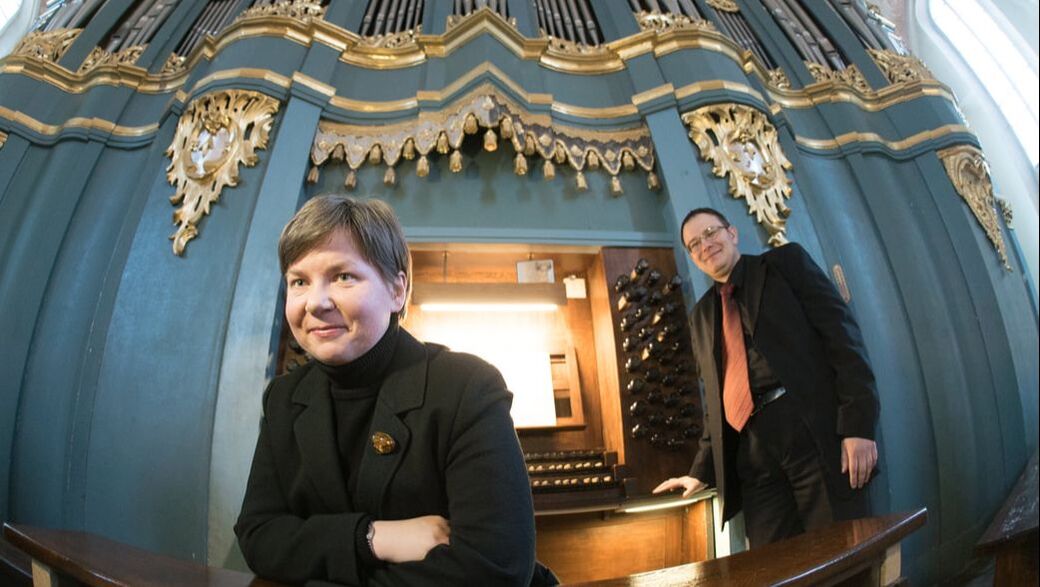
Vidas: Hello and welcome to Secrets of Organ Playing Podcast!
Ausra: This is a show dedicated to helping you become a better organist. V: We’re your hosts Vidas Pinkevicius... A: ...and Ausra Motuzaite-Pinkeviciene. V: We have over 25 years of experience of playing the organ A: ...and we’ve been teaching thousands of organists online from 89 countries since 2011. V: So now let’s jump in and get started with the podcast for today. A: We hope you’ll enjoy it! V: Hi guys! This is Vidas. A: And Ausra. V: Let’s start episode 702 of Secrets of Organ Playing Podcast. This question was sent by Leo, and he writes Good evening, Thanks so much for the fine work that you and your staff render. I am currently moving into a new position as organist for the Second Presbyterian Church here in Memphis. I am ecstatic about this amazing opportunity. Are there any secrets or nuggets of wisdom as it pertains to learning difficult pieces quickly. Please advise or share what to purchase on your website. Thank you Leo We already responded privately to Leo, but we thought that it would benefit other people to discuss this question, right? A: Yes, it's a very important question, actually. V: Yeah, if you have an important position and you know that your music responsibility would involve to learn a lot of difficult music very fast, maybe accompaniments, choral accompaniments, pieces with soloists, solo pieces for organ, what do you do, right? What would you do? Any ideas Ausra today? A: Well actually first of all, just keep in mind that not all music that sounds hard is really hard to learn. So you can always search and look for compositions that sound like substantially hard music, but you don’t need much effort to put into that music in order for it to sound well. So, probably you have to select some pieces for playing at church like this. Then another advice would be, when you pick up a new piece, don’t play it from beginning to end. Maybe play it like once from the beginning to end, and then you have to analyze it, and to know what is hard in that piece and what is not as hard. Because even in the hardest piece, all the pages won’t be hard in the same way. There would be easier spots, let’s say like sequences going on, and maybe some pages without pedals, so you wouldn’t need so much time to spend on those, and then each time when you practice, just play through the hard spots first, and don’t play everything from the beginning till the end. That will save you time and make your progress faster. And of course, another advice would be just organize your music well. Because you really don’t have to play everything new every time. When you will build up a significant portion of repertoire, you can start repeating things, exchanging some things, and that will make your life easier, too. What would be your thoughts? V: I want to elaborate a little bit on what you said before about choosing your repertoire wisely, that not all pieces are equally difficult to learn. And it’s true for contemporary repertoire, especially. If you compare it to classical repertoire, Baroque repertoire, or Romantic or even Modern repertoire, standard organ literature, they’re much more difficult than most of contemporary organ composers would write for liturgical purposes. Not necessarily for concert performance, but liturgical purposes. So basically, living composers. And there is a reason for that, because they are practical. They know that their target audience are busy musicians and maybe they have limited skill sets or always need to think about limited practice time, so they want to create the most effective music, but keep it still accessible. When I write music, I also keep that goal in mind, obviously. So if you don’t have lots of time, sometimes picking contemporary works over classical works would be a better choice. But then, you have to be careful about quality. Because time-tested classical works, of course they are quality works. But with contemporary music, you have to select your own pieces and trust your ears, trust your taste, and choose wisely with quality in mind. A: And of course, you know, I think it’s very important to keep sight reading, especially if you are a church musician. Because the more you will sight read, the easier you will learn the new music. V: I agree with that. I think Leo will learn a lot of difficult pieces quickly, because there is no other way around it, yes? Once you are thrown into that situation, as an organist in a large church, then at first it will be difficult, maybe six months or even a year, but I’m sure the second year will be much easier than the first one, right Ausra? A: Definitely. The liturgical calendar, it will repeat the next year. V: Yes. A: And you can just refresh some pieces that you played last year and they will still work nicely for a new year. V: Definitely. So, if you have any other questions, please let us know. And remember, when you practice, A: Miracles happen. V: This podcast is supported by Total Organist - the most comprehensive organ training program online. A: It has hundreds of courses, coaching and practice materials for every area of organ playing, thousands of instructional videos and PDF's. You will NOT find more value anywhere else online... V: Total Organist helps you to master any piece, perfect your technique, develop your sight-reading skills, and improvise or compose your own music and much much more… A: Sign up and begin your training today at organduo.lt and click on Total Organist. And of course, you will get the 1st month free too. You can cancel anytime. V: : If you need one-on-one coaching, you can check out our page on Buy Me a Coffee platform: A: Find out more at https://buymeacoffee.com/organduo 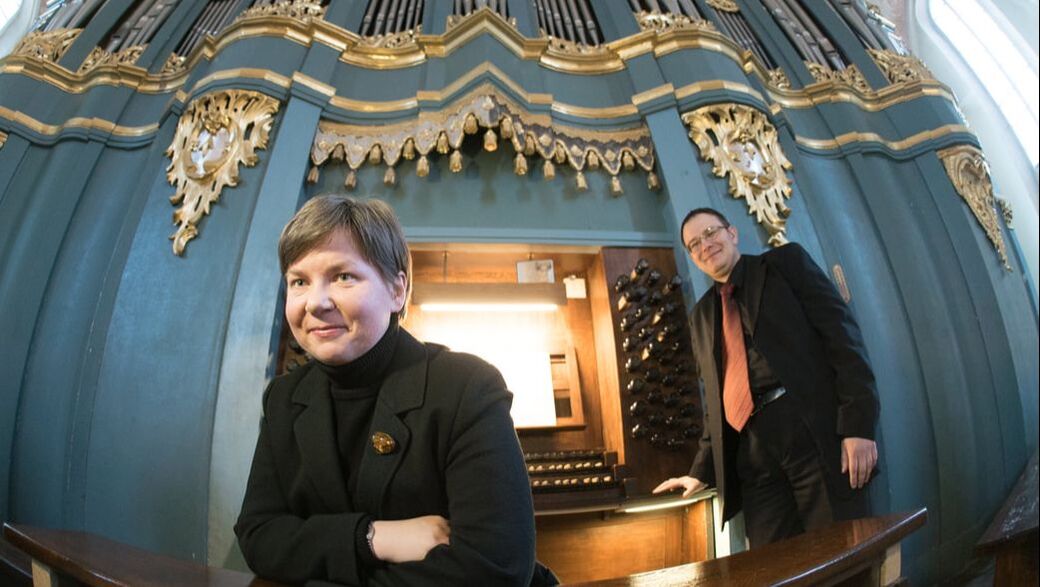
Vidas: Hello and welcome to Secrets of Organ Playing Podcast!
Ausra: This is a show dedicated to helping you become a better organist. V: We’re your hosts Vidas Pinkevicius... A: ...and Ausra Motuzaite-Pinkeviciene. V: We have over 25 years of experience of playing the organ A: ...and we’ve been teaching thousands of organists online from 89 countries since 2011. V: So now let’s jump in and get started with the podcast for today. A: We hope you’ll enjoy it! V: Hi guys! This is Vidas. A: And Ausra. Vidas: Let’s start episode 696 of Secrets of Organ Playing Podcast. Today, I would like to talk about what to do when you come to practice and there is a funeral in the church. Is it a familiar situation, Ausra? Ausra: Oh yes! It happened to us many times, and the last time it happened, actually, a few days ago. Vidas: Yeah. We had our Unda Maris Studio rehearsal planned, but before that, we were going to record some organ music on our church organ. But before entering the church, we noticed widely opened doors which means something is going on. And sure enough, in one of the chapels, there was a funeral being prepared. Ausra: Yes, and nobody warned us about this, and we just found it out too late. Vidas: What was your feeling? How were you feeling when you saw that your practice or rehearsal might be interrupted? Ausra: I was frustrated, of course, very much! Vidas: Did you think you could go to another place to practice, or you thought there was some other solution? Ausra: Well I just wanted to cancel, actually, the studio and go home. What about you? Vidas: Well, I didn’t want to go home without any recordings, so, I had to do something about it. So, we went upstairs, right, and then we discussed how to get out of this situation without upsetting anyone, because previously, in previous cases where a funeral was unannounced and we were showing up for practices, there were mixed feelings. Sometimes relatives of the deceased would want organ music and sometimes not. Remember those days? Ausra: Oh yes. Of course! Vidas: So what happened next, Ausra? Ausra: Well, we just went downstairs to talk to the daughter of the deceased, and actually, she was pretty happy about the organ music and allowed us to practice and to record some things. We promised her we won’t be loud, but she said, “Oh, you can also play loud.” Vidas: Because it was her mother’s funeral. Her mother would have wanted that. Ausra: Yes. She was actually a famous poet. Vidas: Yeah. In general, our church sees many funerals of famous artists, musicians… Ausra: ...Academics... Vidas: ...yeah, members of the academic community, so it’s a famous place for funerals—funeral masses—in Lithuania in general. And I’m glad I talked to her, and we went upstairs and, yes, started recording some quiet meditations. Ausra: Yes, I used mainly Flute or Strings, one Principal maybe for a solo voice. Vidas: Right. So, obviously organ music is really suitable for funerals—appropriate organ music… let me specify, right? And you just have to be respectful of the situation and sometimes ask for permission. Right? Ausra: Yes! Vidas: Because in general, organ music associates with funerals for a lot of people. Ausra: Unfortunately, yes! For some people even Bach’s Cantatas associate with a funeral. But anyway, later our students came, and because we are preparing actually a Christmas recital, so we are playing sort of Christmas music, but the good thing is that only… how to say this politely… only those students showed up who are not very virtuoso players so far, so we don’t play very complex pieces of music right now, and actually it worked pretty well, too! Of course we had to adjust the registration and play it softly, but it worked out well. Vidas: So let’s talk about for a few moments what we played. You recorded a few Chorales by Otto Dienel, a forgotten German Romantic composer, soft pieces that we selected and would be appropriate for this occasion, and then students came and I didn’t have time to record, so then the students played, as you say, quiet music. What was it? Do you remember? Ausra: Well, yes. They did the Chorale by Johannes Brahms, “Es ist ein Ros’ entsprungen” and then we did the piece composed by you. Vidas: Ah right. Meditation, on one of the hymns, I wrote recently, also quite peaceful. And then? Ausra: And then we worked on Zipoli’s “Pastorale.” Vidas: Right. So these are, of course, not necessarily thematic material for funerals, but the mood is quiet and contemplative. Ausra: Yes. Vidas: And even “Pastorale” if it’s even playful in general, today, this student played really slowly, and it was a really meditative “Pastorale” and not playful at all. Ausra: Yes, so it worked quite well. And say what you did afterwards! Vidas: And I, afterwards, recorded two pieces—two takes of “Improvisation on Nearer My God to Thee” which is obviously very suitable for funerals, and Phil Lehenbauer’s “Cortege and Hymn.” It was composed in memory of Queen Elizabeth II when she passed away. So it all worked out well, I think. Ausra: Yes, I think so, too. Vidas: So in general, to summarize our conversation, yes, you can give up and go home, or you can ask for permission from the relatives and practice, not necessarily the same music that you were going to play, but you know, adjust the situation and play something contemplative, something quiet like communion pieces. Ausra: Yes, I’m glad it all worked out well. Vidas: Yeah. And most of the time, I think relatives would be happy if you played like this. Ausra: Yes, I think so, too. Vidas: Would you like to add anything else today, Ausra? Ausra: Well, let’s hope that in the future we won’t have many funerals to attend or to play. Vidas: Well, that’s the issue with this church. There are so many unannounced events in this place that it’s hard to plan something regular, ongoing, or important like a festival, because you never know what will happen with… if for example, we are participating in an event, it’s okay, we can be flexible. But let’s say this was not our rehearsal, right, but let’s say a guest recitalist who would be performing a couple of days from now… Ausra: Well, we had a situation like this before, so… he wished he could practice on the silent keyboard. Vidas: That’s the best they can do, of course, but that’s already a red flag, obviously, if you want to organize a festival in this church. You can’t plan anything. If they create such unannounced occasions of interruptions for festivals, it’s not okay. For normal rehearsals, practices, fine. You can adjust and no problem. But that’s the problem with planning something big. Do you agree Ausra? Ausra: Oh yes. Definitely! Vidas: So the only reason I wasn’t frustrated was because I was flexible and I could do something quiet today. So I hope you can be flexible if this happens to you, too. Okay guys, this was Vidas, Ausra: And Ausra. Vidas: Please send us more of your questions; we love helping you grow. And remember, when you practice, Ausra: Miracles happen! V: This podcast is supported by Total Organist - the most comprehensive organ training program online. A: It has hundreds of courses, coaching and practice materials for every area of organ playing, thousands of instructional videos and PDF's. You will NOT find more value anywhere else online... V: Total Organist helps you to master any piece, perfect your technique, develop your sight-reading skills, and improvise or compose your own music and much much more… A: Sign up and begin your training today at organduo.lt and click on Total Organist. And of course, you will get the 1st month free too. You can cancel anytime. V: If you like our organ music, you can also support us on Buy Me a Coffee platform and get early access: A: Find out more at https://buymeacoffee.com/organduo 
Vidas: Hello and welcome to Secrets of Organ Playing Podcast!
Ausra: This is a show dedicated to helping you become a better organist. V: We’re your hosts Vidas Pinkevicius... A: ...and Ausra Motuzaite-Pinkeviciene. V: We have over 25 years of experience of playing the organ A: ...and we’ve been teaching thousands of organists online from 89 countries since 2011. V: So now let’s jump in and get started with the podcast for today. A: We hope you’ll enjoy it! V: Hi guys! This is Vidas. A: And Ausra. Vidas: Let’s start episode 694 of Secrets of Organ Playing Podcast. This question was sent by Ed, who is our Total Organist student, and a few days ago, he wrote a nice feedback about our program and a few things that might be improved, so, things like organization of the files, training materials in the Total Organist program, or adding a search box on the blog archives according to month, or categories for blog posts, so we’re working on that. Ausra: Oh yes! We are! Vidas: Ausra is doing categories since 2014—that’s a lot of work—and I’m presently occupied with organizing material in the Total Organist dashboard. I’ve already done beginner’s material and am working through various other levels, so that people, students, would find it easier to navigate and find what they’re looking for. Ausra: Yes, so we very much appreciate your comments and your advice. Vidas: And Ed writes, now, a question, and it could be used for our conversation, I think. So he writes: “You asked me to get back to you about what I’m practicing, and I had to wait a few days to figure out how to explain this. As I mentioned in my prior email I have a masters degree in organ performance from many years ago, and then let it lapse for several decades. Now that I’m retired I’m trying to make the magic happen again, and it’s been challenging to figure out how to put the pieces back together. My technique has really slipped a good bit, most of my repertoire is rusty, and if I’m not careful I can get pretty discouraged. One thing that has helped me is that I put together the attached spreadsheet. I took several days to go through all the music in the boxes to try to remember what I had learned already. I even found pieces that clearly I had played because my handwriting is all over the paper, yet I could not remember anything about the piece. I put all this information into a spreadsheet to help me understand my priorities and the current state of each of the pieces I was working on. It’s been very helpful to keep my focus to resurrect all of the things I’ve learned already well while still branching into some new material. I’m in a good daily routine now. I spend about 30 minutes split between Hanon and the Davis textbook pedal exercises to get my dexterity back, and then I look through this repertoire list and pick some things that I’m interested in moving up on the current status list. I get pretty tired by mid afternoon, so I save the evening for watching YouTube videos from your site. I also got a copy of the New Oxford Organ Method which I find delightful. One chapter a day seems to be good to remind me of what I used to know. Keep up the great work. Every hour you put into organization is going to have tremendous benefits and increase the availability and respect for what you’ve done. Thanks so much. Take care, Ed” Vidas: So let’s take a look a little bit about in that spreadsheet. Okay? Ausra: Okay. Vidas: You will find interesting, I think, his repertoire selections and how he organizes. I found it interesting in the morning, so I will show you. Here is this list. Basically, we can see a lot of Bach’s works, Ausra: Oh yes, Vidas: ...a few Pachelbel’s, Walcha’s, a few of Vierne’s works, a few Chorales by Brahms. Right? Most of these are Chorale-based works by Bach and Preludes and Fugues from the “Eight Short Preludes and Fugues” collection. Right? And he writes next to the title, “Composer,” that’s one column, “Designator,” meaning Bach’s catalog number or Opus number for Brahms, then the source, and he lists as the source… I think the source is various books he uses so he can find it, and then priority from 1 to 5, and status from 1 to 5, and date from he practiced, and the last column he wrote examples that he found in YouTube videos by other people. Ausra: Nice! Very well organized. Vidas: It’s well organized! Ausra: I could probably never do things like that. Vidas: We could look at the rating in one of the columns. From 1 to 5, number 1 means ready to perform, random minimal errors. Number 2, minor consistent errors. Need work, but could be ready in one week. Number 3, multiple sections need practice but could be ready in several weeks. Number 4, major practice needed, could be ready in one month. Number 5, challenging. Needs major work on all sections. Ausra: Okay. Vidas: Alright? So if we could take a look at the pieces again, this is status. Right? Status for example number 2 “Liebster Jesu, Wir Sind Hier.” BWV 731. It’s status 2 and it means “with minor consistent errors, need work but could be ready in one week. Make sense? Ausra: Yeah, sure. Vidas: Or let’s say number 3. “Ich ruf zu dir, Herr Jesu Christ, BWV 639,” it’s rating is number 3, so multiple sections need practice but could be ready in several weeks, and so on. Right? For example, number 5 is a few pieces by Brahms, “Herzlich tut mich verlangen” or “Traurigkeit,” which means challenging and needs major work in all sections, more than one month. Ausra: Nicely organized, although I have one suggestion for Ed. You know? Vidas: Okay! Ausra: Well, if I were in his shoes, I might look for a new repertoire and not worry so much about pieces pieces that he had learned many decades ago, because sometimes to learn new pieces is easier and more exciting than to go back so long time ago. Vidas: I agree in part with you, yeah. Ausra: And, you know, there are only a very few composers that he added to this list, so I would truly advise him to expand his repertoire and to look to other composers. There are a lot of Bach on his list, but, for example, I don’t see any of Buxtehude. Vidas: No Buxtehude, yeah. Ausra: And I think it would be a great choice, because they are technically less challenging, but you know, equally beautiful. Vidas: Yeah, that’s right. Then he writes in the next column “sources,” abbreviations of the sources, so I could actually read through his sources list. “Widor-Schweitzer complete set,” “Twelve Easy Chorale Preludes,” “A Treasury of Shorter Organ Classics,” “Franck :Complete Works for Organ,” “Helmut Walcha: Chorale Preludes,” “Twenty-four pièces en style libre,” basically the Vierne collection, “Brahms: Complete Organ Works,” “Pachelbel: Selected Organ Works,” “Eighty Chorale Preludes from German Masters of the 17th and 18th Centuries,” “Flor Peeters: 10 Chorale Preludes,” “Flor Peeters: 10 Chorale Preludes on Gregorian Hymns,” and “Historical Organ Recitals,” Bonnet, probably. Okay, so these are the sources that he had at his disposal many years ago, and probably Ed resurrected that list, these collections, and found them useful. And let’s take a look also at things that might be improved. Like you say, expanded repertoire, Ausra: Yes. Vidas: He could take a look at our training materials on Total Organist. We are focusing now and actually we have a lot of materials now there, and while it’s being still categorized better than in levels of difficulty, not just basic material, intermediate and advanced, or beginner level, but we are organizing it according to historical periods like Baroque, Romantic, Modern, or other categories like technique, practice, for each level of difficulty. Yeah? So that people could easily find… or music theory, harmony, Ausra: Yes, that’s right Vidas: ...improvisation, so people will find it easier to navigate, and of course Ed could take advantage of those enormous material lists that we have. Did you notice anything else that could be improved for in his practice, while I was reading, maybe, his letter? Ausra: As I mentioned before, I would really add new composers to his list. Vidas: Mhmm Ausra: For example, if we are talking about Romantic music, okay, I saw the Brahms, but you know if you are more interested in like German Romantic music, you could always add Liszt, Mendelssohn, to this list Rheinberger, Vidas: Rheinberger, yes, very useful, too. Ausra: Yes, and you know, if he put on his list Vierne, so maybe look at Widor, maybe look at the earlier French masters like César Franck… so… what else? Vidas: Merkel Trios, we have fingering for them, too. Ausra: Yes. Obviously. Vidas: Gustav Merkel. So basically we are doing a lot of materials that we are playing ourselves, and as we are expanding our repertoire, we let you on this journey, too, while making fingering and pedaling available, and of course, we are very grateful for people on our team like Juan and Jeremy who are helping us to transcribe those fingerings and make it into a nice neat collection, edition, edited for you to use, and that’s all available and included in your Total Organist membership. So it’s really, really exciting that Ed has found this site really useful, and it’s been really an eye opening to read his feedback, Ausra: Sure! Vidas: How he values what we do, and how he uses that material. For example, I didn’t realize that people are actually looking for specific blog posts on our site, https://organduo.lt. Right? Through 11 years of work, we have produced thousands, several thousands of blog posts. Right? And the majority of them are still uncategorized, so it would have been difficult to find. But now, since there is this search box on the right-hand column on the top, you could easily insert any keyword that you want, any word, any phrase that you’re looking for, and it will probably find some hits as you press enter. Ausra: And I’m planning to finish this work by New Year. Vidas: That’s very fast. Maybe take it easy, Ausra! She’s very hard working, but I don’t want her to overextend herself, and still she needs to practice and to relax and do some other things, too, in her day, not only this archival work. Ausra: Well, yes. Vidas: Alright, wonderful! We hope this was useful to Ed and maybe to others who are planning to do Total Organist but were maybe hesitant before. So take a look, we are actually improving it, and every day, thinking how can we help better on this organ playing journey. Ausra: Yes, and how can we improve it. Vidas: Yeah. So, take care, and please send us more of your questions; we love helping you grow. And remember, when you practice, Ausra: Miracles happen! V: This podcast is supported by Total Organist - the most comprehensive organ training program online. A: It has hundreds of courses, coaching and practice materials for every area of organ playing, thousands of instructional videos and PDF's. You will NOT find more value anywhere else online... V: Total Organist helps you to master any piece, perfect your technique, develop your sight-reading skills, and improvise or compose your own music and much much more… A: Sign up and begin your training today at organduo.lt and click on Total Organist. And of course, you will get the 1st month free too. You can cancel anytime. V: If you need one-on-one coaching, you can check out our page on Buy Me a Coffee platform. A: Find out more at https://buymeacoffee.com/organduo 
Vidas: Hello and welcome to Secrets of Organ Playing Podcast!
Ausra: This is a show dedicated to helping you become a better organist. V: We’re your hosts Vidas Pinkevicius... A: ...and Ausra Motuzaite-Pinkeviciene. V: We have over 25 years of experience of playing the organ A: ...and we’ve been teaching thousands of organists online from 89 countries since 2011. V: So now let’s jump in and get started with the podcast for today. A: We hope you’ll enjoy it! V: Hi guys! This is Vidas. A: And Ausra. Vidas: Let’s start episode 687 of Secrets of Organ Playing Podcast. This question was sent by Steven, and he writes: “Vidas, Here are my responses to your questions. 1. What is your dream for organ playing? My dream is to improve my playing with the most effective way to practice and get the most out of my practice time. 2. What are 3 most important things that are holding you back from realising your dream? A. Effective practice and getting the most out of practice time. B. Better registrations for the music C. Being more confident in my playing Currently practicing Widor’s Toccata from his 5th organ symphony and Vierne’s Finale from 1st symphony and Carillon de Westminster. And these works of J.S. Bach: Toccata and Fugue in d minor BWV 565 Fugue in D BWV 532a Praeludium and Fugue in d minor BWV 549a The Gigue Fugue, BWV 577. Thank you for all you two do in assisting others to improve their playing skills at the organ. Steven” Vidas: Well, where shall we start, Ausra? Ausra: It’s up to you. You choose. Vidas: Okay, this is a long message, but let’s decipher a little bit. Unpack it. Right? His dream is to improve his playing with the most effective way to practice and get the most of his practice time, which is rather generic. Ausra: Yes, it’s very generic. Vidas: It doesn’t say much. But then let’s maybe talk about challenges, and then pieces that he plays a little bit mentioning. Ausra: Sure. Vidas: So the first: Effective practice and getting the most of practice time. Ausra: Well, I don’t think you can find a magical way that with sitting down at the organ you will learn all those really difficult pieces that we read here. So basically, you just have to practice every day very diligently and spend at least a couple of hours at the organ bench. Vidas: Yeah, if he is practicing one, two, three pieces from this symphonic repertoire and four major pieces by Bach, that’s a lot! Ausra: Yes, that’s really a lot, and what I noticed, that from his repertoire that he selected, actually his repertoire doesn’t show variety. And when I say about variety, I’m meaning that, for example, that if he would choose to practice an entire symphony, let’s say, by Louis Vierne, he would get different pieces in that symphonic cycle. Vidas: Or Widor’s symphony. Ausra: Yes! But now, if you choose only loud and fast pieces as I see on his list, then I don’t know how to make your practice really effective because you can really hurt your hands. Vidas: Exactly! You practice for a couple of hours, 7 major pieces… Ausra: And basically, these are almost all Toccatas, or Fugues, you know! Vidas: Yeah, Toccata style pieces. It’s really difficult. If you think of Toccata and Fugue as two different movements, so it’s even more than 7 pieces. Right? It’s 7 plus 1 and 2… 9 movements in total! Ausra: So if all these pieces are new on his repertoire list, I would never learn them all at the same time. It’s really unrealistic. Vidas: And what’s the point of playing them all together at the same time? You will not be able to play them all in one recital or in one church service as a postlude or prelude. Definitely not. So you need variety, as Ausra says. I understand that some people value loud and fast organ music, and especially famous, loud and fast organ music, which is a shame sometimes, because there is so much wonderful slow and famous organ music—slow and soft, famous organ music. If you only are interested in famous work. Plus there are so many undiscovered composers or forgotten composers who created either slow music or fast music but we don’t know about it. Ausra: But even, you know, when talking about these composers mentioned here—Bach, Widor and Vierne—there are so many pieces written by them that are really worth our attention and could add very nicely to the variety of repertoire, for example all the Chorale works by J. S. Bach. Vidas: Yes, it definitely would hurt my program if I only played Toccatas and Fugues and Preludes. Ausra: Or by Louis Vierne also there are other cycles. Vidas: Yes. Maybe with Vierne I wouldn’t start with symphonies, I would start with probably “24 Pieces in the Free Style,” which could by played by hands only or with pedals—optional pedals. Ausra: Because look, if you are playing only fast and loud pieces, and you are talking about problems of making registrations, actually like all these pieces mentioned by J. S. Bach, they can all be played with one registration: Organo Pleno. That’s it! Vidas: Principle Chorus. 16’, 8’ 4’, a 5th mixture, a 2’ and you can couple another manual to the same Hauptwerk great division, also Principle Chorus without 16’, so it would be 8’, 4’, 2, and mixture with a coupler to the Great, and with the principles 16’, 8’, and 4’, and Posaune with mixture. That would be quite enough. Ausra: And Vierne and Widor, they usually describe what they want from the registration, so it’s not a problem to pull out the right stops. But again, there wouldn’t be much of a variety because all those pieces are also toccata like and really fast and virtuosic pieces. And well, if you are talking about effective practice ways, you need to have quite a selection of repertoire, and never work on more than two or three big pieces in your repertoire at one time. You need to have shorter pieces, you know, softer pieces, slower pieces. That way, you can alternate in your practice time. Because if you only play fast and hard, you definitely will damage your hands, and once it’s done, usually there’s no way back. Vidas: Exactly. If you practice for 20 minutes those 9 pieces on your list, for two hours, 20, 20 20, 20, 20, 20, that’s only 6 pieces that you can do in two hours. You need three hours just to spend 20 minutes on each piece, and that’s even not a lot. Right? You need, I think, at least 30 minutes for each piece. So in two hours, I don’t know how much time you can devote to organ playing each day, but on average, 2 hours is a good amount of time. You could only do four major pieces… Ausra: That’s right! Vidas: So, as Ausra is saying, look at softer and slower pieces, both from Romantic and the Baroque repertoire that you like. Surely there are more pieces than you wrote on the list that you would be like to be playing. You know, pieces by Baroque composers like Buxtehude. They’re easier than Bach’s Chorales, some of them. Ausra: Definitely easier than Bach’s Preludes and Fugues or Toccatas. Vidas: Yes. And you mention as number C challenge being more confident in your playing. That will solve your problem with confidence. If you only play fast pieces, it’s hard to be confident. I would never be confident if I only played fast pieces. Ausra: I know! And physically, how can you do it in one recital to play only fast and loud? And people would get tired, too, after listening to Organo Pleno all the time. Vidas: I think he’s not thinking about a recital, definitely, because he would… from the start he would plan a more varied program, I think. Ausra: Yes, but of course, if you are a church musician, too, then you of course can play a loud Prelude and Postlude, but in the middle of the service you wouldn’t play Toccatas or even Fugues. Vidas: Exactly. So that’s our best advice to you, so I hope you will take it! Thank you guys for sending your questions; we love helping you grow. This was Vidas, Ausra: And Ausra! Vidas: And remember, when you practice, Ausra: Miracles happen! V: This podcast is supported by Total Organist - the most comprehensive organ training program online. A: It has hundreds of courses, coaching and practice materials for every area of organ playing, thousands of instructional videos and PDF's. You will NOT find more value anywhere else online... V: Total Organist helps you to master any piece, perfect your technique, develop your sight-reading skills, and improvise or compose your own music and much much more… A: Sign up and begin your training today at organduo.lt and click on Total Organist. And of course, you will get the 1st month free too. You can cancel anytime. V: If you like our organ music, you can also support us on Buy Me a Coffee platform and get early access: A: Find out more at https://buymeacoffee.com/organduo 
Vidas: Hello and welcome to Secrets of Organ Playing Podcast!
Ausra: This is a show dedicated to helping you become a better organist. V: We’re your hosts Vidas Pinkevicius... A: ...and Ausra Motuzaite-Pinkeviciene. V: We have over 25 years of experience of playing the organ A: ...and we’ve been teaching thousands of organists online from 89 countries since 2011. V: So now let’s jump in and get started with the podcast for today. A: We hope you’ll enjoy it! V: Hi guys! This is Vidas. A: And Ausra. Vidas: Let’s start episode 685 of Secrets of Organ Playing Podcast. This question was sent by Odubiyi, and he writes: “My dreams for the Organ is to be a master on the Organ. Things holding me back: light, faulty pedal notes, spending too much time without getting much progress. Art of performance” Vidas: That’s a tricky question. Right Ausra? Ausra: Yes, it is. Vidas: Let’s decipher it a little bit. Unpack it, so to say. The dream. Master on the organ. Right? Odubiyi needs to master the organ, which kind of sounds like a general dream. Ausra: Yes, very general. Vidas: Not very specific. We need more information. What kind of music does he like to play? What kind of organs does he have to play? Right? Ausra: What is his background as a musician? What kind of experience does he have? But from his note, it seems that he doesn’t have much experience and probably doesn’t practice a lot. Vidas: Or doesn’t know what and how to practice. Ausra: Could be, too. Vidas: So there are some variables. Right? If Odubiyi, let’s say, wants to practice music on the, let’s say, general organ, general style organs, eclectic style organs, that might be with pistons, electro-pneumatic action. Right? It’s one thing. Unless people want to practice on the Baroque organs. Right? Ausra: Yes. From what I understand, he doesn’t get much progress, and he cannot get the right pedal notes. That’s what I see from his question. Vidas: That’s good! That’s good! You deciphered well, I think… Ausra: Well, and that I draw a conclusion that he doesn’t practice enough, or maybe he practices in the wrong way. Vidas: Okay, so Odubiyi probably needs to spend quality time with pedal playing. Correct, Ausra? Ausra: Yes. Vidas: And how would you improve your pedal playing if you were him? Ausra: I don’t know... if I would be him… Vidas: Would you play exercises, or would you play hymns, or would you play organ music? Ausra: Probably I would do a combination of all of these three. If I would have an hour, let’s say, I would maybe do 10 minutes of exercises and then 15 minutes of hymn playing, and the rest of the time would practice the repertoire. Vidas: Would you add some improvisation to that? Ausra: Well yes, of course, especially if he is a church musician. Of course, he didn’t mention that, but I assumed that he probably is. Vidas: What does it mean in his sentence, “light faulty pedal notes.”? “Light.” What does “light” mean? How do you understand it? Ausra: That’s a very interesting description. Vidas: Faulty pedal note… Ausra: Faulty… no, that’s the wrong notes, probably. Yes. Vidas: Right. Ausra: ...but light… Vidas: Light… maybe short? Pedal notes too staccato… Ausra: Well, could be. Vidas: Could be. Or in general, passages that are written for pedals that he plays are not difficult to play—they’re light. Easy. Right? Could be that way, too. Ausra: But if they are easy, then why make mistakes in playing them? Vidas: Maybe they are not easy to him! Ausra: Well, could be. Vidas: So, you suggest he would do some combination of practice of hymns, exercises, repertoire, and improvisation. Correct? Ausra: Yes. Do you think there is a magic way how to improve your organ performance without significant practice? Vidas: No. No, no. Probably not. You have to be very decisive about what and when and how to practice, and for how long, and stick to it. Right? I think a good measure of progress is picking the same piece that you haven’t been able to play three months before and checking. So Odubiyi could make a test like this; take a very difficult organ piece with pedals and try to play it now, and start practicing the right way, and in three months, he could check that same pedal passage again, and see if it’s easier. Ausra: Yes, that’s a good suggestion. Well everything in organ actually takes time. You know? And in all the other areas of your life, if you want to improve and you want to be really good at something, you need to spend quality time and to put some effort into it. Vidas: Yes! Let’s say I was Odubiyi and wanted to play hymns. Right? So I would do combinations of practice the way people like to play organ pieces as well. Treat hymns like organ pieces, and would start practicing separate lines—Soprano, Alto, Tenor, Bass. Then two part combinations—Soprano/Alto, Soprano/Tenor, Soprano/Bass, all those combinations, and then three part combinations, and then 4 part texture. After I can do each step three times in a row without mistakes in a slow tempo, then I can go on to the next step. That’s very specific, and Ausra is smiling. Why are you smiling? Ausra: While you were mentioning all these steps, I could have already learned a new hymn! Vidas: Well, yes and no! But if you don’t have any skills, you have to start somewhere, you know? And the best way to start is to be very, very precise. And my way of teaching, and I believe yours, too, is not playing any way you want, but very specific at the beginning. Maybe for a few months, even for a few years until you are satisfied with your progress. Right Ausra? The same is if Odubiyi wants to practice organ music. Pick one, two, or three pieces, but not too difficult pedal lines, and again play separate lines. If this music is polyphonic, then play four-part texture or three-part texture separately. One, two, three. Right? But if it’s homophonic—if it’s a melody and accompaniment, you can do hands separately, pedal line separately, both hands together, right hand and pedals, left hand and pedals and then all parts together. But again, be very very slow with your practice and aim for three correct repetitions in a row. Ausra: Yes, that’s a very good suggestion. Vidas: Same thing if you do exercises. Pick one exercise and do it three times in a row without mistakes before going to the next one. Right? Ausra: Yes. Vidas: Same thing with improvisation. Pick one texture that you want to master, then don’t go on to the next one until you can do it three times in a row without mistakes! Ausra: Yes, and it takes patience, you know, and commitment. Vidas: And record yourself. That’s very good. Not only audio, but video, so that you would see your body movements or positions if your body is moving too much, for example. If your hands are moving incorrectly, if your feet are banging the pedal board. Right? Your movements have to be very economical. Right? Ausra: Yes, that will help you in the future to master harder pieces. Vidas: Can we recommend some course to Odubiyi? Ausra: Well, Pedal course probably. Vidas: We have two. “10-Day Pedal Playing Challenge,” and then “Pedal Virtuoso Master Course.” This is a little longer course. So, for starters could be “10-Day Challenge…” Ausra: Yes, I think so, too! Vidas: ...and then if they like it, they can go on to the next one. Ausra: Sure! Vidas: “Pedal Virtuoso Master Course.” Alright guys! We hope this was useful to you, and please send us more of your questions; we love helping you grow. This was Vidas, Ausra: And Ausra! Vidas: And remember, when you practice, Ausra: Miracles happen! V: This podcast is supported by Total Organist - the most comprehensive organ training program online. A: It has hundreds of courses, coaching and practice materials for every area of organ playing, thousands of instructional videos and PDF's. You will NOT find more value anywhere else online... V: Total Organist helps you to master any piece, perfect your technique, develop your sight-reading skills, and improvise or compose your own music and much much more… A: Sign up and begin your training today at organduo.lt and click on Total Organist. And of course, you will get the 1st month free too. You can cancel anytime. V: If you like our organ music, you can also support us on Buy Me a Coffee platform: A: Find out more at https://buymeacoffee.com/organduo 
Vidas: Hello and welcome to Secrets of Organ Playing Podcast!
Ausra: This is a show dedicated to helping you become a better organist. V: We’re your hosts Vidas Pinkevicius... A: ...and Ausra Motuzaite-Pinkeviciene. V: We have over 25 years of experience of playing the organ A: ...and we’ve been teaching thousands of organists online from 89 countries since 2011. V: So now let’s jump in and get started with the podcast for today. A: We hope you’ll enjoy it! V: Hi guys! This is Vidas. A: And Ausra. V: Let’s start episode 684 of Secrets of Organ Playing Podcast. This question was sent by Scott, and he writes My dream is to be able to play well enough that what I'm playing is recognizable. You see, I was once a church organist for 20+ years, until I had my first stroke on January 1, 1999. Two more strokes followed in 2013, so I have had 2 strokes paralyzing my dominant right side and 1 stroke weakening my left side and making it greatly uncoordinated. Now I play for physical therapy, but I can't find any easy music for my left hand and left foot alone! So he writes further: 1. Finding music 2. Adapting existing music 3. Maintaining correct technique while I learn how to play in a new way, and being able to recognize that a given piece is not meant for me to play but to be satisfied with just listening to it being played by another. V: Do you remember, Scott wrote this message awhile ago, and I think we talked about it and I’d written to him some messages. He’s from Facebook and he’s very actively engaging with our postings there and videos. A: Yes, I remember. V: Scott. And basically, he can only practice with one hand and one foot - left hand and left foot. At first I actually advised him to look into hymn playing, play the right hand - the soprano with the hand and the bass with the foot, left foot. What do you think about this idea? A: Yes, it should work. But if for example you were a good organist, you could play all kinds of repertoire and you served for the church for more than 20 years, then I understand his stress, and I pity him for not being able to do and to play what he used to play, and to do what he used to do. But such is our life, full of complications and all these difficult moments, so I guess you just have to adjust. Of course, you have to adjust to the idea that you will never be able to play as you did, because you will hardly be able to get your health back, and I think many people struggle with it. And if he would search online, I guess he would find many many people who struggle with the same problems. V: Yes, maybe not necessarily same hand, same foot, but strokes can paralyze your activities on one side or another side on a lesser degree or greater degree, right? Gradually you can regain the movement or not. It depends on your own situation, right? I was thinking along the lines of involving video equipment also. So that, imagine that he can use one limb, left hand not necessarily even the pedals. Left hand he can do still simple melodies or relatively uncomplicated melodies, right? So imagine a trio, like a chorale prelude from the Baroque period, but you only have one hand. What I would do, or at least I would try to do and see if it works - I would record myself playing one hand, just one part, let’s say the right hand part. And then play it back in my headphones and then record the second part, maybe the middle part with the same hand on a different registration. And now I will have two tracks: two video tracks and two audio tracks also. And then the third track would be the pedal part, played exactly with the same hand as before but with pedal registration. So only having one limb, you could imagine that you are playing a real trio. We all know it’s not a real trio, but it will sound like a real trio, right? It’s still better than not playing at all, because you’re still making music and enjoying it. The only problem is I don’t know if Scott is proficient enough in managing multiple video angles, camera angles and putting them all into some software which could be put on the screen, like three or even four - you could play four-part chorales like this as well. Or just right hand, left hand and pedals if it’s not polyphonically complex music. And you would have three portions of the screen, for each dedicated to one particular track. And Scott alone would be playing entire piece, but from three different angles. What do you think? A: Yeah, I think that’s a great idea, and maybe if he has some younger relatives who could help him… V: Yes. A: …with all this technical equipment, to help edit his videos and put all the different parts together. V: Yes, we have done this before, remember, with James Flores. A: Yes, we played the first trio sonata by J.S. Bach. I played the right hand, Vidas played the left hand, and James played the pedals, and put it all together. V: Two different continents - Europe and Australia. A: Yes, it was very exciting. V: So now technology allows you to make all kinds of technological tricks, but you still are making music and letting others enjoy it. He has one video, Scott has one video on his Facebook profile where he plays with his one hand and one foot. So yes, he could share the same video on his profile or even YouTube if he wants, and keep making music as long as he can. A: Yes, everything is possible. V: That’s what I would try to do. But of course I would need to get over the fact that I would never do the organ playing the way I used to. Something has to be changed, adapt, make compromise, right? A: Yes, such is life. V: Yeah, people who are willing to change and adapt, they will find a way out of many difficult situations. So thanks very much, Scott. Please send us more of your questions. We love helping you grow. And remember, when you practice, A: Miracles happen. V: This podcast is supported by Total Organist - the most comprehensive organ training program online. A: It has hundreds of courses, coaching and practice materials for every area of organ playing, thousands of instructional videos and PDF's. You will NOT find more value anywhere else online... V: Total Organist helps you to master any piece, perfect your technique, develop your sight-reading skills, and improvise or compose your own music and much much more… A: Sign up and begin your training today at organduo.lt and click on Total Organist. And of course, you will get the 1st month free too. You can cancel anytime. V: If you like our organ music, you can also support us on Buy Me a Coffee platform and get early access: A: Find out more at https://buymeacoffee.com/organduo 
Vidas: Hello and welcome to Secrets of Organ Playing Podcast!
Ausra: This is a show dedicated to helping you become a better organist. V: We’re your hosts Vidas Pinkevicius... A: ...and Ausra Motuzaite-Pinkeviciene. V: We have over 25 years of experience of playing the organ A: ...and we’ve been teaching thousands of organists online from 89 countries since 2011. V: So now let’s jump in and get started with the podcast for today. A: We hope you’ll enjoy it! V: Hi guys! This is Vidas. A: And Ausra. V: Let’s start episode 682 of Secrets of Organ Playing Podcast. This question was sent by Martin, and he writes Dear Vidas, I really enjoy receiving your emails and watching your Youtube channel. From early childhood, I always admired organ music and organists. In church, I would always go up to watch how the organ was played. I grew up in Bratislava, Slovakia, and listening to the organ in the big Lutheran church was quite an experience (4 manual, 62 stops). It was always my dream to play it. Alas, my life took a different path and I now live in Canada. Last year, being stuck at home due to the COVID pandemic, I discovered the Hauptwerk virtual pipe organ. I built myself a 3-manual console + 25 pedal and started to learn. Your Youtube channel and those of other expert organists are an enormous help and inspiration, and I try to follow your tutorial steps as much as possible. One thing I might like your advice on is the following: since organ playing is my hobby, I can only devote maybe an hour a day to practice (sometimes even less). What would be the best way to use this time? Practice a little bit of everything every day (scales + compositions)? Or do scales (mainly pedals) one day, and composition(s) another? Many thanks and best wishes Martin V: That’s a nice question, right, Ausra? A: Yes, and very nice letter from Martin. I listened as you read through his message and thought, Lucky, lucky, lucky man. He escaped from Europe to Canada. Because right now, Canada for me is like a dream country. V: Why is that? A: Well, because actually of that war in Ukraine. I’m afraid that soon there won’t be half of Europe left. V: Mm hm. Europe is very very small compared to… A: Yes, and now we heard that people, tourists - foreign tourists actually are canceling their summer reservations. They had to come for example to get vacation on our coast. V: Yes. A: So we, I’m really worried that we soon might end up as Ukraine. V: Yes. There is a peninsula called Curonian Spit. It’s a beautiful resort place with sand dunes and Baltic Sea on one shore and - what is this sea, not sea water called… A: Kuršių marios in Lithuanian, but I don’t know… V: Marios, marios, wait a second. Kuršių marios, let me look it up. Kuršių marios, marios English, English… Curonian Lagoon? A: Yes, that would be lagoon probably. V: Curonian Lagoon, yeah, lagoon. That’s a wonderful place for summer attractions and vacations. A: Yes, but now people are canceling their plans to come to Lithuania because they are afraid of, that the war will start in the Baltics, too. And since this wonderful resort has a border with Kaliningrad, which is basically crammed with the Russian army, nobody wants to come here anymore. V: Yeah, and Canada seems far, far away, right? A: Yes, although if Russians would warn, they could attack Canada too, from the north. Through Siberia. V: Mm hm. A: Well, anyway - so now let’s talk about Martin’s question, how it would be best for him to practice on a daily basis, since he has only one hour a day to spare for organ practice. V: But three manuals and pedals at home. A: That’s wonderful. V: That’s all that is needed. We also have three manuals and pedals. More than 25 pedals, 30 pedals, but 25 pedals is quite enough to start with. A: Yeah, sure. But you know, in terms of practicing one day only scales, I wouldn’t do that if I would be him. Unless he loves practicing scales and exercises, which is good. But if he does not, I would spend maybe 10 minutes per day practicing on the scales and other technicalities, and then I would practice the repertoire. V: If he likes scales and pedal exercises on the pedals, he could check out my Pedal Virtuoso Master Course. That’s a long course, several months, but will teach you everything about pedal technique, and he will develop pedal flexibility. If you like exercises. If you don’t, that would be too artificial for you. A: Yes, and then about practicing the repertoire, of course you don’t have to play and practice many pieces at one time. Because let’s say if you will pick up three pieces and you will practice them every day, if they are short pieces then it’s okay. But if you are working on longer pieces, then probably it’s best if you would work at two pieces at one time, not more. Because if you will just play them through, you will not progress very quickly. Because in order to see the progress and to learn the text easier, we need to repeat what you have just played a few times. V: Half an hour for one piece? A: Probably yes. V: At least 20 minutes probably. A: Yes. V: Or 25 minutes. You will see for yourself what is the average time that you can spend for one piece. But as Ausra says, repeating a few times the same fragment would be more beneficial than just sight reading it once, right? A: Yes, that would be my suggestion. V: In one hour a day, you can do many things over time, you know - not in one sitting, but in several months. A: Yes, the most important thing is that you would spend the same or approximately the same amount of time every day, that you wouldn’t skip your practice. Of course if you will just take one day, for example, Sunday out, it still works, but if you will just practice every other day it won’t be good. You won’t see progress as good as it could get if you woul practice every day for an hour. V: Talk about practice and progress, I find that practicing alone is quite lonely and sometimes boring. People end up quitting a lot of times, don’t you think? A: Well, not for me. I guess it depends on the character. V: Why haven’t you quit organ playing, Ausra? A: Well why should I quit it? I love it. I love the organ. I love organ repertoire. Actually, I feel privileged that I can practice, because I know many people might want to practice but they can’t. So why should I give up this opportunity and this privilege of practicing? I can still move my legs and my hands, so why don’t do that? V: I was going for another answer, but sort of around - would you still be practicing, Ausra, if you hadn't let’s say, planned our future recitals, or let’s say if you didn’t have YouTube channel? A: Yes, of course I would still practice. Maybe not as much, but... V: Not as much. External motivation helps, don’t you think? A: Yes, it helps. It pushes you to move forward. But it’s not the main thing. The process gives me pleasure, being in the music, making music. V: I see. Maybe Martin is like you, too? Or like me? A: I don’t know. V: For me, external motivation is also important. When people write comments and I share my music and they play my music, then it is very rewarding experience. A: Yes, you like to show off much more than I do. But anyway. V: There are various situations for people, and you can choose whatever you like. Ausra is different from me in that she is more introverted than me, right? A: Yes. V: But she’s sharing her music as well, sort of out of necessity, right? A: (laughs) V: Out of necessity from living with an extrovert. A: Yes, you are pushing me to exhibit so I have no choice. V: Am I pushing you too much, or not? A: Sometimes. V: Tell me on, for the record. A: Well actually, now I am thinking about death much more often than I usually did before all this horrible situation in Ukraine, and actually now I’m glad that I recorded some things and I wrote some things, because death might be standing right next to me, next to us. Who knows how long we are going to live? And it’s nice to leave something after. V: I agree. Agree. And sometimes music changes people, changes people’s lives. Right there! Martin writes the first sentence, “I really enjoy receiving your emails and watching your YouTube channel.” Probably my music in some way touched him. So imagine I wasn’t sharing, right? A: Mm, yes. V: Just practicing or just playing recitals and never recording, right? That would be probably a pity. A: And what I liked about Martin’s letter, that he got his inspiration, his love, his curiosity for the organ music from his childhood when he lived back in Bratislava. I think it’s so important for children to get experience, early experience with an organ. V: Yes. I hope he can go to some church in Canada as well, and look up some nice instruments there, too. A: Sure. V: But now when he has Hauptwerk at his home, then he can play many many different sample sets which sound quite similar to real pipe organs. Not the same, but rather similar. And at home to have this kind of set up is a very very big privilege, I would say. A: Yes, I think it helped us through pandemics and through other hard times, you know. V: Okay guys. Please send us more of your questions. We love helping you grow. And remember, when you practice, A: Miracles happen. V: This podcast is supported by Total Organist - the most comprehensive organ training program online. A: It has hundreds of courses, coaching and practice materials for every area of organ playing, thousands of instructional videos and PDF's. You will NOT find more value anywhere else online... V: Total Organist helps you to master any piece, perfect your technique, develop your sight-reading skills, and improvise or compose your own music and much much more… A: Sign up and begin your training today at organduo.lt and click on Total Organist. And of course, you will get the 1st month free too. You can cancel anytime. V: If you like our organ music, you can also support us on Buy Me a Coffee platform and get early access: A: Find out more at https://buymeacoffee.com/organduo 
Vidas: Hello and welcome to Secrets of Organ Playing Podcast!
Ausra: This is a show dedicated to helping you become a better organist. V: We’re your hosts Vidas Pinkevicius... A: ...and Ausra Motuzaite-Pinkeviciene. V: We have over 25 years of experience of playing the organ A: ...and we’ve been teaching thousands of organists online from 89 countries since 2011. V: So now let’s jump in and get started with the podcast for today. A: We hope you’ll enjoy it! V: Hi guys! This is Vidas. A: And Ausra. Vidas: Hello and welcome to Secrets of Organ Playing Podcast! Ausra: This is a show dedicated to helping you become a better organist. Vidas: Let’s start episode 679 of Secrets of Organ Playing Podcast. This question was sent by Rolf, and he writes: “Hi Vidas Very good wishes for you both! I want to tell you that I am studying this wonderful Praeludium in C from JS Bach, using your tips. Especially the tip cutting the piece in 4 bars and not making any mistake by playing slower, it’s working! In fact it goes faster and it’s giving me a lot of pleasure, thank you very much!! I will support your beautiful work of course. Greetings from Groningen Rolf” Vidas: Do you remember our fan Rolf? Ausra: Yes! I think he is a subscriber of my YouTube channel, and he comments on my videos. Vidas: Yes. A regular commenter, and we appreciate his engagement very much, and he is supporting us through “Buy Me a Coffee,” too. Ausra: Very nice indeed. Vidas: Wonderful! So let’s congratulate him a little bit more! Ausra: Yes, I think it’s wonderful that he found your suggestion useful, how to work on the larger pieces, how to divide them in the smaller segments and that way to learn faster. Vidas: Do you like playing a piece in four-measure segments, or not? Ausra: Yes, I do! Because usually this is how most of the compositions divide. Vidas: In four-measure segments. Ausra: Yes. With some exceptions, of course, but generally that is the case. Vidas: True! If every piece would be possible to dissect into four-measure fragments, that would be very boring. But, inside of any piece, you could find four-measure fragments easily, I think. Ausra: Yes, true! Vidas: So in other words, composers use more ingenuity than just 4-4-4-4-4, but the four-measure fragment is a building block of any piece from any period, basically. That’s what I wanted to say. Ausra: Yes, that’s right! Vidas: Agree? Ausra: Yes, I agree. Vidas: Right now, I am actually working also on some pieces for Easter, based on Easter Hymn, and I am creating a recurring motif between chorale phrases. We call it “ritornello” and yes, it is divided into four phrases of four measures each, this general ritornello, but of course, I have to use a little bit more creativity to make it more interesting and not to repeat everything note by note throughout the piece. Ausra: That’s right! Of course you cannot repeat exactly the same things. Vidas: Yes, but those measures that aren’t divided into four-measure phrases, you could really dissect and learn them that way. Ausra: Yes! Actually, the only one thing that I’m thinking might be hard after learning a piece by four bars is how to put everything together afterwards, and how to connect those four-bar-long segments into one big structure. Vidas: Yeah. In observing other people’s playing sometimes, I can see that they’re working in smaller fragments like this, but then when it comes to make the piece flow, they’re struggling. Why do you think they are doing this? Ausra: Well, I think the main thing to keep in mind if you are practicing in four-measure segments, you need not to stop at the end of the last note of the fourth bar, but on the strong beat of the fifth bar. Vidas: In other words, not to end the fragment on the last note of the fragment, but to end the fragment on the first note of the next fragment. Yes? Ausra: Yes, that’s what I mean. That might help you to put the piece easier together and it will be played smoother. Vidas: And then gradually you would expand those fragments, practicing not four measures at a time but eight, or even sixteen, or… I mean, not necessarily mathematically like this, but maybe one line, two lines, one page, two pages… like this. Ausra: Yes, true. Vidas: Make it longer. Most people don’t practice small fragments, so they’re not making that kind of progress like Rolf is doing. Ausra: Well, yes, because most people just play every time from the beginning, every piece, and I think that’s a big mistake, because that way the beginning will always be easier for you than the end of the piece or the middle of the piece, because I notice that it’s very often the case with the Lutheran Chorales with that Gesang structure when you have A section, then A section repeated, then you have the B section which is a little bit longer than the A section and usually more difficult. And I notice because that A section is always repeated, you know it so well, but you struggle with the B section. So what I do, if I’m not learning in the segments of four measures, I play that A section once, and then I play the B section also once. And if I repeat the A section, I repeat the B section although it’s not written in the score. Vidas: So that you would be able to repeat both halves an equal amount of times. Ausra: That’s right. Vidas: That’s good! That’s good! Ausra: Again, if you have the piece which is written in ABA form, then of course I do the same with the middle section. It needs more work then. Vidas: And this ternary structure is very common, too! Ausra: Sure! Of course. It’s probably more common in general music, I think, we as organists deal more with the binary structure, but I think in general the classical musician deals more with the ternary form. Vidas: True. Alright, we hope this was useful to you. This was Vidas, Ausra: and Ausra! Vidas: Please send us more of your questions; we love helping you grow. And remember, when you practice, Ausra: Miracles happen! V: This podcast is supported by Total Organist - the most comprehensive organ training program online. A: It has hundreds of courses, coaching and practice materials for every area of organ playing, thousands of instructional videos and PDF's. You will NOT find more value anywhere else online... V: Total Organist helps you to master any piece, perfect your technique, develop your sight-reading skills, and improvise or compose your own music and much much more… A: Sign up and begin your training today at organduo.lt and click on Total Organist. And of course, you will get the 1st month free too. You can cancel anytime. V: If you like our organ music, you can also support us on Buy Me a Coffee platform and get early access: A: Find out more at https://buymeacoffee.com/organduo |
 DON'T MISS A THING! FREE UPDATES BY EMAIL.
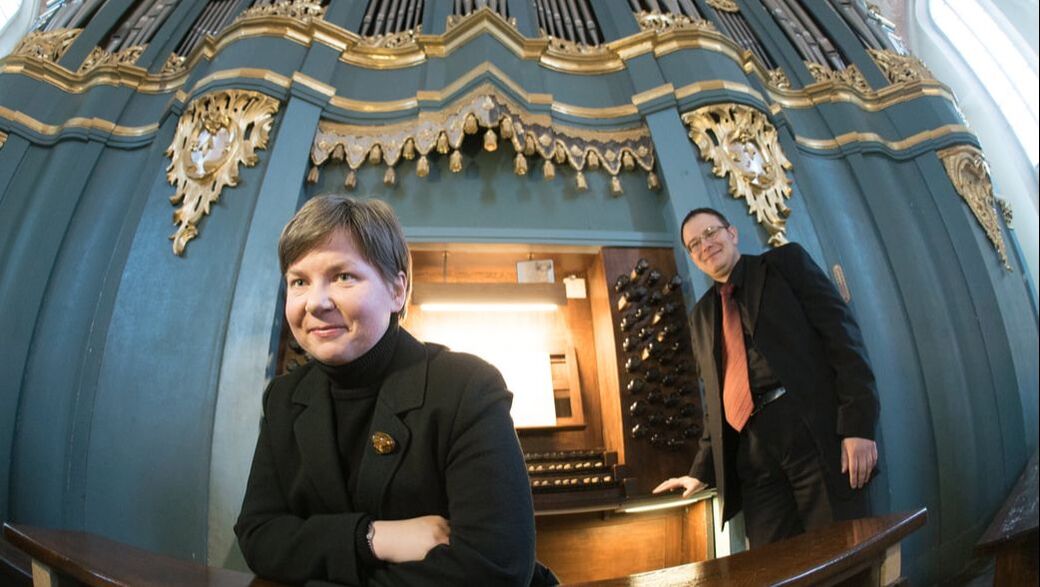 Photo by Edgaras Kurauskas Photo by Edgaras Kurauskas
Authors
Drs. Vidas Pinkevicius and Ausra Motuzaite-Pinkeviciene Organists of Vilnius University , creators of Secrets of Organ Playing. Our Hauptwerk Setup:

Categories
All
Archives
April 2024
|

 RSS Feed